About Luxilus chrysocephalus Rafinesque, 1820
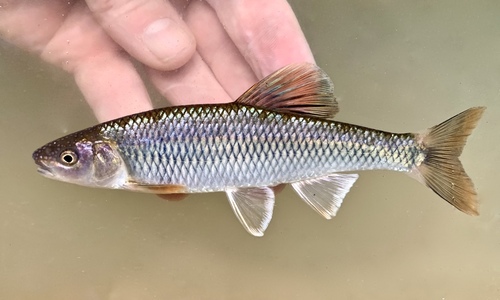
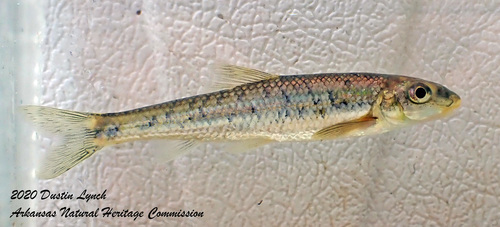
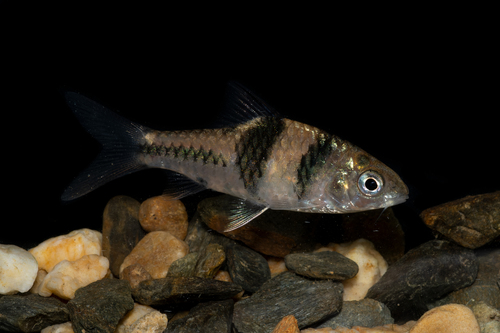
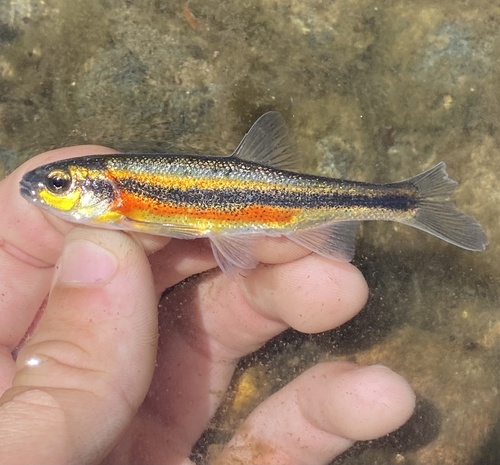
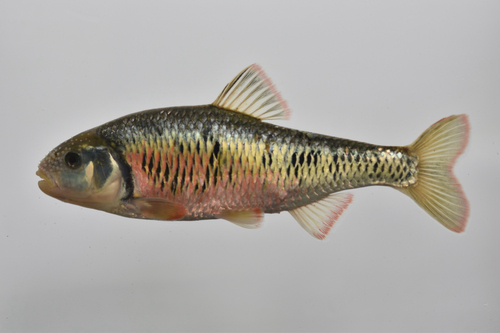
Luxilus chrysocephalus, commonly called the striped shiner, is a silvery fish marked with three to four dorsolateral stripes and dark crescents along its sides. Its scales and the sensory pores on its snout may be outlined in black. Fins range in color from milky to clear; caudal fins have a milky base with a black or gray spot. Breeding males can develop pink snouts, with additional red or pink coloring across the rest of their bodies. This species has large, terminal mouths, and may reach a maximum length of 9 inches (23 cm). Striped shiners inhabit the mid to upper regions of streams and rivers, as well as rocky pools in both clear and turbid creeks. Their distribution covers Gulf Coast drainages from Texas to Alabama, extending northward into Tennessee; they can also be found in the Great Lakes region, New York, and Wisconsin. The breeding season for striped shiners typically runs from March to July, and may extend into October. During breeding, both males and females change body color from silver to gold, and all fins except the tail turn orange. They spawn in shallow water over gravel-bottomed streams with depressions, and will also spawn over the nests of other fish. Males create the spawning depressions by pushing gravel out with their nose, or picking up gravel pieces with their mouths. Males are aggressive toward other competing males, and may bite or attack with breeding tubercles that develop on their heads and bodies during breeding. During spawning, the male swims down and tilts to the side, while the female swims up alongside the male. The male then swings his caudal peduncle onto the female's back. This spawning posture lasts for several seconds, but may be interrupted by other aggressive males.