About Lutjanus bohar (Forsskål, 1775)
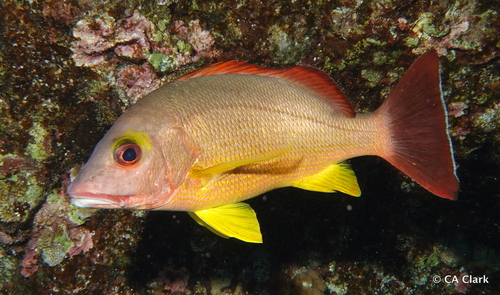
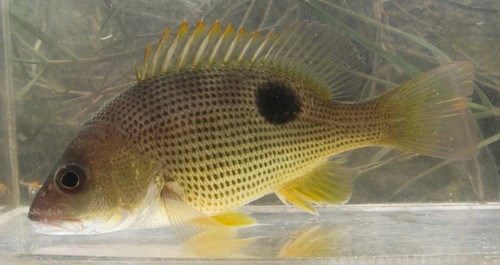
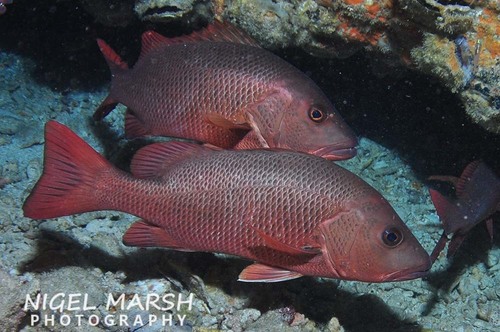
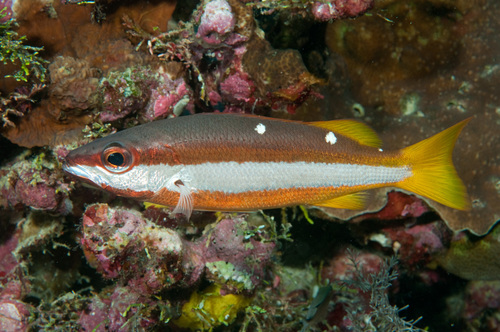
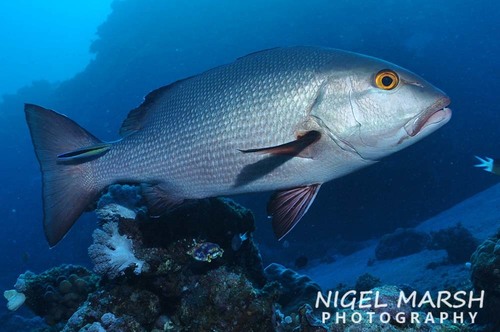
Scientific name: Lutjanus bohar (Forsskål, 1775), commonly called the two-spot red snapper. This large reddish tropical snapper can reach a maximum length of 90 cm (35 in), though most individuals do not grow longer than 76 cm (30 in). The heaviest recorded specimen of this species weighed 12.5 kg (28 lb). This species has darker fins, a rounded head profile, and a groove that runs from the nostrils to the eyes. It has 10 dorsal spines and 3 anal spines. Juveniles and some adults have two silvery-white spots on the back near their dorsal fins; this feature gives the species its common name. Larger adults lose these spots and become mostly solid red. Meat from large adult two-spot red snappers may cause ciguatera poisoning. This species is commercially important, and is also a popular target as a game fish. Two-spot red snapper is native to the Indian Ocean. It has a wide distribution across the Indo-Pacific region, ranging from the east African coast and north to the Red Sea, east to the western Pacific Ocean, north to the Ryukyu Islands, and south to Australia. It inhabits coral reefs, and can be found at depths between 4 and 180 m (13 to 591 ft), though it most commonly occurs between 10 and 70 m (33 and 230 ft).