About Lupinus saxosus Howell
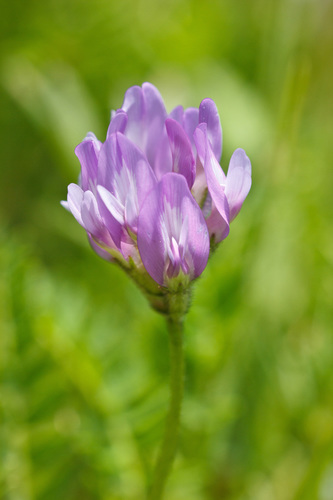
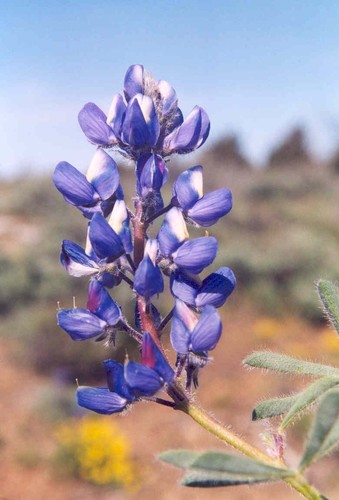
Lupinus saxosus Howell is a perennial herb that grows erect to heights of 20 to 30 centimeters (7.9 to 11.8 inches), and it is shorter than most other lupine species. Its leaves are palmate, with 7 to 13 leaflets per leaf, most often 8 to 12; each leaflet measures 1 to 4 centimeters (0.39 to 1.57 inches) long, and has either an acute or rounded tip. Stiff long hairs cover the undersides and edges of the leaves, while the upper surfaces of the leaves are hairless. The inflorescence is a dense raceme holding many flowers, which are sometimes arranged in whorls. Individual flowers are 1 to 2 centimeters (0.39 to 0.79 inches) long, blue, and have a yellowish or violet patch on the banner. The fruit is a shaggy-haired legume pod that reaches up to 4 centimeters (1.6 inches) in length. Flowering occurs in early spring, with a bloom period falling between May and June. 52.3% of recorded observations of this species in bloom were from May, and 19.8% were from June. No part of this lupine should be eaten. It is most commonly found at elevations between 4,000 and 6,000 feet (1,200 to 1,800 meters). It grows in poor rocky soils, and is often found in shallow soils that become dry down to basalt bedrock by midsummer.