About Lupinus formosus Greene
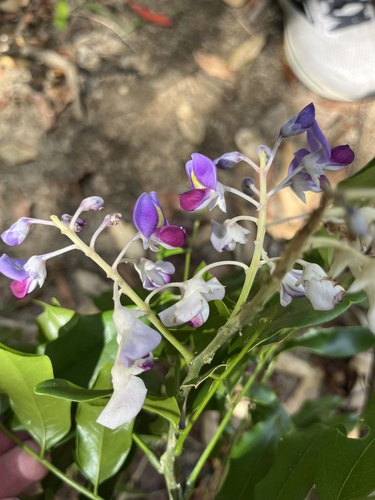
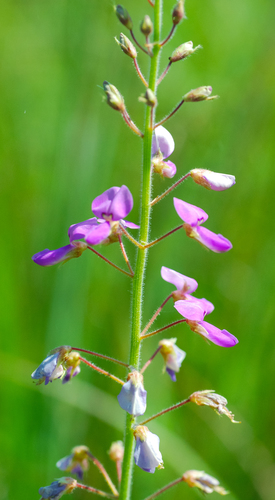
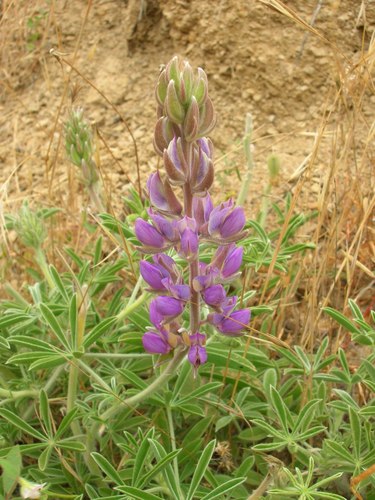
Lupinus formosus Greene, commonly known as summer lupine or western lupine, is a species of flowering plant in the legume family Fabaceae. It is native to California and Oregon in the United States. Lupinus formosus has been recorded as a poisonous plant. While it is not an endangered species, it is targeted for eradication in some areas by cattle farmers, because it has been linked to crooked calf disease. This species, along with five other lupine species, remains poisonous from the start of its spring growth until its seed pods shatter in late summer or early fall. Toxicity is highest in younger plants. Summer lupine is one of three plants that contain piperidine alkaloids and produce poisonous effects in livestock. Along with poison hemlock (Conium maculatum) and tree tobacco (Nicotiana glauca), it caused multiple congenital contractures (MCC) and palatoschisis in goat kids when pregnant dams were gavaged with the plant during gestation. The observed skeletal abnormalities included fixed extension of the carpal, tarsal, and fetlock joints, scoliosis, lordosis, torticollis, and rib cage problems. Clinical signs of toxicity in sheep, cattle, and pigs included ataxia, incoordination, muscular weakness, prostration, and death. Lupinus formosus grows on dry slopes beneath pine trees, in clay soils, grasslands, and coniferous forests, and can be found in the San Jacinto, Santa Rosa, and San Gabriel Mountains. Its distribution spans most of California, excluding the eastern deserts and the plateaus east of the Sierra Nevada. This lupine blooms from April to August. It is a food plant for the endangered mission blue butterfly. Two varieties of Lupinus formosus are recognized. Lupinus formosus var. robustus is restricted to the Sierra Nevada and Southern Coast Ranges of California, while Lupinus formosus var. formosus has a broader distribution. It acts as a larval host plant for the Acmon blue, arrowhead blue, Melissa blue, silvery blue, and sooty hairstreak butterflies.