About Lunella undulata (Lightfoot), 1786
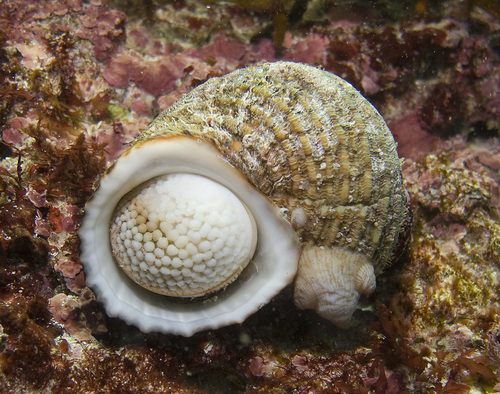
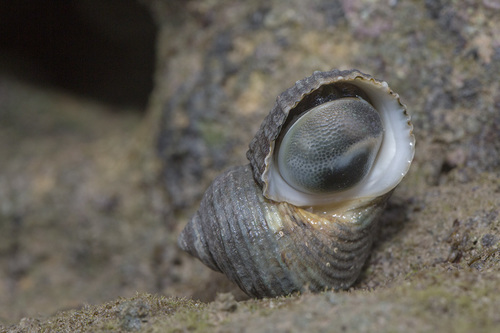
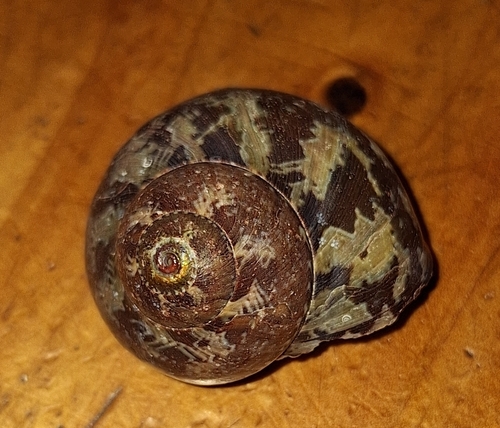
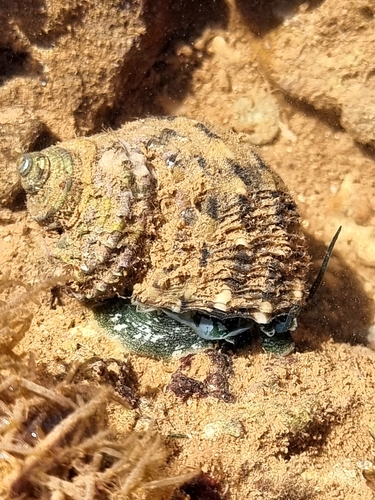
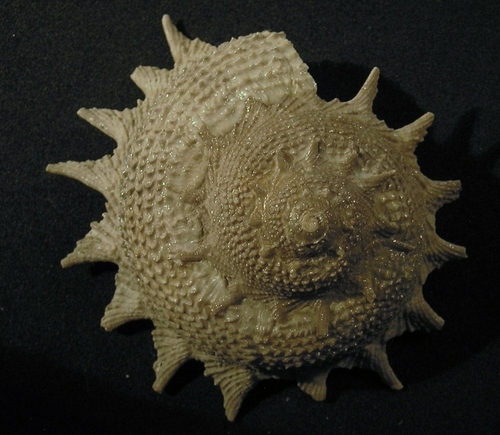
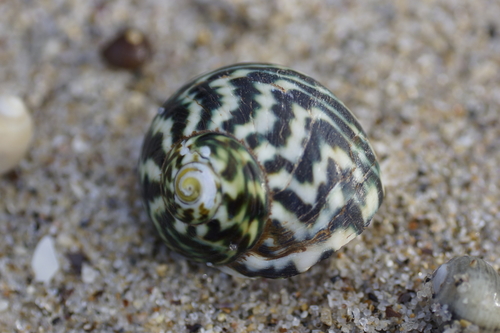
The shell of Lunella undulata ranges in size from 33 mm to 75 mm. This solid, umbilicate shell has a depressed-globose shape. The shell is bright green, marked with longitudinal white strigae beneath a brown epidermis. Its color pattern can sometimes be solid green all over, or the white strigae may break up into a tessellated pattern. The obtuse spire is either dome-shaped or low-conical, and holds five whorls. The upper whorls are sometimes angulate, marked with spiral lirae that are wider than the interstices between them; on the body whorl, these lirae are often nearly obsolete. The final whorl descends, and is slightly concave just below the suture. The oval aperture is white on the inside. The columella has a very wide, flattened white callus that extends across the umbilical tract. The umbilicus itself is both wide and deep. This marine species is endemic to Australia, where it is found off the coasts of New South Wales, South Australia, Tasmania, Victoria, and Western Australia. This species is a dominant component of shell middens in southeast Australia, which are archaeological sites formed when humans consumed this animal.