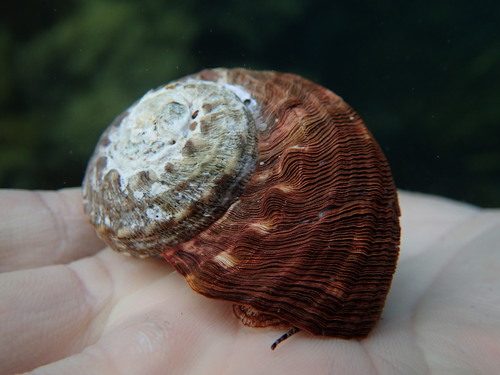
About Lunella torquata (Gmelin, 1791)
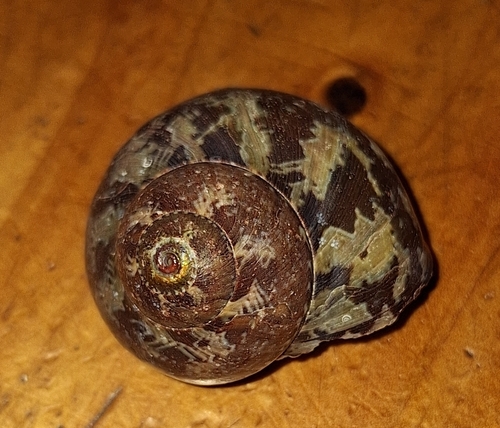
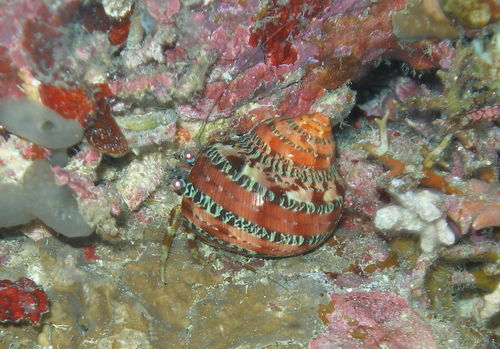
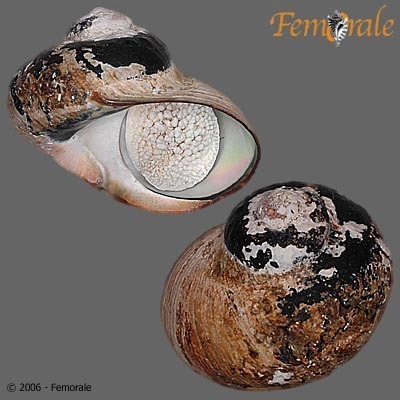
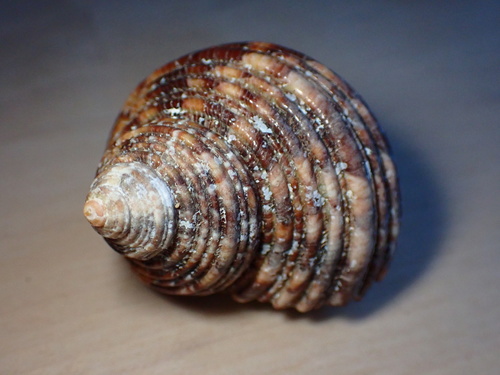
The shell of Lunella torquata reaches a length between 35 mm and 110 mm. It is large, solid, and umbilicate, with an orbiculate-conical shape. The shell base color is whitish, mottled and marked with dark brown strigae. Individuals of this species vary considerably in how elevated the shell is and how pronounced its carination is. The six whorls have dense lamellose incremental striae and coarse spiral lirae. The upper whorls are carinated, and this carina becomes indistinct on the body whorl. The sutures are canaliculate, and are bordered below by a row of nodules. The round aperture is oblique and white on the inside. The white columella is perforated by a wide, deep umbilicus, and has a spiral groove that extends to the base. The oval operculum is flat on the inside, and contains four whorls. Its nucleus is positioned one-third of the distance across the operculum face. The outside of the operculum is white, excavated at the center, and has two strong spiral ribs; the inner rib is noticeably the stronger of the two. A sharply granular tract is visible outside of the outer rib. This marine species is distributed from New South Wales to Western Australia, and can also be found off the coast of New Zealand.