About Lunella smaragda (Gmelin, 1791)
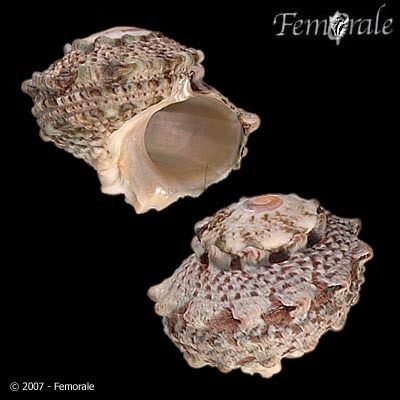
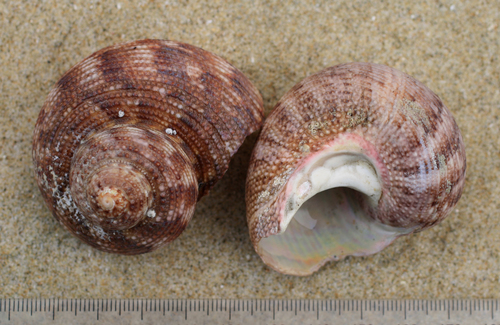
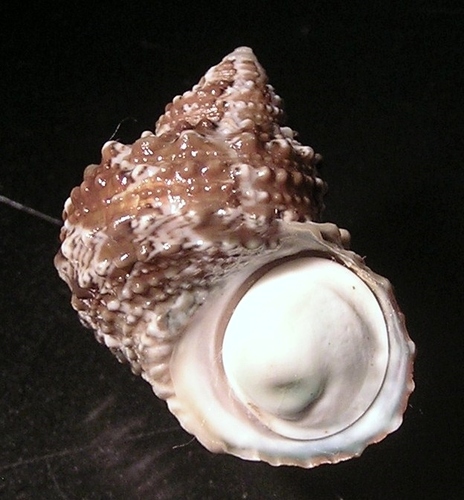
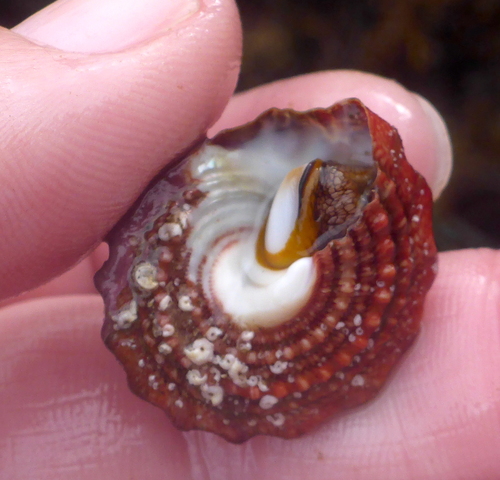
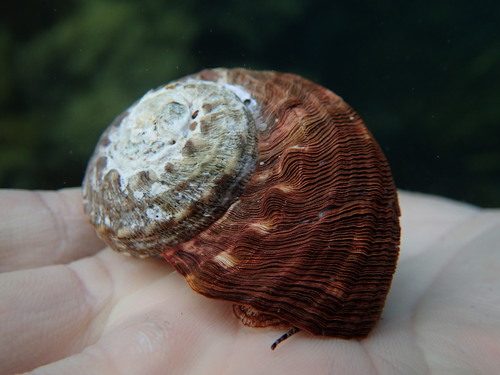
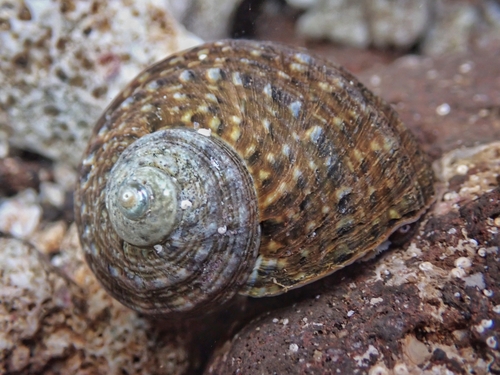
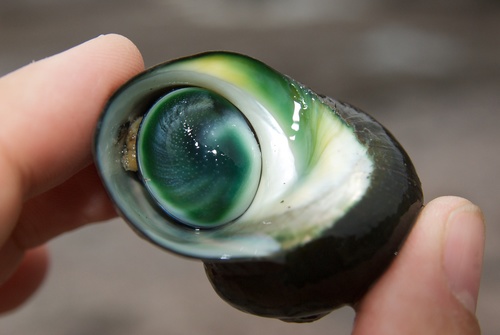
Lunella smaragda (Gmelin, 1791) is a sea snail species with a green operculum. The shell of this species ranges in size between 35 mm and 70 mm. The shell is depressed, imperforate, solid, and heliciform in shape. It is covered by a thick blackish cuticle, and the shell beneath this cuticle is green. The apex of the shell is usually eroded, and the shell holds 4 to 5 whorls. The upper whorls are spirally sulcate or carinate. The large body whorl is flattened above, marked by incremental wrinkles and faint, partially obsolete spiral sulci. The large aperture is oblique and rounded, and is pearly white on the inside. The outer lip is thin and has a black edge. The arched columella bears a pearly callus. The white umbilico-parietal area is excavated and concave. When this species was classified under the synonym Turbo smaragdus, it was commonly called "cat's eye". This common name refers to the species' attractively colored operculum, which has a slight resemblance to an eye; this operculum is sometimes used for decorative purposes. The operculum is flat on the inside and contains four whorls. Its nucleus is positioned more than one-third of the total distance across the operculum's face. The outside of the operculum is deep green, except for the increment side, which is white. The outer surface is very minutely and sparsely granose. Lunella smaragda is an endemic species to New Zealand. It lives on intertidal and low subtidal rocky shores, as well as soft substrates including seaweeds. It can be found around the North Island, South Island, and Stewart Island, on rocks located between low tide and mid tide.