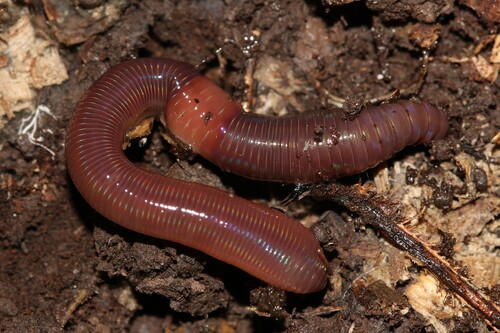
About Lumbricus rubellus Hoffmeister, 1843
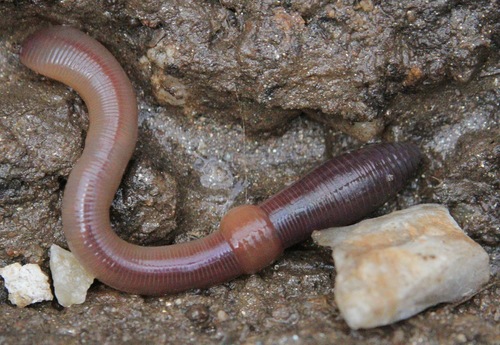
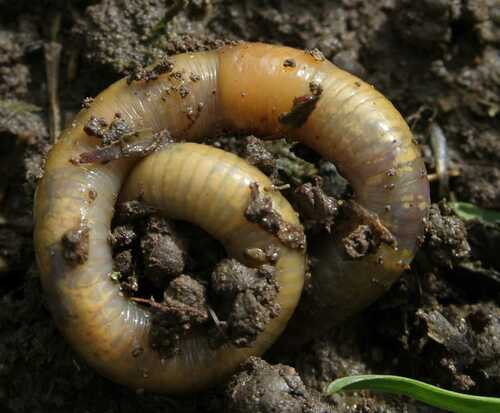
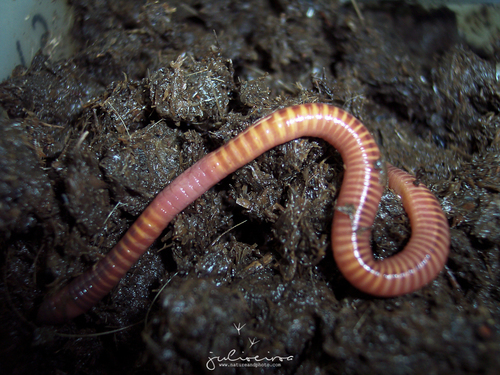
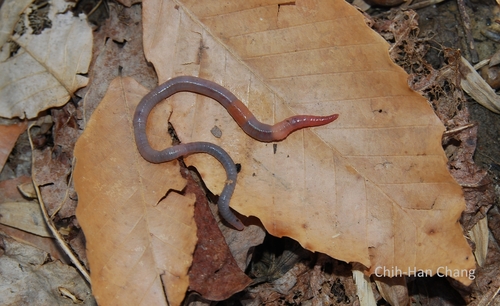
Lumbricus rubellus Hoffmeister, 1843 is a species of earthworm related to Lumbricus terrestris. Its body is usually reddish brown or reddish violet, with an iridescent sheen on the dorsal side and a pale yellow ventral side. Adults typically measure 25 millimetres (0.98 in) to 105 millimetres (4.1 in) in length, and have around 95 to 120 body segments. The species is native to mainland Europe and the British Isles, but has since spread to suitable habitats across the globe. In its natural range, Lumbricus rubellus lives in soils with high organic matter content, and prefers habitats with dung and feces. It requires loose soil to burrow and sufficiently moist soil to carry out gas exchange. A number of abiotic factors are important for its survival. Soil pH is particularly critical: it tolerates a pH range of 5.5 to 8.7, and prefers neutral soils. Temperature also strongly impacts the species, affecting its growth, respiration, metabolism, reproduction, and other biological processes, with an ideal temperature of 10.6 degrees Celsius (51 degrees Fahrenheit). Moisture is another key abiotic factor, as it is required for respiration; a closely related species, Millsonia anomala, is most active in soil with a 10–17% moisture content. The preferred substrate for Lumbricus rubellus is dung, which aligns with the species' food source requirements along with its pH and moisture preferences. Like most other earthworm species, Lumbricus rubellus is photonegative (avoids strong light) and photopositive (attracted to weak light). This behavior is a response to the effects of intense light, which include drying out of the worm's body and the lack of accessible above-ground food sources for earthworms. In traditional Chinese medicine, abdominal extracts from Lumbricus rubellus are used to make a preparation called Di Long, or Earth Dragon, which is used to treat rheumatic disorders, phlegm disorders, and blood disorders.