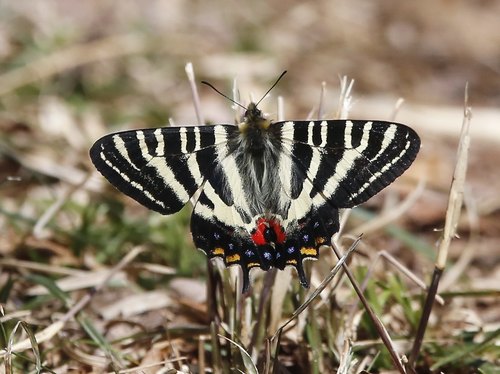
About Luehdorfia japonica Leech, 1889
Luehdorfia japonica, commonly called the Japanese luehdorfia, is a butterfly species belonging to the subfamily Parnassiinae of the family Papilionidae. This species is endemic to Japan. It was first discovered by Yasushi Nawa in Japan's Gifu Prefecture in 1883. It is also widely known as the Gifu butterfly, called Gifu Chō in Japanese, with the local Japanese names 岐阜蝶 and ギフチョウ. Luehdorfia japonica is univoltine, meaning it produces only one generation per year, and adult butterflies emerge in early spring. The larval host plants for this species are wild ginger species that belong to the genus Asarum. Female Luehdorfia japonica lay eggs in clusters on the new fresh growth of their host plants. After hatching, larvae remain in groups and feed together on host plant leaves during their early instar stages. Japanese entomologists have conducted intensive research on multiple aspects of Luehdorfia japonica's biology, including its phylogeography, population dynamics, and the function of the sphragis. The sphragis is a post-copulatory plug that attaches to a female's abdomen after mating, and it prevents the female from mating with other males again. This structure is also found in other members of Parnassiinae and in some members of the tribe Acraeini.