About Ludwigia pilosa Walter
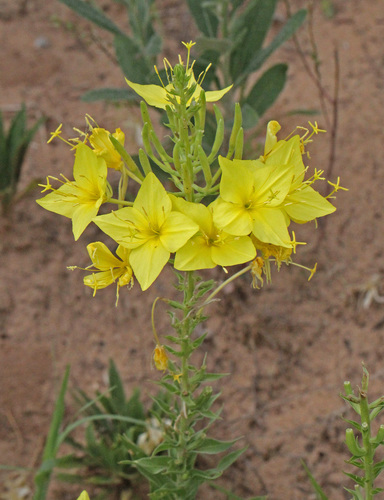
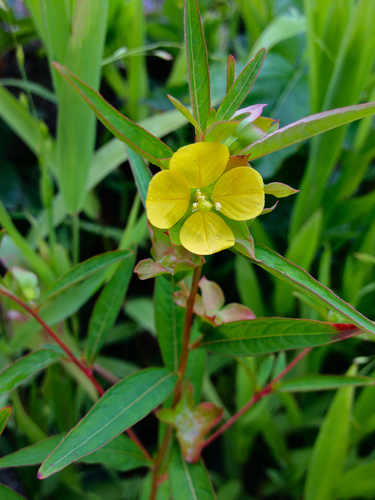
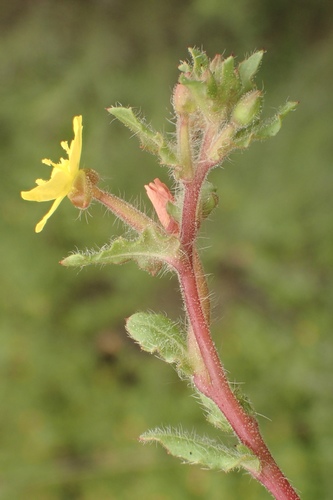
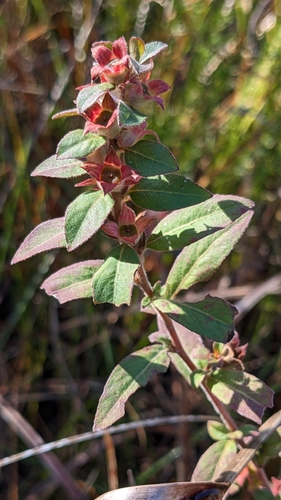
Ludwigia pilosa Walter is a perennial aquatic plant that flowers from late June through late November. The entire plant is covered in fine hairs, and is sometimes described as having a velvety texture. Its stems can grow up to 1.2 meters tall, and bear alternately arranged leaves. The leaves are simple, petiolate, and elliptical in shape, measuring roughly 20 to 100 millimeters long and 3 to 14 millimeters wide. Its flowers do not have petals, but instead have 4 to 7 yellow sepals that average 4 to 5 millimeters in length. This species produces many small 0.5-millimeter seeds, which are held inside a dry, cube-shaped seed capsule. The seed capsule has a thick outer wall and measures 3 to 4 millimeters long. Ludwigia pilosa, commonly called hairy primrose-willow, performs valuable ecological roles. Waterfowl feed on its seeds, the submerged portions of the plant provide habitat for many invertebrates, and decaying plant detritus also provides food for these invertebrates. This plant prefers wet ground, and can be found growing along roadside ditches, the edges of ponds, and in shallow swampy areas. Its natural range extends from eastern Texas to the southern halves of Mississippi, Alabama, Georgia, North Carolina, and South Carolina, the northern part of Florida, and two counties in southeastern Virginia.