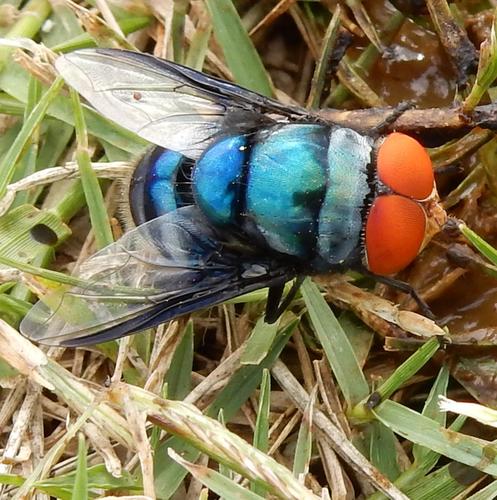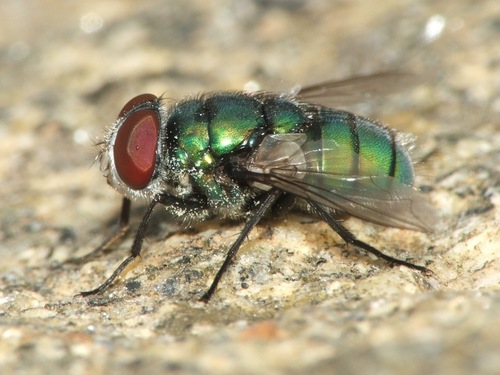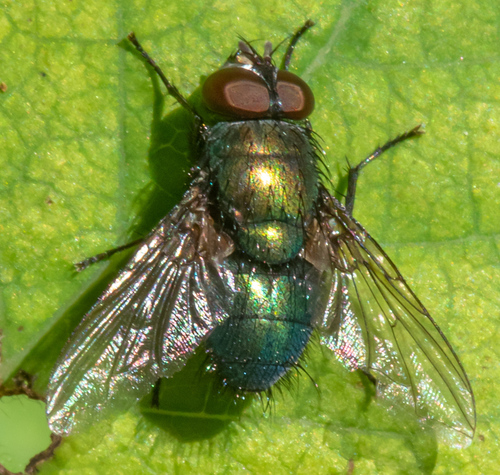
About Lucilia silvarum (Meigen, 1826)
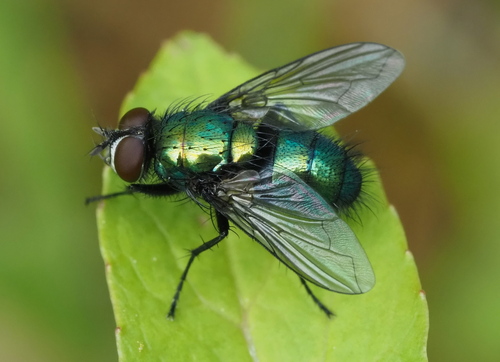
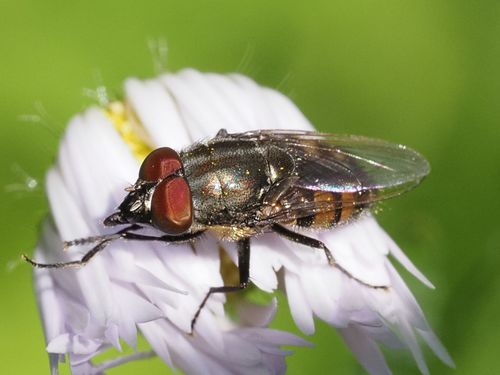
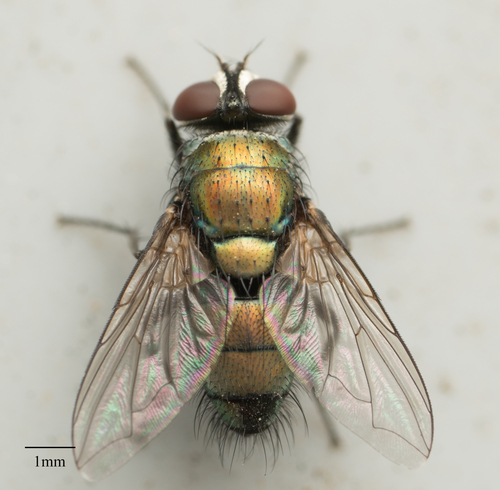
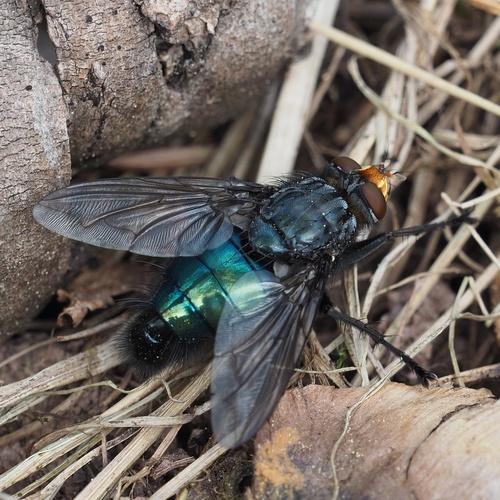
Lucilia silvarum (Meigen, 1826) is a species of blow fly in the family Calliphoridae. Like all true flies, adult individuals have a single pair of wings. Like most members of Calliphoridae, they have a characteristic metallic body color and plumose aristae. Adult (imago) Lucilia silvarum generally range in size from 4.5–10 mm (0.18–0.39 in). They are hard to tell apart from many closely related green fly species. When larvae first hatch, they are typically around 2 mm (0.08 in) long, and grow to a maximum length of approximately 17 mm (0.7 in).
Lucilia silvarum is a warm-weather fly, and is typically found in areas with temperatures between 75 °F (24 °C) and 85 °F (29 °C). Confirmed recorded locations for the species include China, Denmark, the United States, Finland, southern Norway, North Africa, Russia, and Canada.
The species' life cycle starts when adult males and females mate. After mating, the female lays eggs, most often on carrion. Lucilia silvarum eggs take approximately one full day to hatch, a shorter incubation period than is typical for most flies. Once hatched, larvae go through three distinct larval development stages, which is consistent with other species in the Calliphoridae family. The first larval stage is reached approximately 2 days after hatching, the second after 2 and a half days, and the third after 4 to 5 days. After completing the third larval stage, larvae become restless and move away from their original feeding site. At this point, they are termed prepupae; this stage generally occurs 8–12 days after eggs are laid, and larvae reach sizes up to 12 mm long. Prepupae develop into pupae approximately 18–24 days after egg-laying, with timing dependent on atmospheric conditions.
Most calliphorid larvae are scavengers that feed on carrion and dung, but L. silvarum is also well known for infesting necrotic tissue in both animals and humans. Adult L. silvarum typically feed on nectar and other available sweet liquids.
Lucilia silvarum is one of two blow fly species that cause myiasis in anurans (frogs and toads), and such infestations are almost always fatal to the anuran host. Adult flies lay their eggs on the backs of anurans, and the eggs hatch into larvae within a few hours. The larvae then enter the amphibian's body through the eye sockets or nostrils. Due to their rapid growth rate, larvae leave the anuran host's body in less than a week, then migrate into soil to pupate. They generally mature into adult blowflies around nine days after pupation starts. While most anuran infestations by L. silvarum are fatal, a recent study found that two species, the wood frog and the boreal toad, can survive infestation. In Canadian regions, confirmed common anuran hosts are Rana sylvatica (wood frog), Pseudacris maculata (boreal chorus frog), Bufo boreas boreas (boreal toad), and Bufo hemiophrys (Canadian toad).