About Lucilia illustris (Meigen, 1826)
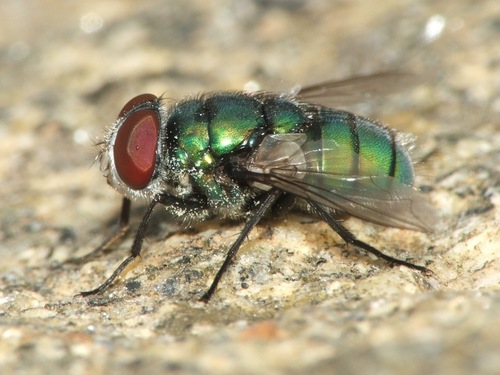
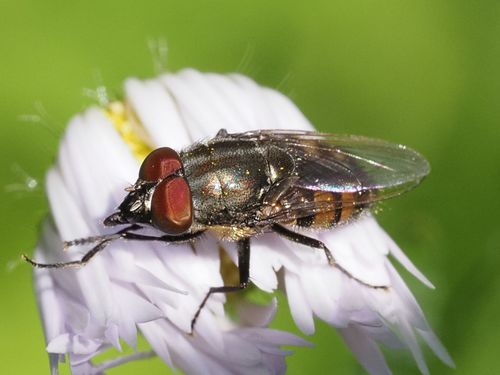
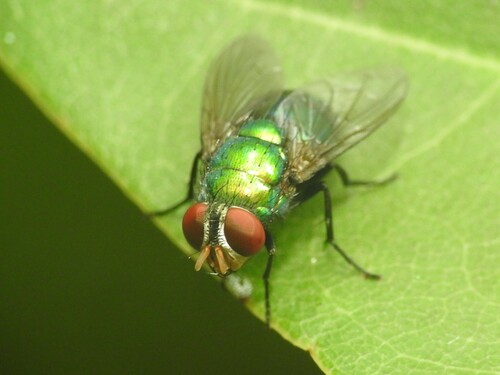
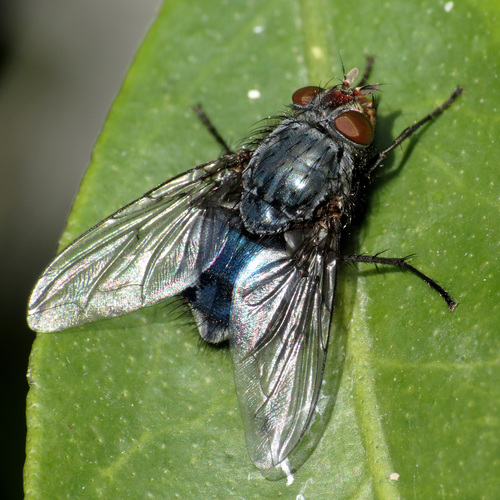
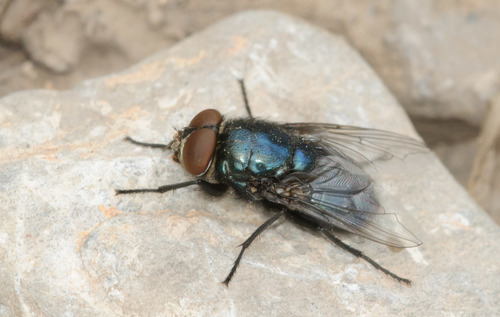
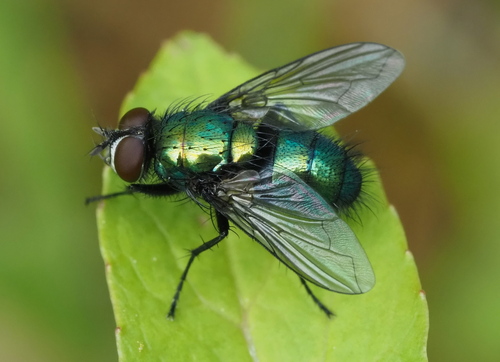
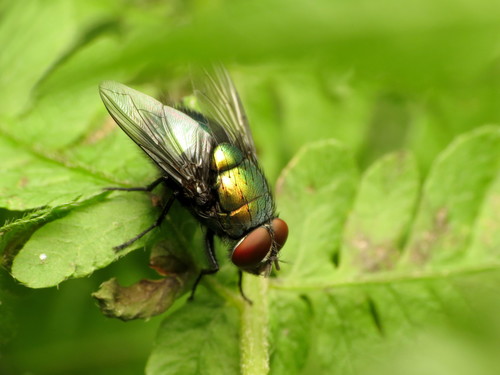
Lucilia illustris (Meigen, 1826) measures 6–9 mm in total length. Its cheeks (bucca) are black, covered in faint gray pollinose coating and black hairs. The first segment of its antenna is black; the second segment usually has an orange tip, and the third segment, which is dark brown or black, is around three times as long as the second segment. The arista, a bristle structure on the antenna, is dark brown or black, and bears long, dark cilia. The back of its head is black, with three to four rows of black cilia positioned behind the eyes. Its thorax has a metallic blue-green color that reflects bronze and purple hues. When viewed in certain lighting, silvery pollen and a dark line extending along the back of the thorax are visible. Black setae are present on both the propleuron and hypopleuron, while the prosternum has brown setae. The wing-base has dark brown or black sclerites, and the spiracle is also dark brown or black. This species has black legs and translucent wings, and lacks a costal spine. The abdomen shares a similar coloration with the thorax, but appears slightly white when viewed in certain lighting. The first abdominal segment is metallic and dark brown. The second abdominal segment has a faint central spot on its front dorsal margin, along with a row of barely visible bristles along the margin. Both the third and fourth abdominal segments have long, upright bristles; the fourth segment additionally has scattered hairs and a marginal row of bristles.