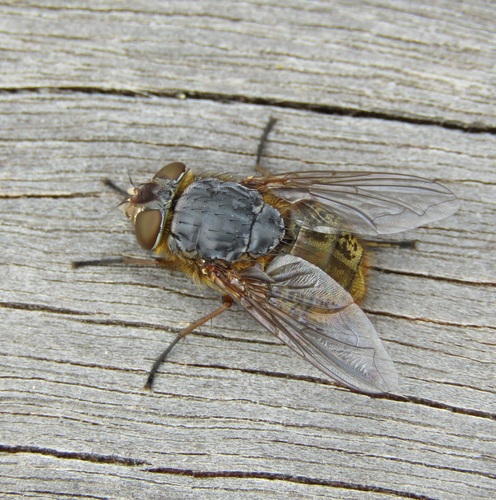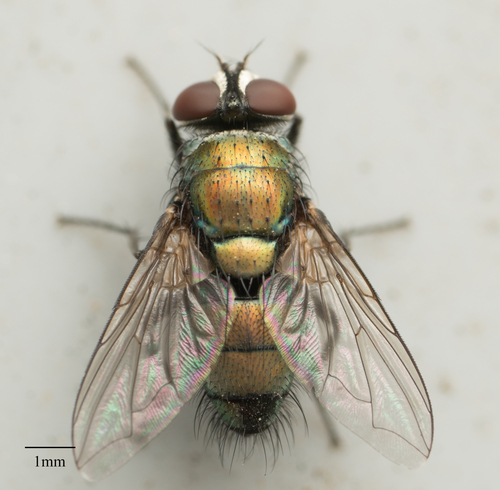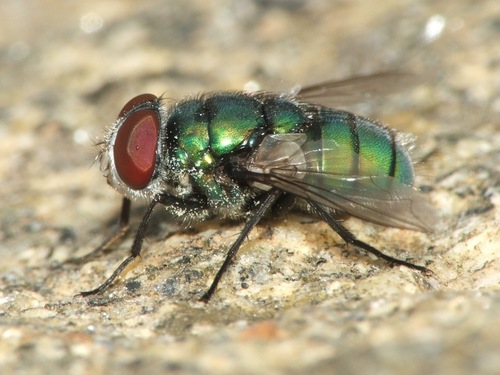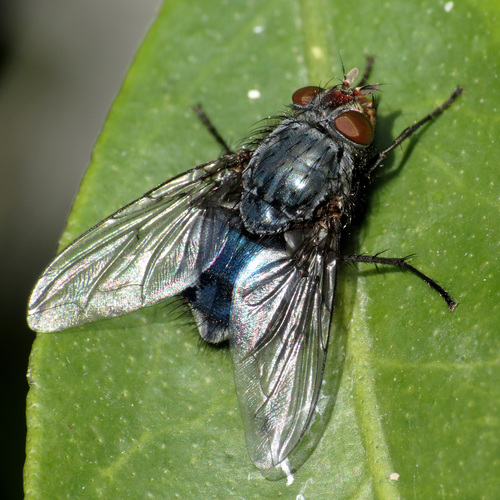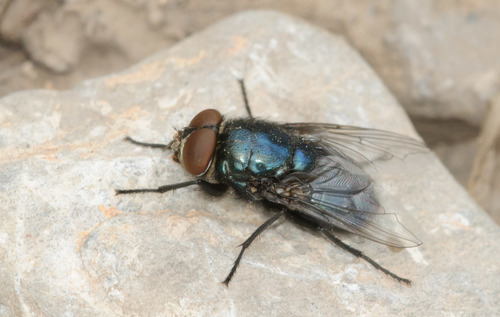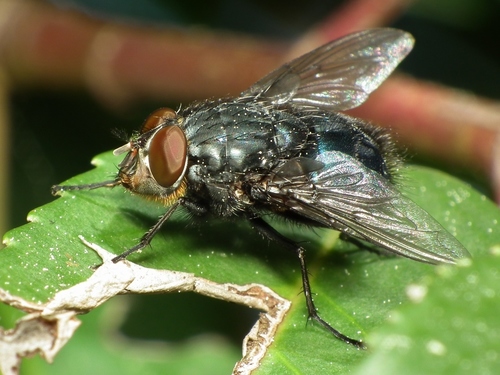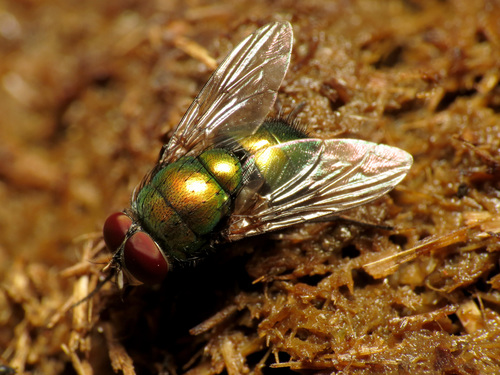
About Lucilia caeruleiviridis Macquart, 1855
Lucilia coeruleiviridis, formerly named Phaenecia coeruleiviridis, is commonly called a green bottle fly, named for its metallic blue-green thorax and abdomen. It was first described by French entomologist Pierre-Justin-Marie Macquart in 1855, and belongs to the family Calliphoridae. It is one of many forensically important Diptera species, since it is often found on decaying organic matter. This blow fly is one of the most widespread blow fly species in the southeastern United States, especially during spring and fall. Lucilia coeruleiviridis has a Nearctic distribution, meaning it occurs in the biogeographic region that includes Greenland and all of North America north of Tropical Mexico. It is very widespread across the southern United States, and is likely the most common blow fly species in the southeastern US during spring and fall, remaining active during mild winters. Female Lucilia coeruleiviridis use their extended abdominal ovipositor to deposit eggs around accessible natural body openings (such as eyes, nostrils, ears, mouth, anus and genitals) or near wounds. The presence of maggot masses of this species can indicate premortem or perimortem trauma, which is relevant to forensic investigations. The species has a four-stage life cycle. As a calliphorid, L. coeruleiviridis is necrophagous, so its eggs are laid on rotting animal remains, and generally hatch around twelve hours after being laid. Larvae aggregate and feed on the decomposing carcass, then go through three larval stages (instars). At an ambient temperature of 80 degrees Fahrenheit, these three instars take an average of eleven to twenty days total to complete. In the fourth stage, larvae leave their food source to pupate. The pupal stage lasts between six and twelve days. A single female L. coeruleiviridis can lay more than two thousand eggs over the course of its lifetime. Green bottle fly maggots are known to prefer feeding on necrotic tissue while leaving living tissue untouched, so they are often used in maggot therapy, also called Maggot Debridement Therapy (MDT). This therapy involves intentionally introducing disinfected maggots to clean non-healing, typically large, wounds. However, Lucilia sericata, the common green bottle fly, is the preferred species for this use. Maggots used in this therapy serve three main purposes: cleaning wounds by consuming dead tissue, killing bacteria, and stimulating healthy tissue growth.