About Lucasium steindachneri (Boulenger, 1885)
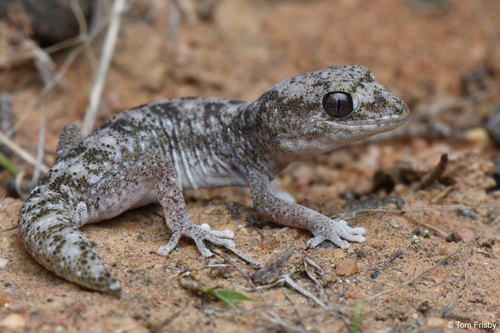
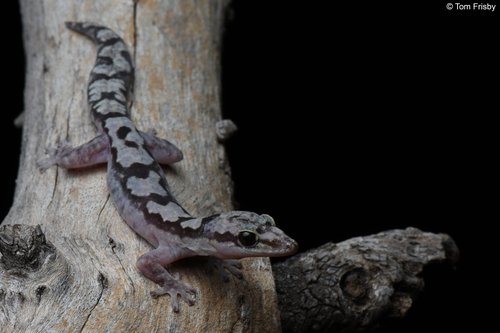
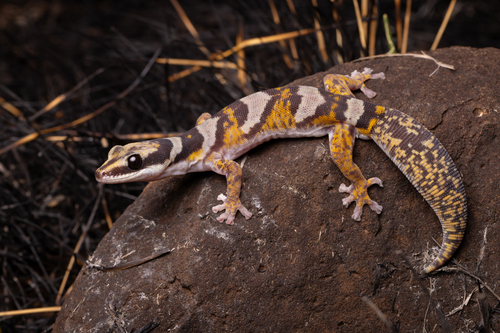
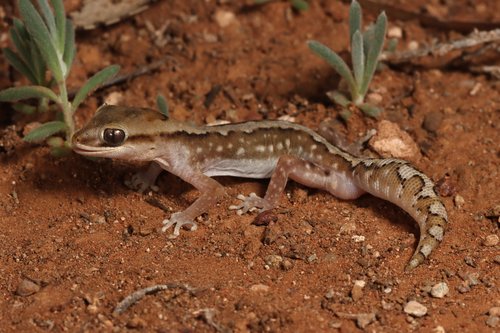
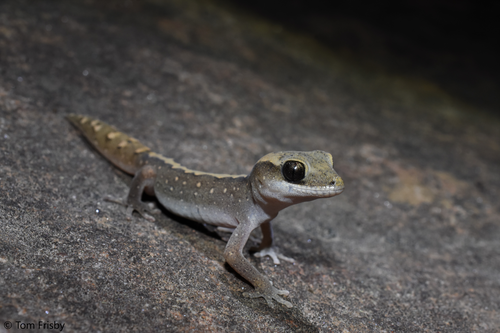
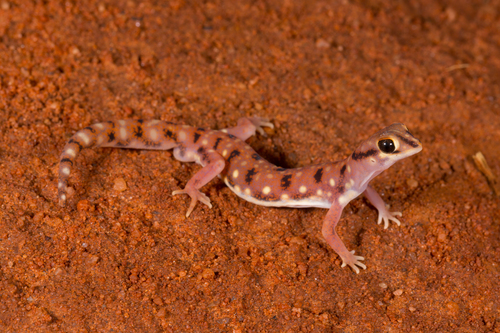
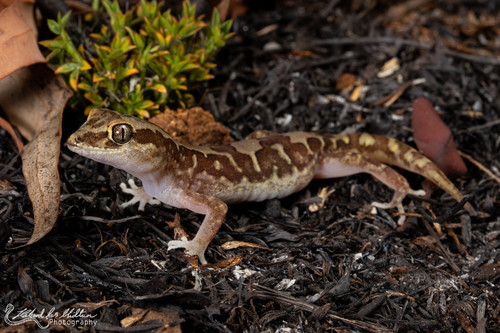
The box-patterned gecko, Lucasium steindachneri, is a smooth-scaled reptile. It reaches a maximum snout-to-vent length (SVL) of 59 mm (2.3 in), with an average adult SVL of 45 mm (1.8 in). This species has large circular eyes with vertical pupils, and lacks moveable eyelids; each eye is covered by a clear transparent scale, and the gecko cleans its eyes by wiping its tongue across these scales. It can be identified by a pale dorsal stripe running from its eyes down to the base of the tail, which contains three oval dark brown patches. It has pale spots and flecks along its sides, plus a long slender tail that makes up 70% of its total body length. The ventral surface of its body and the undersides of its limbs are whitish. Its feet have five digits, each bearing circular adhesive discs and a large single terminal plate. The box-patterned gecko is found across arid and semi-arid regions of Australia, occurring in Queensland, New South Wales, a small area of eastern South Australia, and the Northern Territory. Its typical habitat includes dry open woodlands, forests, and mallee country with heavy or stony soils. During the day, it shelters in ground crevices, most commonly in disused insect holes. It emerges from its shelter at night to forage for food. Sexually mature female box-patterned geckos lay one to two eggs per year.