About Lucania goodei Jordan, 1880
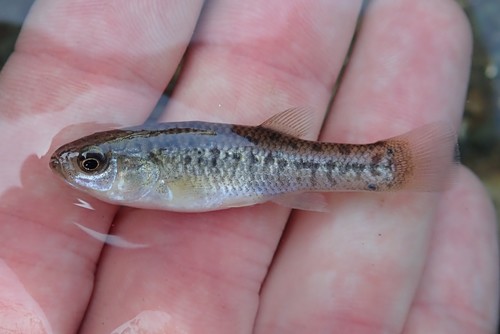
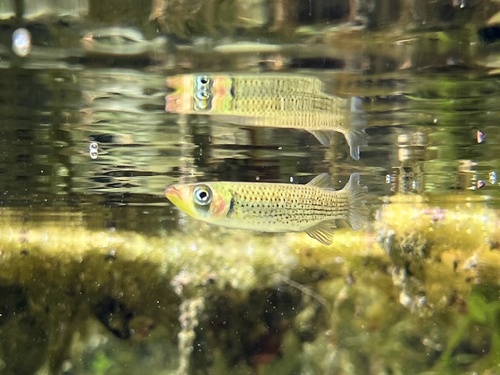
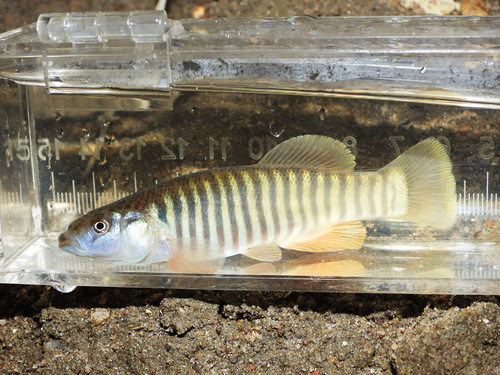
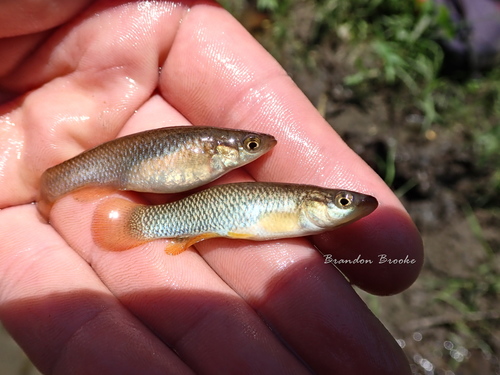
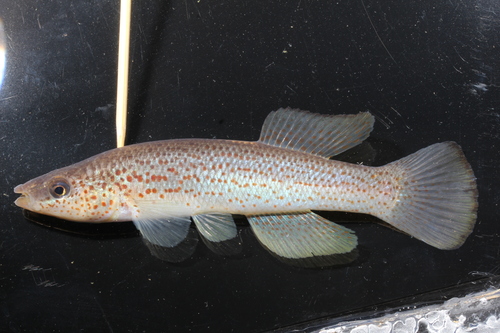
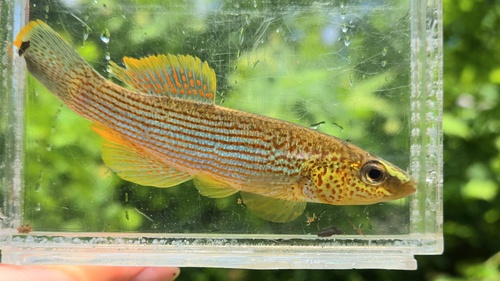
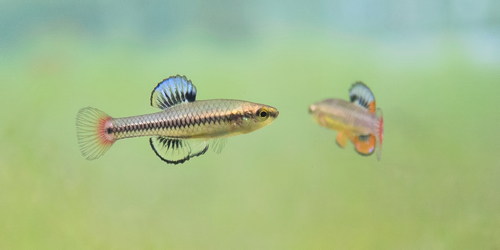
The bluefin killifish, scientifically named Lucania goodei Jordan, 1880, normally grows up to 2.9 cm (1.1 in), with a maximum recorded length of 6 cm (2.4 in). The maximum recorded age for this species is 2 years. The bluefin killifish is distributed across most of Florida; it is absent from the Florida panhandle west of the Choctawhatchee River. It also occurs in the Chipola River drainage of southeastern Alabama, and is found sporadically along the Atlantic coast as far north as central South Carolina. It has been introduced to Texas, North Carolina, and California. Lucania goodei inhabits heavily vegetated ponds and streams with little to no current. It is often found in spring habitats, can tolerate moderate salinity, and survives in low oxygen environments by using its upturned mouth to gulp air at the water surface. When not gulping air, it swims well below the surface. Unlike many other killifish species, bluefin killifish are not seasonal. Males and females can be distinguished by fin coloration: males have an orange tint on their fins, while females have colorless fins. Females carry eggs; bluefin killifish can breed year-round, with peak breeding activity occurring from spring to summer.