About Loxosceles laeta (Nicolet, 1849)
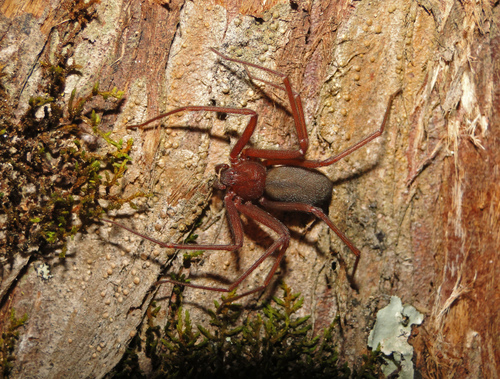
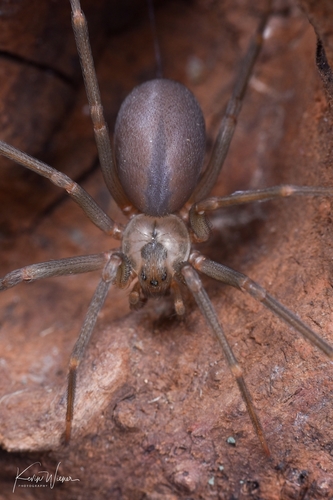
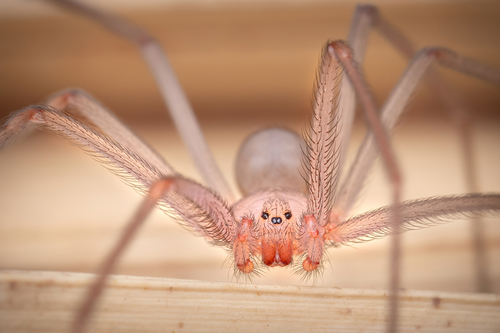
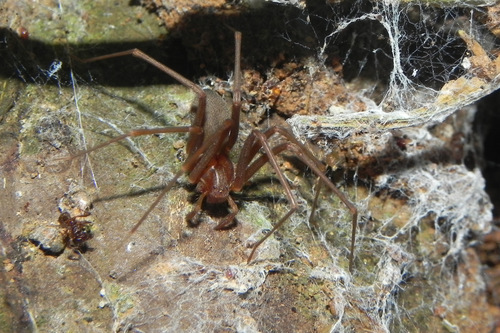
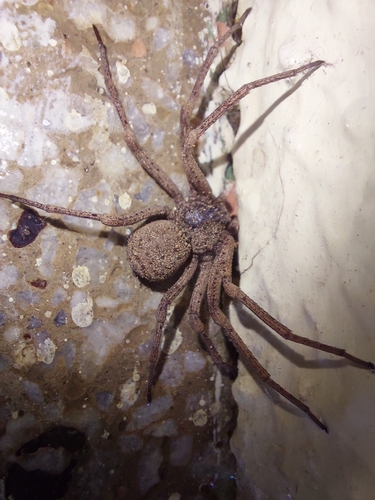
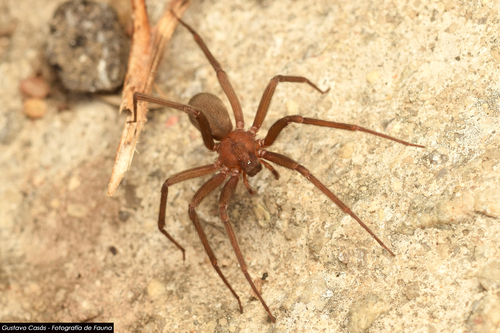
The Chilean recluse spider, scientifically named Loxosceles laeta (Nicolet, 1849), is one of the larger recluse spider species. Its total size, including legs, generally ranges from 8 to 40 mm. Like most recluse spiders, it is brown, and usually has markings on the dorsal side of its thorax, with a black line extending from the marking that resembles a violin. The neck of this violin-shaped marking points toward the rear of the spider, giving the species the common nicknames "fiddleback spider" or "violin spider" in English-speaking regions. The spider's body color ranges from light tan to brown, and the characteristic violin marking is not always visible. Because the violin pattern is not a reliable diagnostic feature for identification, examining the spider's eyes is far more important for correct identification. While most spiders have eight eyes, recluse spiders have six eyes arranged in pairs called dyads: one median pair and two lateral pairs. Like other recluse spiders, the Chilean recluse builds irregular webs that often include a shelter made of disorderly threads. Unlike most web-building spiders, Chilean recluse spiders leave their webs at night to hunt. Bites to humans usually happen when people unintentionally squeeze the spider in clothing or bedding. They often build their webs in dry, generally undisturbed areas including woodpiles, sheds, closets, and garages, and are frequently found inside human homes. The species can survive for long periods without food or water, a trait that supports its spread to regions across the world. The Chilean recluse spider is native to South America. It is common in Chile, and can also be found in Peru, Ecuador, Argentina, Uruguay, and southern and eastern Brazil. It has been introduced to several areas outside of its natural native range, but it does not thrive in these introduced locations. The spider has successfully established a stable population in the Los Angeles area. Infestations have been reported in the United States (Massachusetts, Florida, Kansas), Canada (Vancouver, British Columbia), and Australia. A persistent colony of Loxosceles laeta has lived in the Natural History Museum of Helsinki since it was likely introduced via fruit shipments in the 1960s and 1970s; local daycares, preschools, and schools organize regular day trips to the museum, and only one bite has ever been recorded at this site. In 2021, this species was also found in three separate school buildings in Sandviken, Sweden. In 2025, a single specimen was discovered on the campus of the University of Tübingen, Germany. The species' scientific epithet laeta means "happy", and as this name hints, the Chilean recluse is not an aggressive spider. It typically only bites when it is pressed against human skin, for example when someone puts on an article of clothing that contains the spider. Like all sicariid spiders, the venom of the Chilean recluse contains the dermonecrotic agent sphingomyelinase D, a compound that is otherwise only found in a small number of pathogenic bacteria. One study found that the venom of the Chilean recluse, along with that of the six-eyed sand spider Hexophthalma hahni, contains an order of magnitude more of this dermonecrotic agent than the venom of other sicariid spiders such as the brown recluse. For a comparison of the toxicity of multiple types of spider bites, see the list of spiders with medically significant venom.