About Loxosceles gaucho Gertsch, 1967
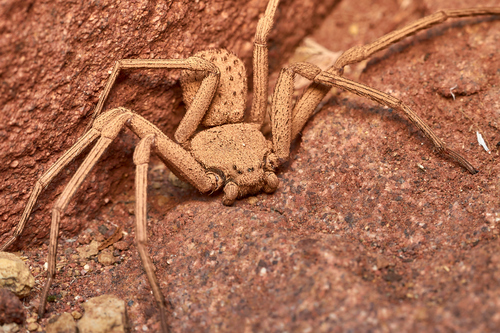
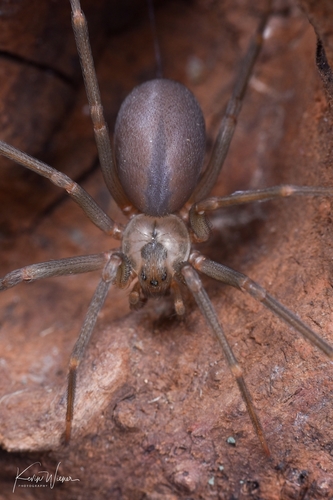
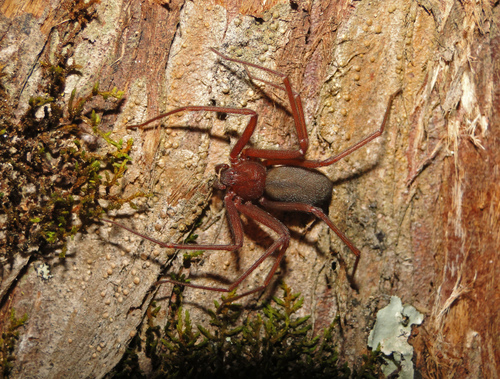
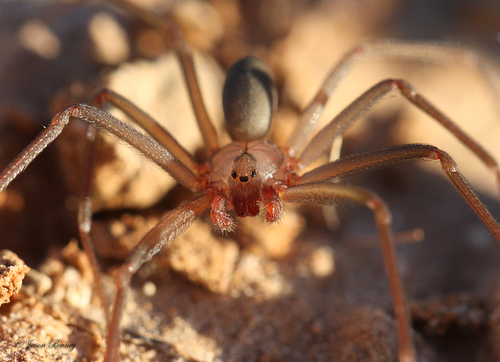
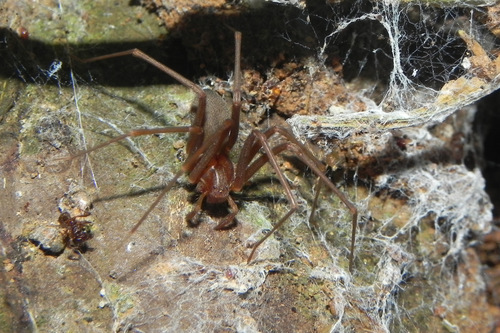
Description and behavior: Adult female Loxosceles gaucho grow 7–12 mm, with a maximum recorded size of 14 mm. They are primarily brown in color, which gives them the common Portuguese name "Aranha marrom" (brown spider) in Brazil. Their bodies range from pale to dark brown, often with a reddish tint, and they have a slightly darker violin-shaped mark on the dorsal carapace. They have long, slender legs that lack dark marks or stripes. Males have the clearest distinct markings on their thoracic region, which consists of bands. The anterior portion of the male cephalothorax forms a V shape pointing toward the rear, while the last articles of their pedipalps are short, with a curved stylus. The anterior portion of the female cephalothorax forms a U shape pointing toward the rear. Like many recluse spiders, Loxosceles gaucho is nocturnal. It hunts insect and arthropod prey using strong webs, and is most active during the hottest seasons of the year. Range and habitat: This species usually spins irregular webs in cracks, crevices, and corners, which gives it the alternate common name of corner spider. It builds webs along or under large rocks, and is often found inside human homes, in dark locations such as inside clothes, shoes, socks, and other dark household areas. It mainly occurs in Central and Southern Brazil, but has been introduced to Tunisia. Medical significance: One study examined 81 cases of cutaneous and cutaneous-hemolytic loxoscelism from a geographic area where most bites are caused by L. gaucho. The study documented bite-related symptoms including massive hemolysis and acute kidney injury, the latter of which occurred in two cases. In 25 cases, increased serum bilirubin and LDH were observed, which is suggestive of hemolysis. Additional reported symptoms include anemia (14.7% of cases), reticulocytosis (56% of cases), thrombocytopenia (17.6% of cases), increased D-dimer, and fever. A study of L. gaucho venom confirmed common local bite reactions: pain, edema, erythema, ecchymosis, pallor, and dermonecrosis, as well as the systemic reaction of hemolysis. In the Brazilian state of São Paulo alone, this species causes viscerocutaneous loxoscelism in 3.1% of bite cases.