About Loxia pytyopsittacus von Borkhausen, 1793
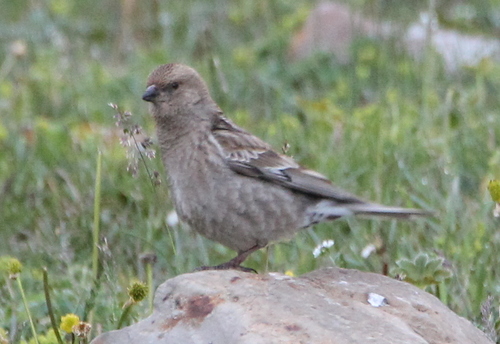
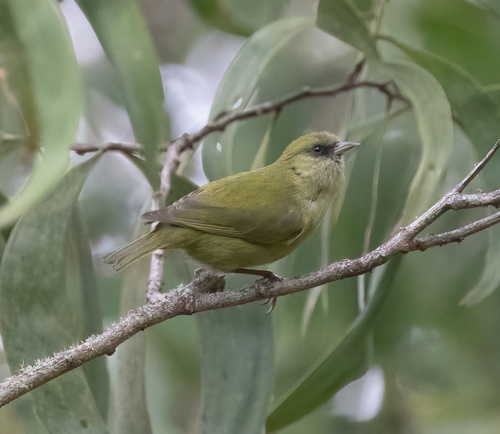
Description: Adult males of this species are typically red or orange in color, while females are typically green or yellow, though there is a great deal of individual color variation. This species is hard to distinguish from the red crossbill and Scottish crossbill, as plumage differences between the species are negligible. It is slightly larger than other crossbill species, measuring 16 to 18 cm (6.3 to 7.1 in) in length, with a wingspan of 27 to 31 cm (11 to 12 in). It is quite bulky and heavy, weighing 44 to 58.2 g (1.55 to 2.05 oz), with an average weight of 53 g (1.9 oz). Its head and bill are larger than the heads and bills of the other two crossbill species. Its bill is thicker than the bills of its close relatives, and the crossed tips of the bill are often not easy to see. Extreme care is required to correctly identify this species. Its deeper, harder choop or tyuup call is likely the most reliable indicator for identification.
Distribution and habitat: This bird breeds in the pine forests of northwest Europe, and extends east into western Russia. A small breeding population also exists in Scotland, which adds to the difficulty of telling this species apart from the sympatric red crossbill and endemic Scottish crossbill that also occur there. This crossbill is primarily a resident species, but will migrate south and west if its food source fails.
Food and feeding: These crossbills are specialist feeders that feed on conifer cones, and their unusual bill shape is an adaptation that helps them extract seeds from cones. The parrot crossbill is specifically a specialist feeder on the cones of Scots pine.