About Lottia instabilis (A.Gould, 1846)
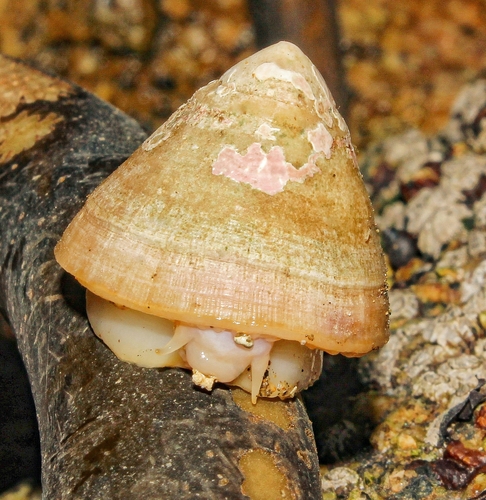
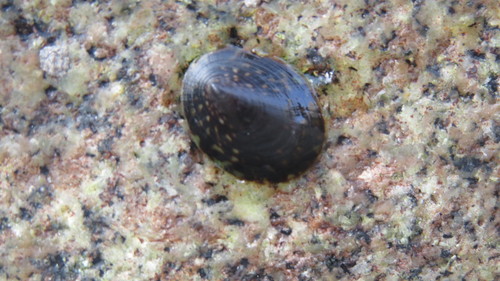
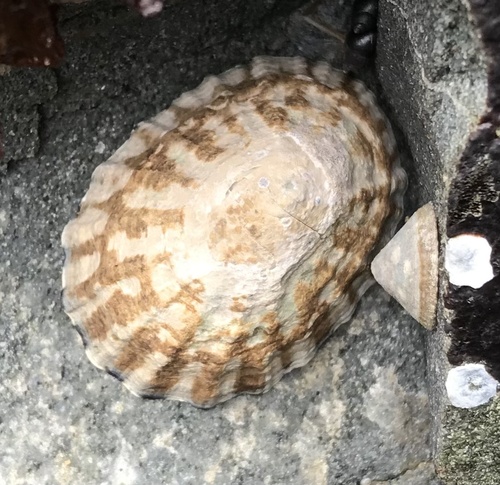
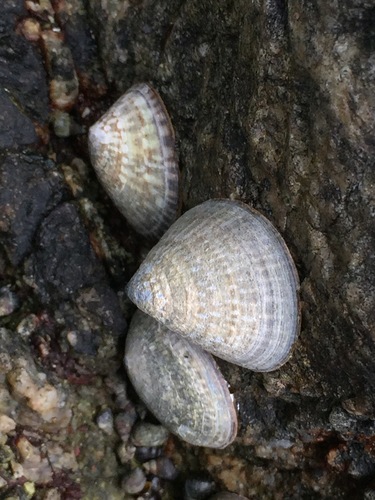
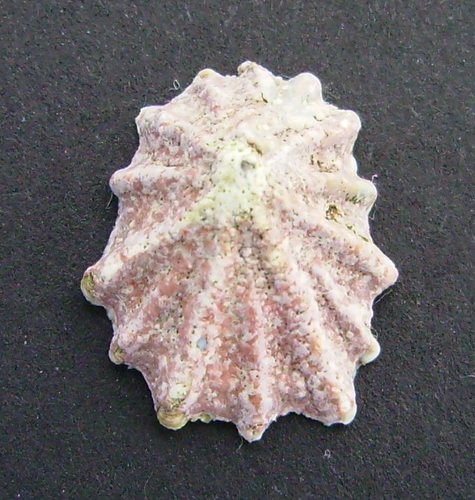
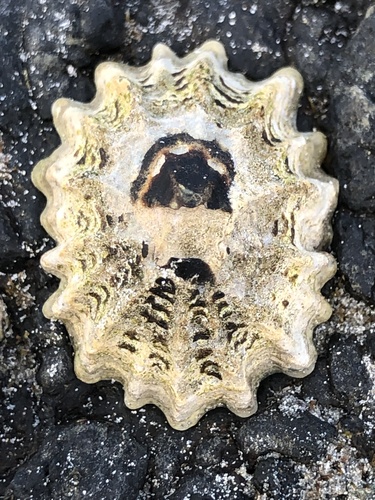
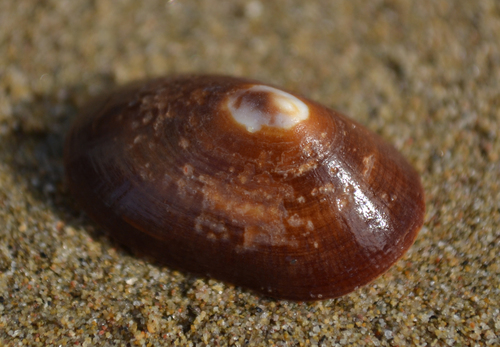
Lottia instabilis (A.Gould, 1846) has a shell specially adapted to adhere to kelp holdfasts and stipes via the shape of its rim. The sides of the shell's rim are elongated and nearly parallel, while both the anterior and posterior ends are raised. This shape means the species cannot lie flat and seal itself to a level surface, but can successfully seal to a curved surface. The shell is smooth with an even margin. It is most often predominantly brownish, and may be paler near the apex, which sits somewhat toward the anterior end of the shell. The interior of the shell is bluish-white, sometimes with a dark margin and a dark blotch near the apex. Individuals living in the northern part of this species' range tend to have solid shell colors and grow larger than individuals in the southern range; southern individuals usually have tesselated brown and gray patterns on their shells. Lottia instabilis is native to the northeastern Pacific Ocean, and can be found from Kodiak Island, off the coast of Alaska, to San Diego, California. It is most often found on the holdfasts and stipes of kelp, at depths from the intertidal zone down to around 73 m (240 ft). It also occurs on bare rock, and sometimes on the shells of gastropod mollusks, including shells that are currently occupied by hermit crabs. Lottia instabilis is a herbivore that feeds directly on kelps such as Saccharina dentigera and Pterygophora californica. As this species is such a specialized feeder, it can essentially be considered a parasite of its kelp host. Lottia instabilis belongs to a genus whose rock-associated members are widely distributed across the Pacific Ocean, and this species probably evolved in the Pacific alongside its kelp hosts. The purple seastar (Pisaster ochraceus) is a predator of this limpet, and the limpet flees when a purple seastar approaches.