About Loriculus vernalis (Sparrman, 1787)
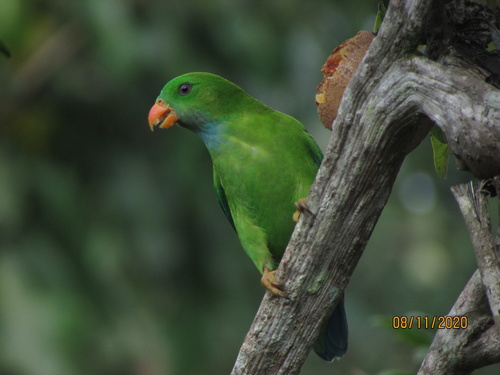
The vernal hanging parrot, scientifically named Loriculus vernalis (Sparrman, 1787), is a small parrot that is a resident breeder in the Indian subcontinent and parts of Southeast Asia. This species makes local movements that are driven primarily by the availability of the fruit, seeds, buds and blossoms that form its diet. It frequently visits banyan trees to feed on their fruit, and plantain trees to feed on nectar from their flowers. It is a small, predominantly green hanging parrot, measuring only 14 cm in length with a short tail. Adult males have a red rump, red bill, and a blue throat patch, while females have a green throat patch. Immature birds have a duller rump and lack a throat patch entirely. The vernal hanging parrot inhabits dry jungle and cultivated areas. It nests in tree holes, and lays 2 to 4 white eggs per clutch. It is less social than some of its relatives, and usually occurs in small groups outside of the breeding season. Its flight is swift and direct, and its call is a raucous chattering. In Sri Lanka, this species is replaced by the very similar endemic Sri Lanka hanging parrot, L. beryllinus.