About Lophosoria quadripinnata (J.F.Gmel.) C.Chr.
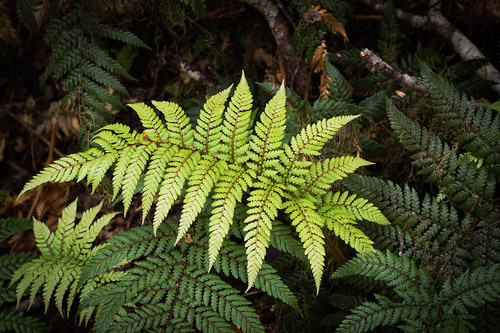
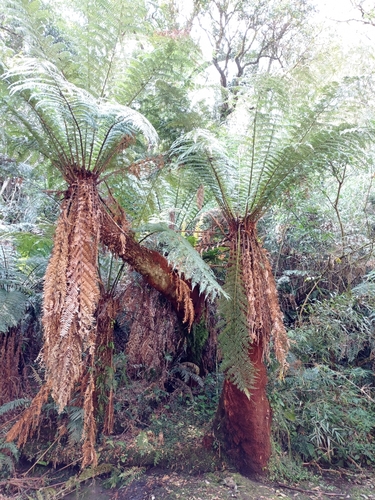
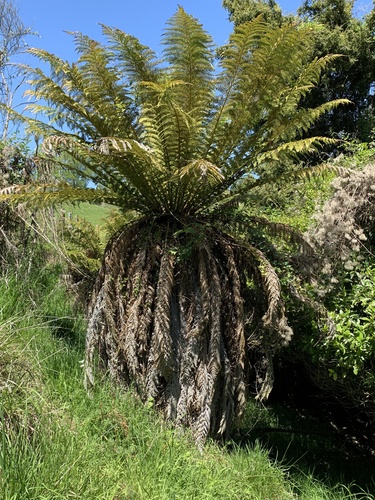
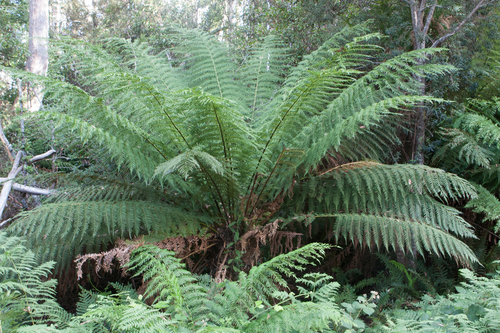
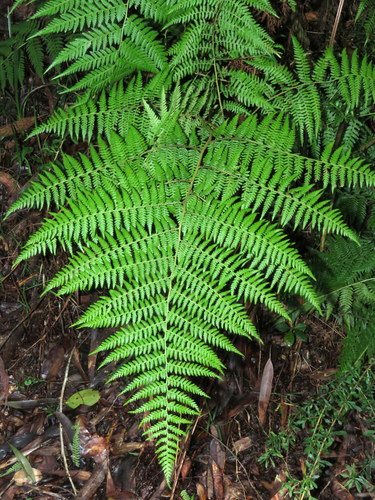
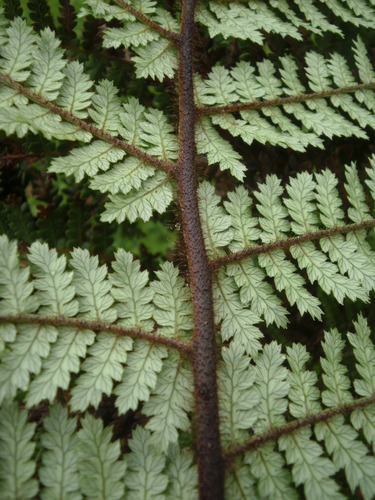
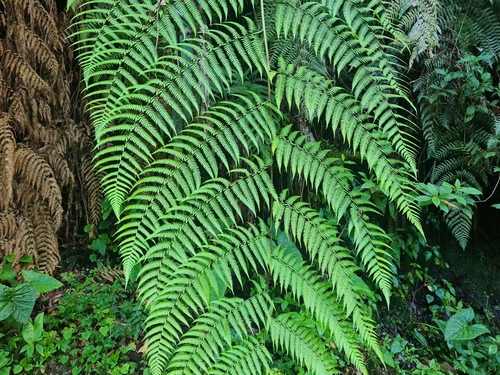
Lophosoria quadripinnata (J.F.Gmel.) C.Chr. is a vascular plant that has two alternating, multicellular, independent generations: the sporophyte and the gametophyte. It uses spores for dispersal and survival. Its gametophyte forms a thallus, which is made of undifferentiated tissue, while its sporophyte forms a corm with roots, shoots, and a vascular system. These traits place it in the pteridophyte group. Its sporophytes produce megaphylls, also called fronds, placing it in the Euphyllophytina subgroup. This species has a massive rhizome covered in hairs; it does not grow a trunk, so it is not arborescent. The rhizome has radial symmetry rather than growing horizontally, a trait thought to come from the ancestor of tree ferns. Its fronds are large, with 2 to 3 pinnations, and have hairs on the underside of the petioles, located high on the abaxial part of the structure. These are all common traits of the order Cyatheales, the tree fern clade. Like other members of the tree fern clade, this species has pneumathodes: discrete vent lines or patches found on the rachis, petiole, and rhizome, which facilitate gas exchange in dense tissue. Sori, which lack an indusium covering, sit on the abaxial (lower) surface, along the veins of the last pinnae. Unlike species in the Dicksoniaceae family, the leaf margin of Lophosoria quadripinnata does not form part of an indusium. Numerous filiform paraphysis hairs grow between the sporangia within the sori. The characteristics and position of these sori are unique to this species and can be used for identification. Like all members of Polypodiopsida, its sporangia are leptosporangiate: they have a foot, a capsule with a single-cell thick wall, and a dehiscent ring inside the capsule. As with all tree ferns, the ring is oblique and complete, not interrupted by the foot of the sporangium. Its spores have trilete marks. The spores of this species have a very unusual morphology, featuring a central belt called a cincture. For a long time, this trait led to the species being placed in its own separate family, Lophosoriaceae. Gametophyte germination matches the pattern seen in the Cyathea genus, producing short strands of 2 to 6 cells in both recognized varieties. Prothallus development follows the Adiantum type. When grown in laboratory conditions, gametophytes of the quadripinnata variety are always cordate. Gametophytes of the contracta variety develop three different morphs depending on the spore density they grow in, as documented by Dyer in 1979. At low spore density, they form long spatulates with a central meristem and one slightly more developed wing. At medium density, they are cordate. At high density, they are band-like and produce a large number of antheridia. The gametophyte is protandric: it is hermaphroditic, developing antheridia that produce antherozoids first, then developing archegonia that produce oospheres. The haploid chromosome count for this species is 65.