About Lophornis ornatus (Boddaert, 1783)
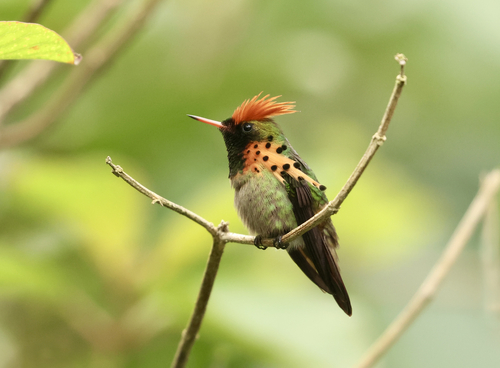
The tufted coquette, scientifically named Lophornis ornatus (Boddaert, 1783), measures 6.6 centimetres (2.6 in) long and weighs 2.3 grams (0.081 oz). It has a short, straight black-tipped red bill. The male of the species has a rufous head crest and a coppery green back with a prominent whitish rump band that is easily visible in flight. Its forehead and underparts are green, and black-spotted rufous plumes extend outward from the sides of its neck. The male’s tail is golden rufous. The female does not have the male’s crest and neck plumes. She has green upper (dorsal) body parts, except for a whitish band on the tail. Her under (ventral) body parts are rufous, turning much paler on the belly. Her tail is mostly bronze green, with a dusky band and whitish tips on the individual feathers. Immature males look similar to females, but have whitish throats marked with fine dark spots. The female tufted coquette lays two eggs in a small cup-shaped nest built from plant down, which is positioned on a branch. Tufted coquettes are described as tame and easy to approach. When feeding, this species produces a light chik call. The birds feed on nectar collected from a variety of flowers, as well as some small invertebrates. Their small size and steady flight mean they often look like a large bee as they move from flower to flower.