About Lophophorus impejanus (Latham, 1790)
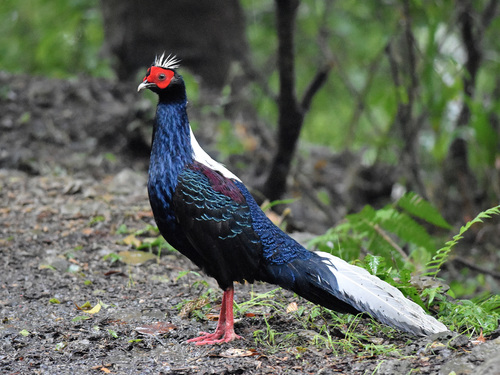
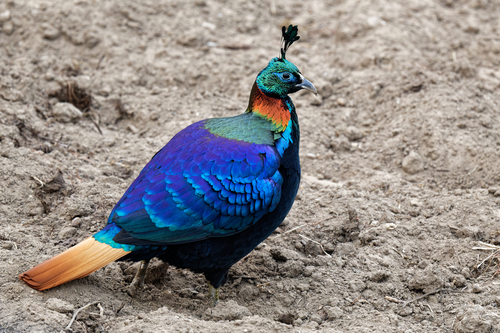
Lophophorus impejanus, also known as the Himalayan monal, is a relatively large landfowl. Adults measure 24–30 inches (61–76 cm) in length and weigh 3–5 pounds (1.4–2.3 kg). Adult males have fully multicolored plumage, while females have more subdued coloration, which matches the pattern seen in other landfowl. Distinctive features of males include a long, metallic green crest, coppery feathers on the back and neck, and a prominent white rump that is most visible during flight. Male tail feathers are uniformly rufous, darkening toward their tips. Females have white lower tail coverts that are barred with black and red, plus a prominent white throat patch and a white stripe along the tail. First-year males and juvenile birds resemble females: first-year males are larger than females, while juveniles have less distinct markings. The Himalayan monal is native to a range that stretches from Afghanistan and Pakistan through the Himalayas into Nepal, India, Bhutan, and southern Tibet. In Pakistan, it is most common in Khyber Pakhtunkhwa province, and has also been recorded in Kaghan, Palas Valley, and Azad Kashmir. In India, it has been recorded across the entire Indian Himalayan Region, from Jammu and Kashmir to Arunachal Pradesh. It inhabits upper temperate oak-conifer forests mixed with open grassy slopes, cliffs, and alpine meadows, at elevations between 2,400 and 4,500 m (7,900 and 14,800 ft); it is most common between 2,700 and 3,700 m (8,900 and 12,100 ft). In winter, it descends to elevations as low as 2,000 m (6,600 ft). It tolerates snowy conditions and digs through snow to access plant roots and invertebrate prey. Its diet consists mainly of tubers, nuts, tender leaves, shoots, insects, and other invertebrates. Plant matter makes up the large majority of its diet, while invertebrate matter is only present in low percentages.