About Lophopanopeus bellus (Stimpson, 1860)
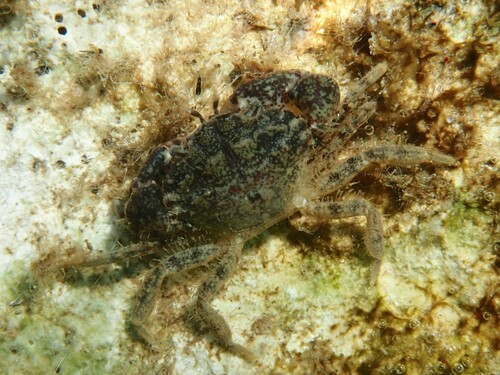
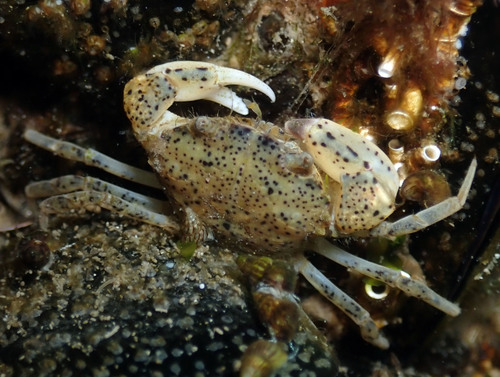
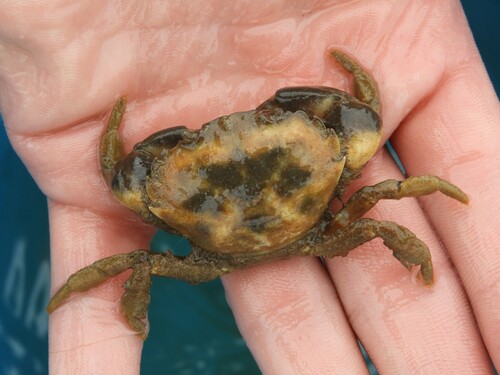
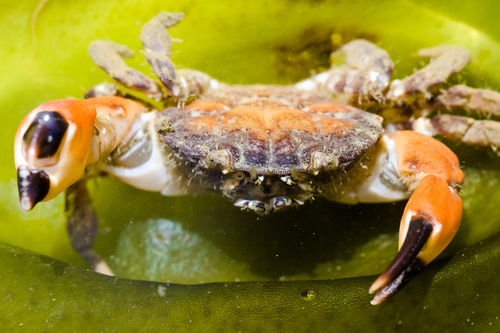
Lophopanopeus bellus is a small crab with a maximum carapace width of 5 cm (2 in). Its carapace is more rounded than that of some related species, and its upper surface is covered with low, rounded projections called tubercles. More prominent tubercles occur on the fifth, sixth, and seventh segments of the chelipeds. Its legs are covered in setae (bristles), and it has black claws. The color of this crab is highly variable, with recorded colors including off-white, various combinations of bluish-black and red, dull dark red, and nearly black. The underside is usually whitish. This species can be confused with Glebocarcinus oregonensis, which is similar in size, but G. oregonensis has spiny ridges on its chelae instead of tubercles. Lophopanopeus bellus occurs along the Pacific coast of North America. Two subspecies are currently recognized: L. b. bellus ranges from Resurrection Bay, Alaska south to Cayucos, California, while L. b. diegensis ranges from Monterey Bay south to San Diego, California. In the Puget Sound area, breeding starts in April. The female carries eggs on the underside of her abdomen to protect them, and eggs begin hatching in May. Many females carry a second brood that hatches in August. After hatching, the zoea larvae become free-living and join the plankton community. Many individual Lophopanopeus bellus are parasitized by the barnacle Loxothylacus panopaei.