About Lophonetta specularioides (P.P.King, 1828)
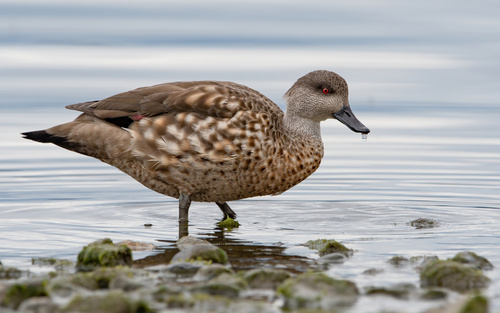
The crested duck, Lophonetta specularioides (P.P.King, 1828), is a medium-sized waterfowl species. Adult males reach just over one kilogram in weight. Males and females have similar plumage, but males have a slightly more prominent crest than females. Feathers on the mantle, back, and scapulars are dark brown with pale centers, which creates a mottled overall appearance. The abdomen, flanks, and tail coverts are light gray, while the tail itself is distinctly elongated and black. The upperwing ranges from gray brown to light brown; its secondaries have an iridescent sheen that goes from coppery to greenish, with a broad dark band behind this sheen that is narrowly edged with white. Juvenile crested ducks look similar to adults, but they do not have crests, have light brown faces, and paler abdomens than mature adults. This species is endemic to South America, with two recognized subspecies that occupy different elevation ranges in the Andes. The subspecies Lophonetta s. alticola occurs between 2,500 and 4,800 metres (8,200–15,700 ft), ranging from Peru to central Chile. The nominate subspecies Lophonetta s. specularioides occurs below 1,500 metres (4,900 ft) in the southern Andes near Patagonia and the Falkland Islands. The two subspecies co-occur in a zone of intermediate elevational habitats in Mendoza, Argentina and Talca, Chile. Crested ducks can be found in lakes, marshes, and grassy areas, ranging from shallow coastal bays to high elevation lakes. In the Altiplano, they gather in turbid, alkaline lakes that hold large concentrations of zooplankton. Along the coast, they reside in sheltered bays and on beaches, where they forage for clams and other marine amphipods among rocks and kelp beds.