About Lophogobius cyprinoides (Pallas, 1770)
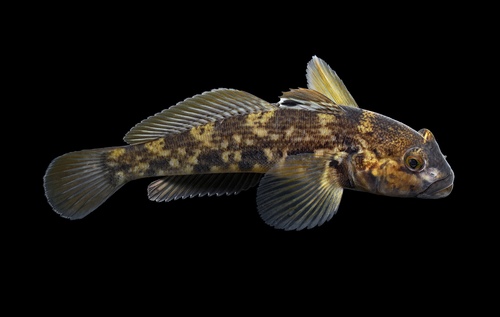
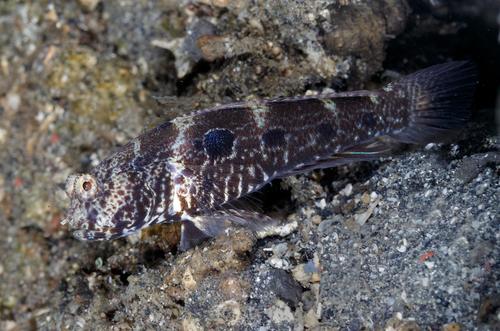
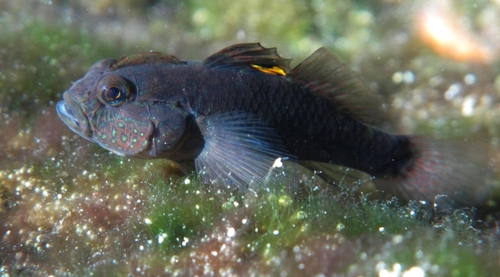
Lophogobius cyprinoides (Pallas, 1770), commonly called the crested goby, is a small, stout fish that reaches a maximum length of 10 cm (3.9 in). Its body is compressed, and a crest extends backward from the middle of its eyes. It has six dorsal spines, with the fourth spine being the longest, and 16 to 20 pectoral fin rays that extend past the start of the anal fin in adult individuals. The crested goby has a wide, round tail. Both sexes have reddish-brown to olive mottling across their heads and bodies, but this mottling is more extensive and darker in males. Females have pale spots covering their cheeks, along with several pale lines behind the eye. Males have black and orange spots on their first dorsal fin, which turn black and violet during the breeding season.
This is a widespread species found throughout the western Atlantic Ocean. Its range extends from South Florida and Bermuda, through the entire Caribbean, and along the coasts of Central America and northern South America.
Adult crested gobies can live in either fresh or saltwater. They inhabit tidal creeks, estuaries, mangroves, and other coastal waters with salinity ranging from 0.0 to 39.3 ppt. Crested gobies favor mangrove habitats because they use the extensive underwater mangrove roots for shelter and hiding.
Nearly all crested gobies are born female, and some individuals change sex to become male over the course of their lives. Only a small number of crested gobies are born male, and these individuals remain male for their entire lives. Crested gobies lay their eggs in rocky areas on the seabed, where the eggs are secured and cannot be swept away by strong currents. Although crested gobies produce a relatively small number of eggs, they can breed at any time throughout the year.