About Lophocebus albigena ugandae (Matschie, 1912)
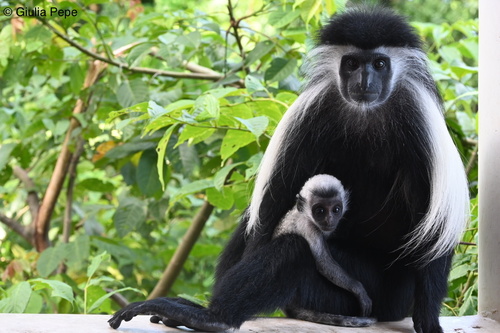
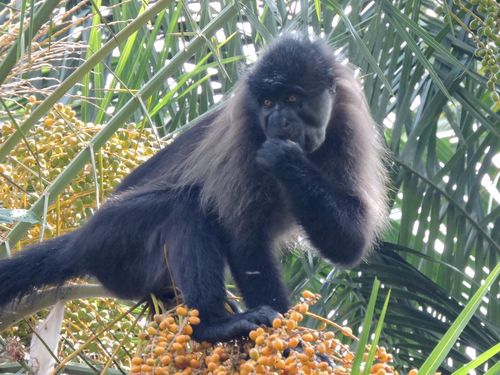
The grey-cheeked mangabey, scientific name Lophocebus albigena, is also called the white-cheeked mangabey. It is an Old World monkey that lives in the forests of Central Africa, with a range that extends from Cameroon down to Gabon. This species is a dark monkey, with an overall shape that resembles a small, hairy baboon. It has thick brown fur that appears almost black in its forest habitat, and it has a slightly rufus or golden mane around the neck. Males and females look similar, with males only slightly larger than females. Grey-cheeked mangabeys live in multiple types of habitats across Central African forests. Most are thought to live in either swamp or primary forests, though the species has also been found in secondary forest in some areas. In the past, some authors considered this species to be restricted to the forest canopy. However, more recently, habituated troops have been observed collecting food on the forest floor. The grey-cheeked mangabey feeds primarily on fruit, especially figs. It also eats other seasonal fruits, as well as shoots, flowers, and insects. Groups of grey-cheeked mangabeys range in size from 5 to 30 individuals. Groups may have a single male, but they more usually have several males, with no single dominant male. When young males reach adulthood, they leave their birth troop to join other troops. Females stay in their birth troop for life. If a troop grows too large, it may split. Confrontations between different troops are rare, because these mangabeys usually avoid other troops. A troop’s territory covers several square miles of forest, can overlap with the territories of other troops, and shifts over time. Previously, three subspecies of this mangabey were recognized. In 2007, Colin Groves elevated all three to full species status, and split one of the original subspecies (johnstoni) into two separate species.