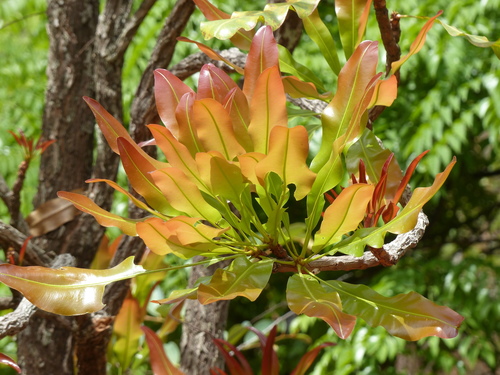
About Lophira lanceolata Tiegh. ex Keay
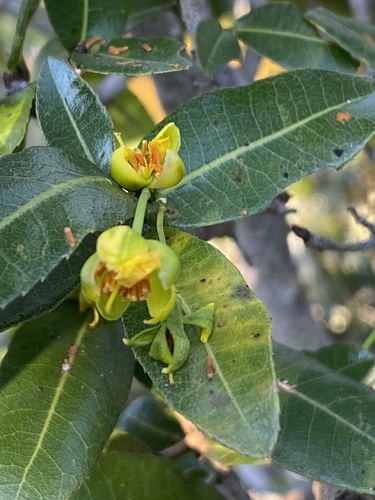
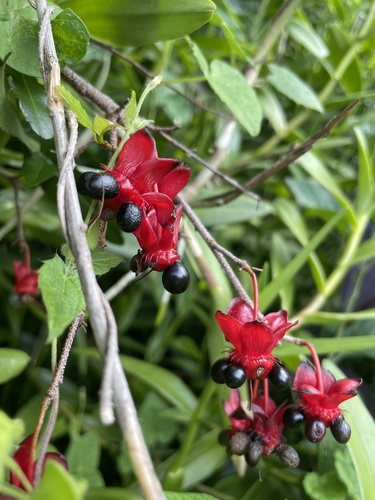
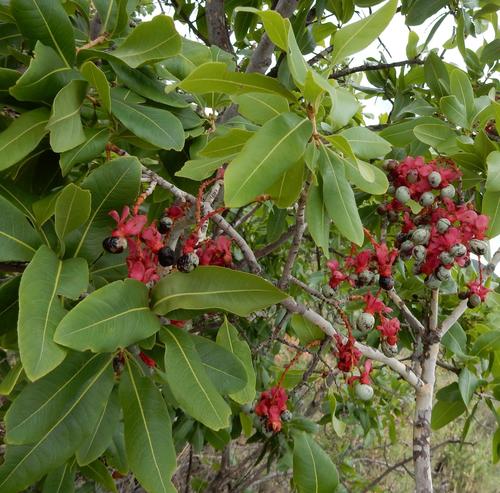
Lophira lanceolata Tiegh. ex Keay is a small deciduous tree that grows to 16 meters (52 feet) or more in height. It has a narrow crown with steeply ascending branches, and produces suckers very easily. Its trunk is typically unbranched up to around 8 meters (26 feet) from the ground, and can reach a diameter of approximately 70 centimeters (28 inches). The bark is grey, corky, and sheds in coarse flakes. Leaves grow in clusters at the ends of twigs; they are alternate, simple, entire, and narrowly oblong, with rounded or notched apexes. New growth foliage is pink or red when it first emerges. Inflorescences form as loose panicles at the end of shoots. Individual flowers are bisexual, scented, and white, with all floral parts arranged in groups of five. After flowering, the tree produces a partially woody, conical achene surrounded by a winged calyx, which holds one single large seed. This species is very similar to its close relative Lophira alata, but it is smaller overall, has narrower leaves with longer stalks, and produces larger seeds. Lophira lanceolata occurs in tropical West and Central Africa, with a native range extending from Senegal east to Sudan, Uganda, and the Democratic Republic of the Congo. It grows at altitudes up to around 1,500 meters (5,000 feet) in wooded savanna, particularly along the edges of larger forested areas where it can grow densely. Established mature trees are tolerant of wildfires, but young saplings are likely to be damaged by fire. The dense timber of Lophira lanceolata is used for bridge building, other heavy construction projects, and tool-making. It burns well as firewood, and can also be processed to make charcoal. The fragrant flowers are attractive to honey bees. The seeds are edible, but are mostly used to extract a vegetable oil called "meni oil", which is used in manufacturing food products, soap, and cosmetics. Foliage from the tree is used as livestock fodder, and in Cameroon, edible caterpillars are cultivated on its leaves. The seed oil, leaves, sap, bark, and roots all have multiple uses in traditional medicine.