About Lopha cristagalli (Linnaeus, 1758)
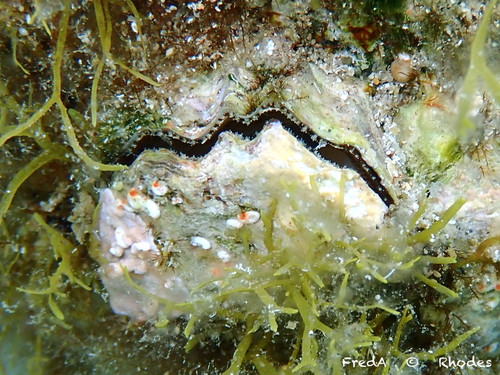
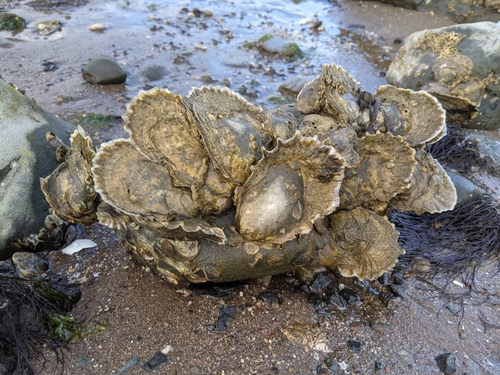
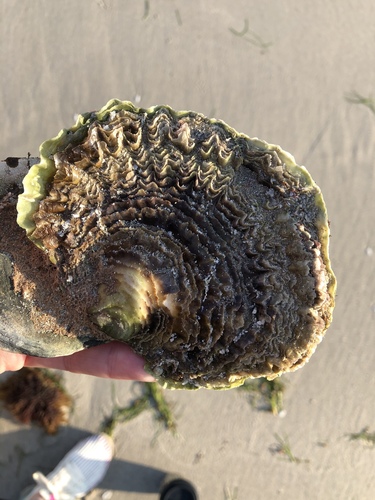
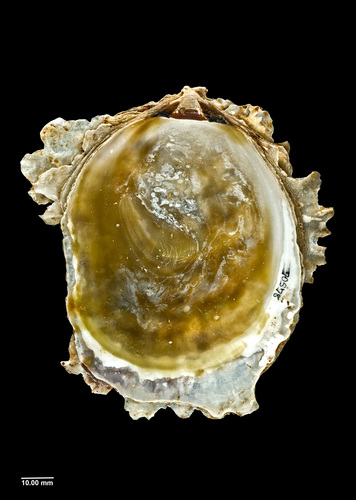
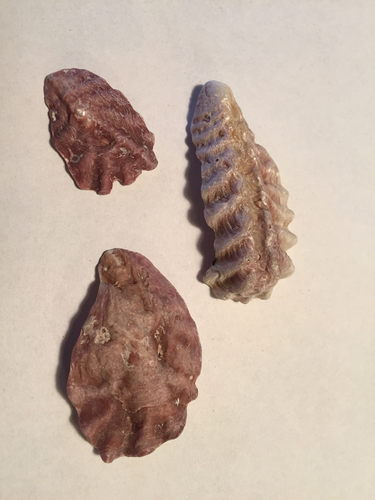
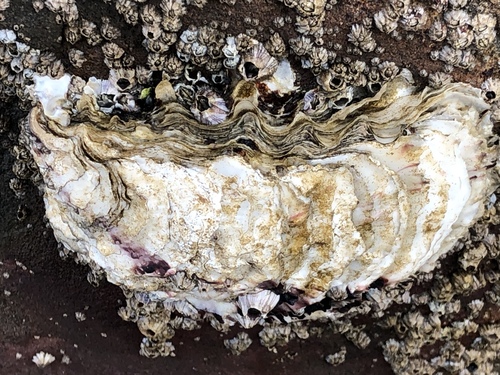
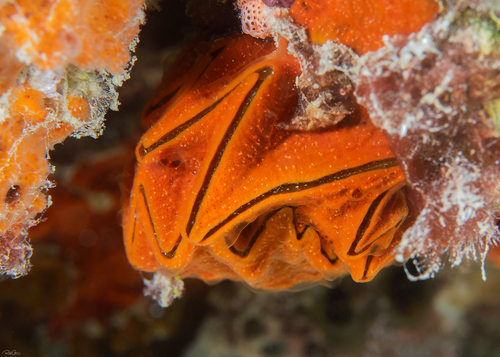
Lopha cristagalli, commonly called the cockscomb oyster, has a shell that reaches a maximum diameter of about 20.5 cm, and a more common diameter of 10 cm. Shell coloration is variable, ranging from dark to light purple. The shell itself is thick, strongly ribbed, and slightly inequivalve. The interior of the shell has a porcelaneous texture, and is usually colored purplish-brown or whitish. The margins of the shell valves have a characteristic zig-zag pattern. Both valve surfaces are covered in many small, low, rounded protuberances. Cockscomb oysters are stationary epifaunal suspension feeders; they feed by filtering seawater to extract nutrients. This species is widespread across the Indo-West Pacific. Its range extends from East Africa, including Madagascar, Mauritius, the Red Sea, Seychelles, and the Persian Gulf, east to Micronesia, north to Japan, and south to Papua New Guinea and Indonesia. It inhabits coral reefs in shallow subtidal waters, at depths between 5 and 30 meters.