About Lonicera periclymenum L.
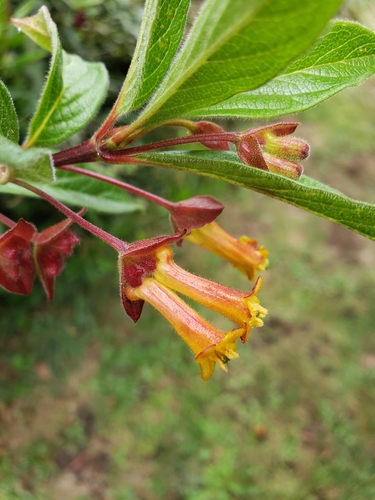
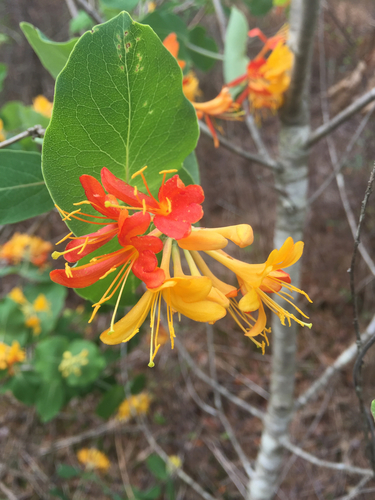
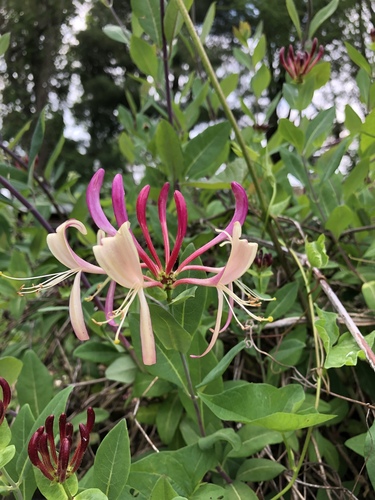
Lonicera periclymenum L. is a vigorous deciduous twining climber that grows to 7 m (23 ft) or more in height, and occasionally retains its old leaves through winter. It is the only native honeysuckle species in the UK, where it is most often found growing in woodland, scrubland, and hedgerows. Its flowers are tubular and two-lipped, creamy white or yellowish in color, and may be flushed with pink or red on the outside and when in bud. The flowers grow in showy clusters at the ends of shoots, and are highly scented at night, with a much weaker scent during the day.
In ecological terms, Lonicera periclymenum is usually pollinated by moths or long-tongued bees, and produces bright red berries after flowering. Dormice build summer nests for their young using honeysuckle bark, and also eat the flowers, which provide a good source of energy-rich nectar. Night-flying moth species such as the hummingbird hawk-moth can detect the scent of honeysuckle flowers from as far as a quarter of a mile away. In autumn, birds including thrushes, bullfinches, and warblers eat the clusters of red berries.
In cultivation, Lonicera periclymenum is one of several honeysuckle species valued for garden use. It is appreciated for its ability to twine around other plants, or cover unsightly walls or outbuildings, as well as for the intense fragrance of its profuse summer flowers. It requires planting with its roots in shade, and its flowering growth in sun or light shade. Care should be taken when selecting plants for a garden, as they can grow to a substantial size. The cultivars 'Graham Thomas' and 'Serotina' have been awarded the Royal Horticultural Society's Award of Garden Merit.