About Lomatia ferruginea (Cav.) R.Br.
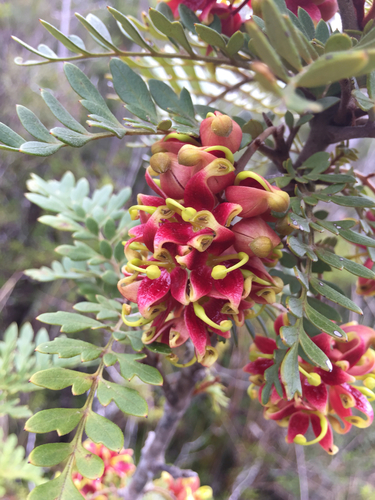
Lomatia ferruginea grows up to 6 metres (20 ft) tall. It is an evergreen species that develops few branches, and its new shoots are covered in reddish-brown hairs. Its leaves are composite, bipinnate, fern-like, opposite, and petiolate; they measure 13–14 cm long and 8–10 cm wide, are green on the upper surface and reddish-brown on the lower surface.
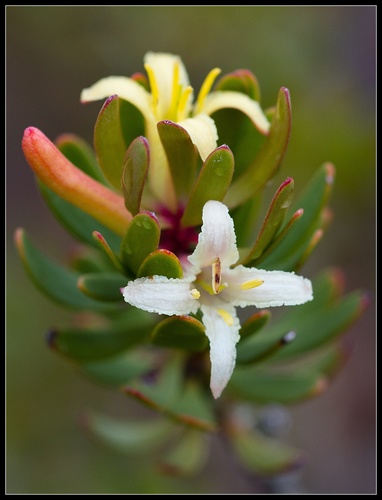
The flowers are hermaphrodite and pedicellate, and reach 2 cm long. They grow in racemes that are shorter than the leaves, with each raceme holding 14 to 16 opposite flowers. Flower buds are grayish-yellow. Each flower is formed of 4 tepals, which are oval-lanceolate and bicolored: reddish brown with a green apex. The tepals narrow before widening again at their 1.5 cm long concave apex. Sessile anthers sit at the concave apex of the petals, and flowers have a long style with a large, bulky, oblique red stigma.
The fruit is a dark brown woody follicle that measures 3.5–4.0 cm wide and 1 cm long. It is formed of two valves, borne on a thin pedicel, with the peduncle oriented downward and the style extending upward from the top of the fruit. It holds many imbricate seeds that are winged and truncated at the tip, measuring 1.5 cm wide and 0.5 mm thick.
The wood of Lomatia ferruginea is valued for its grain, and is widely used in carpentry. It is highly valued as an ornamental tree in Chile. It has been planted in Scotland and the Faroe Islands, where it regularly self-seeds.