About Lomaria nuda (Labill.) Willd.
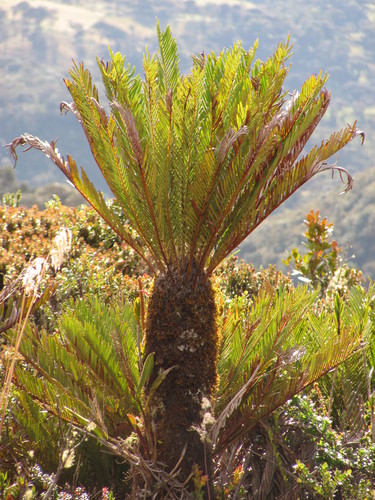
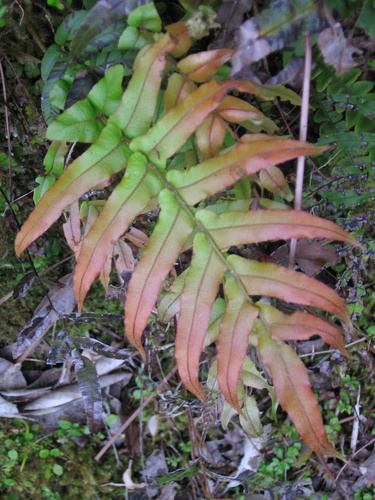
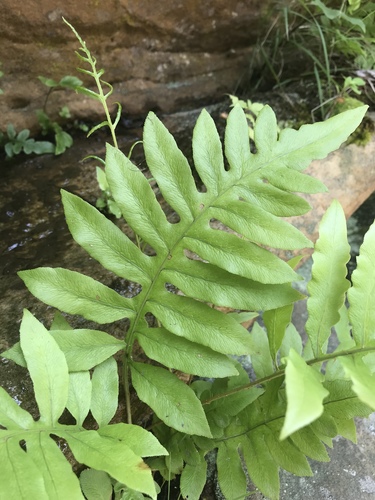
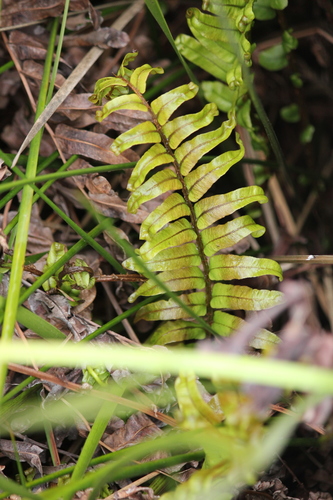
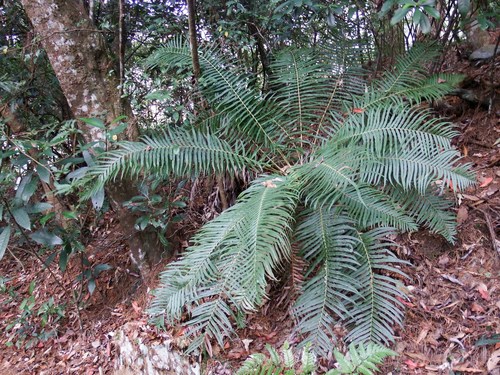
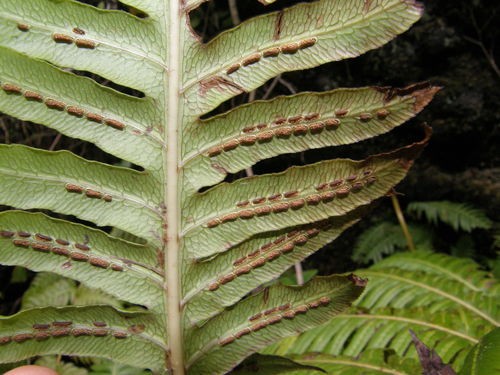
Lomaria nuda, commonly called the fishbone waterfern, is a fern that grows up to one meter tall. It is abundant in rainforests and eucalyptus forests in eastern Australia. In the Pteridophyte Phylogeny Group 2016 (PPG I) classification, the species is placed in the genus Lomaria, but it is often still classified as Blechnum nudum within the genus Blechnum. The fishbone waterfern grows in all Australian states except Western Australia, and it grows abundantly in most habitats that suit it. It can grow across a range of wet forest types. Like many ferns, it thrives in areas with higher water availability, so it grows in moist, poorly drained sites. Shade is an essential factor for this species because of its need for water. Poorly drained soils are particularly important during periods of lower rainfall, as they retain water in the soil for the plant to use even when rainfall is low. However, the fishbone waterfern will grow in full sun if sufficient water is available. It is often found growing in roadside ditches, where there is plenty of sun but water pools after running off roads. Creek beds are a similar natural habitat with consistently high water availability even during low rainfall. Two particularly suitable habitats are rainforest and wet eucalyptus forest. Both of these forest types generally have high rainfall and a large amount of canopy cover that provides shade. Fertile soils allow the waterfern to propagate and grow abundantly in both wet eucalyptus forests and rainforests. The fishbone waterfern has a life cycle that is typical of most ferns. A feature of the Blechnaceae family that distinguishes it from other ferns is its distinct fertile and sterile fronds. Many ferns produce sporangia on the lower surface of any frond, meaning any frond can become fertile, but Blechnaceae species have separate fronds dedicated to spore production. Aside from this difference, the fishbone waterfern has a typical sexual reproductive process matching most ferns. The fishbone waterfern also uses vegetative growth to increase its number and size. It grows through an underground rhizome stem that spreads underground. Fronds emerge from beneath the ground via the stipe. Over time, a single plant may spread its underground stems across a large distance. This asexual reproduction is common among ferns. The fishbone waterfern is commonly sold in nurseries as an ornamental plant. Its combination of hardiness and aesthetic appeal makes it popular with gardeners.