About Lolium rigidum Gaudin
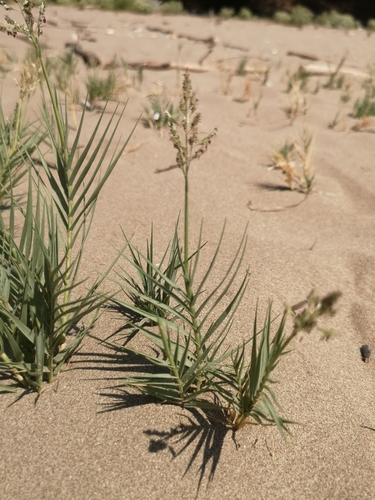
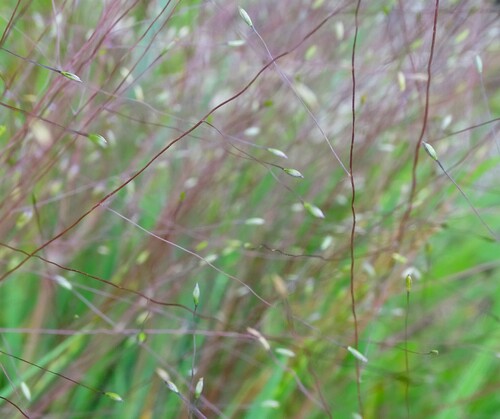
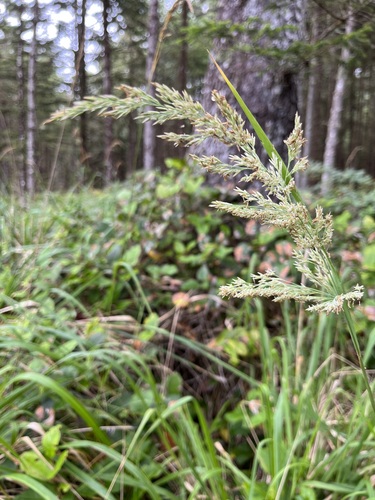
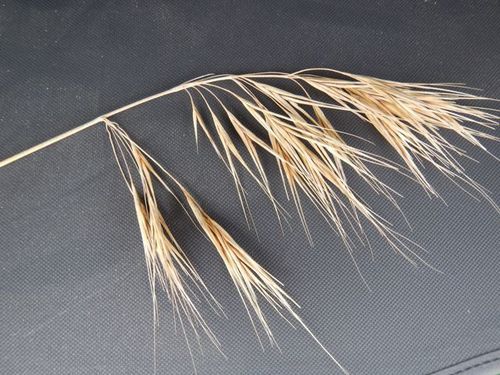
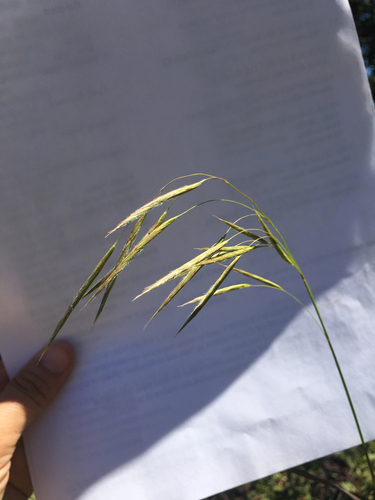
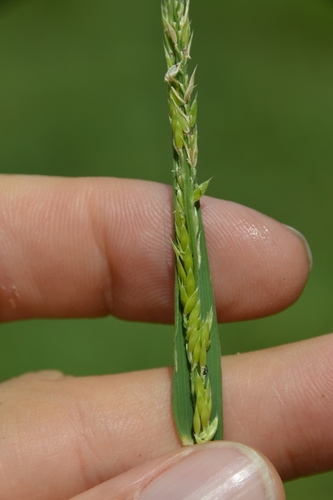
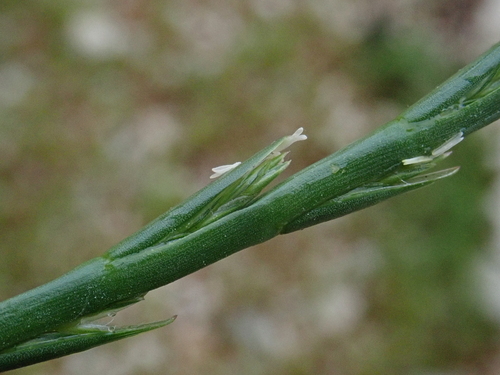
Lolium rigidum Gaudin is an annual grass that grows in open tussocks. It has fibrous roots and can reach up to one metre in height. Its growth habit is usually erect, but it may sometimes grow prostrate. Its stems are often geniculate, meaning they have a knee-like bend, and are purplish at the base. Its leaves are 5 to 25 cm (2 to 10 in) long and 3 to 5 mm (0.12 to 0.20 in) wide. The upper leaf surface is glossy dark green, flat, hairless, and marked with longitudinal veins, while the underside is shiny and smooth. Young leaves are rolled in bud, the auricles are small, and the ligule is white and translucent, and wider than it is long. The unbranched flower spike grows up to 30 cm (12 in) long, with spikelets arranged on alternating sides, positioned edgeways-on to the rachis (central stem) and pressed into recesses in the stem. Each spikelet holds up to twelve florets; most florets have a single glume, and only the terminal floret has two glumes. The glumes are up to three-quarters the length of the spikelet, and their outer surface is finely ribbed with longitudinal veins. There is no awn; the lemma is oblong with five nerves, the palea has a similar shape with two nerves and a few fine hairs. The three anthers are yellow. Lolium rigidum is native to the Mediterranean region. Its natural range covers Western, Southern and Central Europe, northern Africa, the Near East, western Asia, and the Indian sub-continent. It has spread to many other parts of the world and is considered invasive in some regions. It is planted as a forage crop in Australia, but this is not common in Europe. It was introduced to Australia as a forage crop around 1880, but has since become an economically damaging weed that infests more commercially important crops such as canola and wheat. Lolium rigidum is a diploid grass with a chromosome number of n=7 (2n=14). It shows high genetic variability and grows readily in a wide range of situations and habitats. It can hybridise with perennial ryegrass (L. perenne), Italian ryegrass (L. multiflorum), and some species of Festuca. It reproduces solely by seed, and freshly shed seed has dormancy. It is sometimes infected by a rust fungus that inhibits the growth of clovers. The flower spikes of L. rigidum can become infected by the bacterium Rathayibacter toxicus, which is carried into the grass by the nematode Anguina funesta. This nematode forms galls on the grass flower spikes, and the bacteria multiply inside these galls. The bacterial infection causes production of corynetoxins, which are toxic to livestock. Ingestion of infected plant material causes a disease called annual ryegrass toxicity, also known as annual ryegrass staggers. This disease has been recorded in western and southern Australia and in South Africa. Infected galls are present in winter, and become more toxic as the inflorescence dies back in spring. The disease develops when pasture is grazed during this toxic stage. Topping pasture before grazing may prevent the condition, but seed heads remain toxic even when preserved as hay. Poisoning causes neurological symptoms, and often results in a mortality rate of 40 to 50 percent in infected animals. L. rigidum is also susceptible to infection by ergot (Claviceps purpurea) and take-all fungus (Gaeumannomyces graminis); the latter can cause serious losses in cereal crops. Lolium rigidum is grown as a forage crop in suitable areas. Around 80% of its seed germinates in autumn, shortly after the first significant rains, and around 5% of seed may remain dormant for twelve months. The plant has vigorous growth, and flowering is initiated when day length is at least eight hours. This gives the crop a relatively uniform flowering period in late winter to early spring.