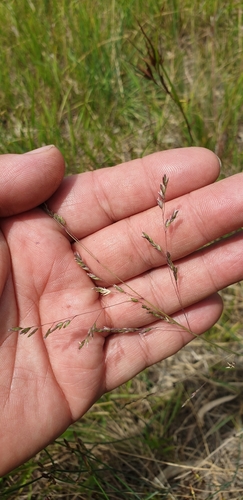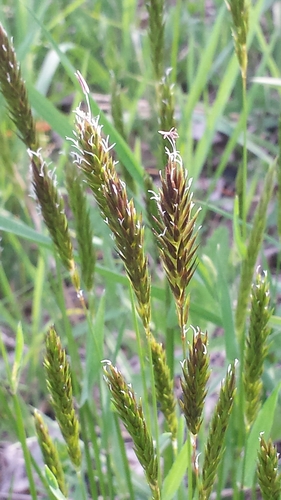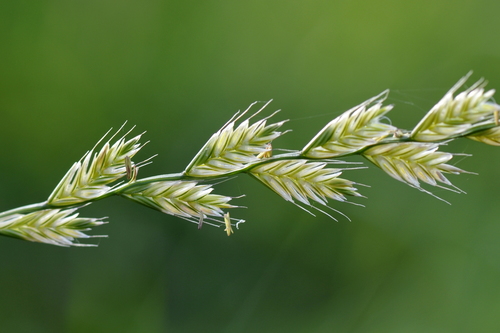
About Lolium multiflorum Lam.
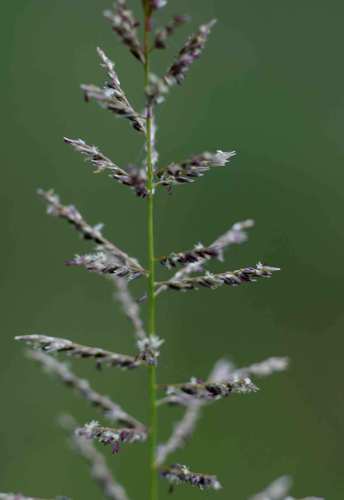
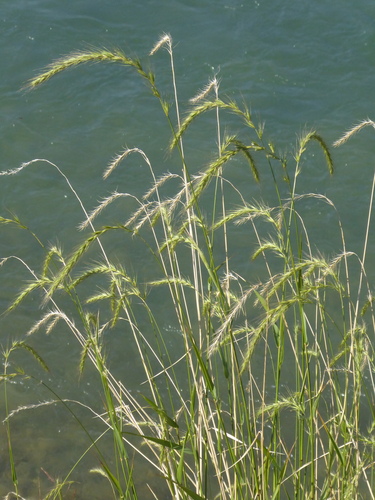
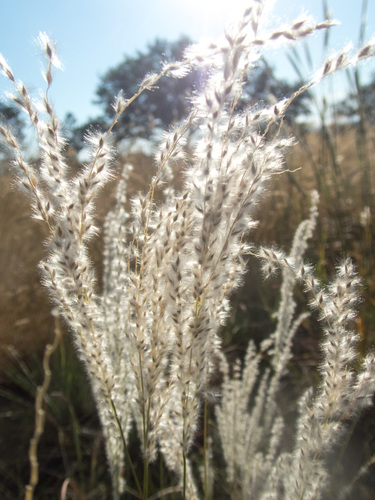
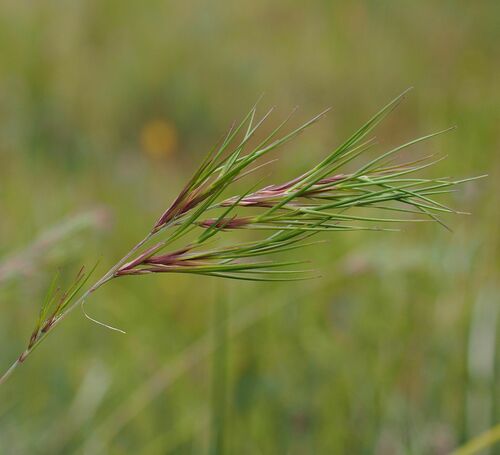
Lolium multiflorum Lam., commonly known as Italian rye-grass, annual ryegrass, Australian ryegrass, short rotation ryegrass, or Westerwolds ryegrass, is also counted among several species referred to as darnel. It is a ryegrass native to temperate Europe, though its exact native range is not confirmed. Its growth habit can be annual, biennial, or perennial herbaceous grass, depending on environmental conditions. This species is cultivated for silage, as a cover crop, and also as an ornamental grass. It naturalizes easily in temperate climates, and can become a noxious weed in agricultural arable areas, as well as an invasive species in native habitats. Multiple herbicide resistance, including resistance to herbicides in the EPSPS and ACcase groups, has been found in wild populations of L. multiflorum. In its native European range, it acts as a host plant for wheat yellow leaf virus and ryegrass mosaic virus. It is sometimes classified as a subspecies of perennial ryegrass (Lolium perenne). It differs from L. perenne in its spikelet, which has a long bristle at the tip, and its stem, which is round rather than folded. It can be confused with couch grass (Elymus repens), which has spikelets arranged along the broad side of the stem instead of the edge. For agricultural use, Lolium multiflorum is widely grown to produce high forage yields in short-term leys, where long-term crop persistence is not a priority. In the United States, it is sometimes planted as a winter cover crop to prevent erosion, improve soil structure, and suppress weeds. As a palatable forage crop, it can be grazed by livestock, and provides feed in years when alfalfa is lost to winter kill.