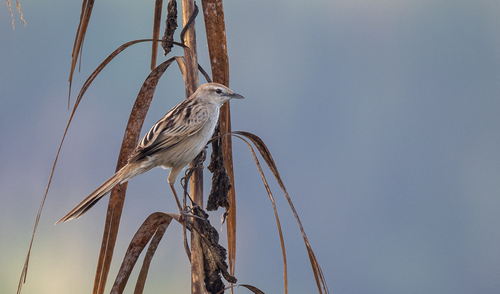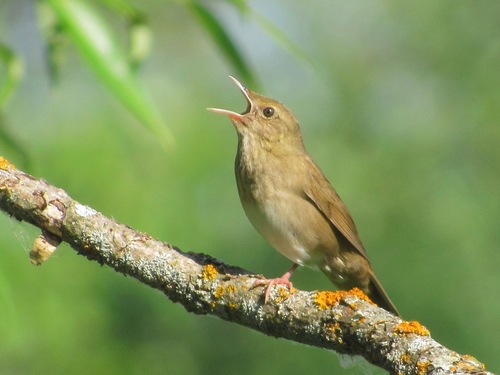
About Locustella fluviatilis (Wolf, 1810)
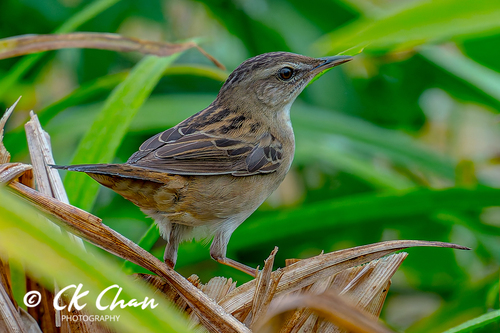
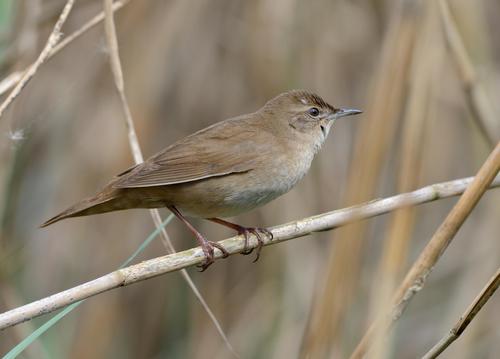
This is a largish species of warbler. Adult individuals have an unstreaked grey-brown back, whitish grey underparts, and a darker undertail with white feather tips that create a contrasting pattern. As with most warblers, the males and females look identical, while young birds have yellower underparts. Some individuals show reduced dark markings on their undertail coverts, which occurs when their white feather tips are more extensive than usual. This makes these birds closer in appearance to Savi's warbler than typical river warblers, though they almost always still have a streaked breast and more olive-toned colouration on their upperparts. This is a skulking species that is very difficult to observe, other than occasionally when it is singing. It creeps through grass and low foliage. Its song is a monotonous, mechanical, insect-like reeling that is often produced at dusk. While the song is similar to the songs of other species in this group, it has a stronger sewing machine-like quality, and may be produced for long stretches of time. This small passerine bird occurs in dense deciduous vegetation located close to water, in bogs or near rivers. It lays five to seven eggs in a nest built in a grass tussock or directly on the ground. This species is a rare vagrant to western Europe. In Britain, a small number of males have established territories during spring, including one individual recorded in Greater Manchester in 1995. One exceptional vagrant of this species was photographed in Gambell, Alaska, in October 2017. Like most warblers, Locustella fluviatilis is insectivorous.