About Lobivia obrepanda (Salm-Dyck) Schlumpb.
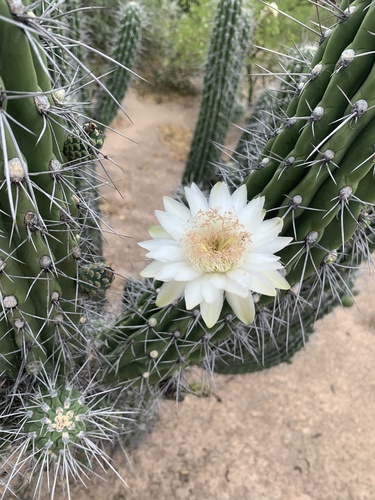
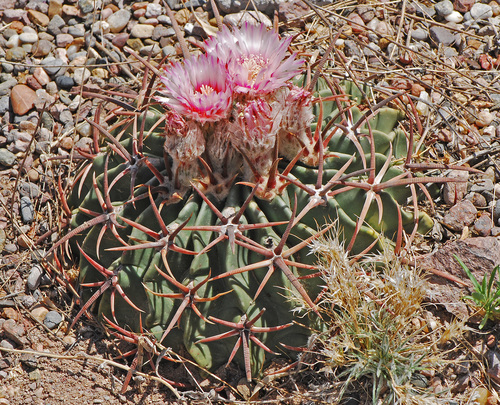
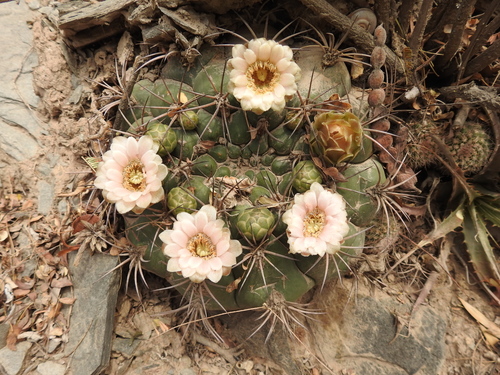
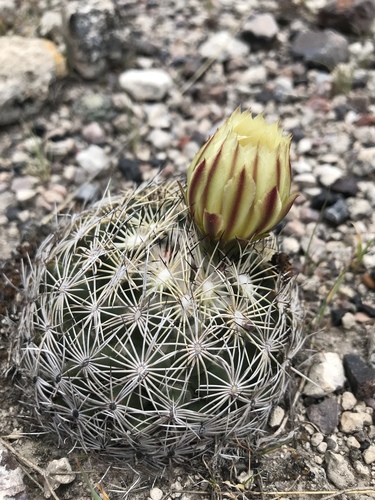
This cactus species is also classified scientifically as Echinopsis obrepanda. It usually grows alone, and occasionally forms small groups as it ages. The depressed spherical shoots are dark or gray-green, and can grow up to 20 centimeters in diameter. The shoots have 13 to 18 sharp-edged ribs, which are divided into hatchet-shaped cusps. Gray areoles sit in the notches between cusps, and are spaced approximately 2 centimeters apart. Slightly curved thorns, ranging in color from white to brownish, grow from these areoles. The species has one to three central spines (which can occasionally be absent), that are curved at the tip and 2 to 5 centimeters long. It also has six to 13 marginal spines, which are most often arranged in a comb shape, and grow up to 1 centimeter long. The funnel-shaped flowers carry a parsley scent, range in color from white to magenta-red, open at night, and are 10 to 20 centimeters long. The flower tube is slightly curved. Outer floral bracts are spread out, while inner bracts curve upwards. The spherical fruits are semi-dry. Echinopsis obrepanda is distributed across the Bolivian departments of Santa Cruz, Cochabamba and Chuquisaca, occurring at low to high altitudes.