About Lobelia erinus L.
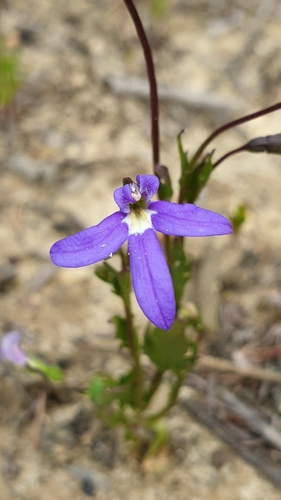
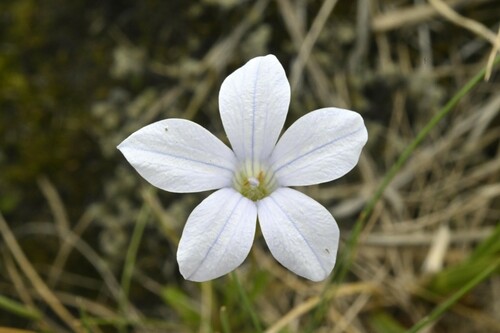
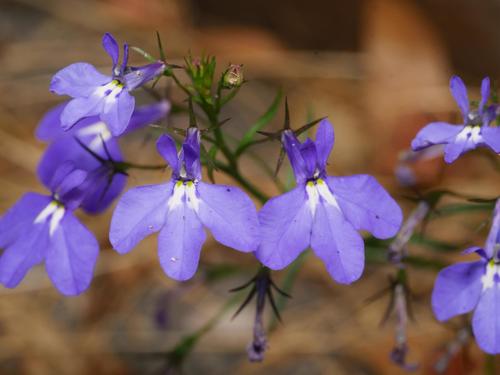
Lobelia erinus L. is a low-growing, prostrate or scrambling herbaceous perennial that reaches 8–15 cm in height. Its basal leaves are oval, 10 mm long and 4–8 mm broad, with toothed margins; leaves positioned higher on the stems are slender and sometimes untoothed. In wild plants, flowers are blue to violet, with a five-lobed corolla 8–20 mm across, produced in loose panicles. Inflorescence stems are 0.5 to 4.5 inches (around 5 inches) long, holding loose, many-flowered racemose inflorescences. The hermaphrodite flowers are zygomorphic, up to 1 centimeter long, pentamerous with a double perianth. The five sepals are fused, the fan-shaped lower lip of the corolla is trilobed, and corolla color varies by cultivar between white, blue, purple, pink, or red, with a yellow or white center. The five stamens are 3 to 7 millimeters long. The fruit is a 5–8 mm capsule that holds numerous small seeds. The native distribution of Lobelia erinus is in southern Africa, ranging from Malawi, Mozambique, Zambia, and Zimbabwe southward to Botswana, Namibia, Eswatini, Lesotho, and the provinces of South Africa. It also occurs as a weed in areas where it has escaped from cultivation. Lobelia erinus is a very popular edging plant for gardens, and is especially common in hanging baskets and window boxes. In temperate zones, it is grown as a half-hardy annual: seeds are sown under glass with heat in spring, then planted outdoors once all risk of frost has passed. Gardeners may also purchase young 'plug' plants from garden centers to transplant outside in May or June.