About Lobaria anomala (Brodo & Ahti) T.Sprib. & McCune
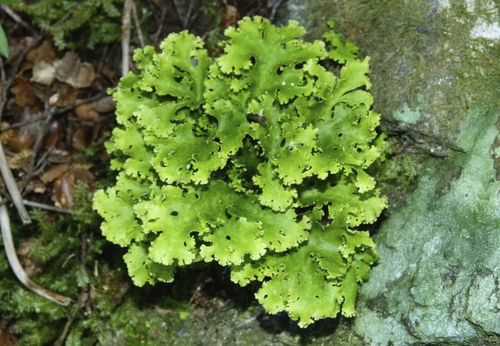
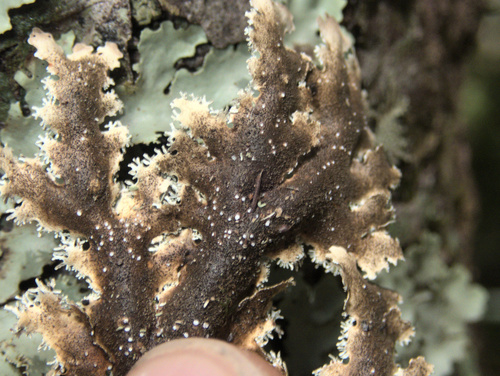
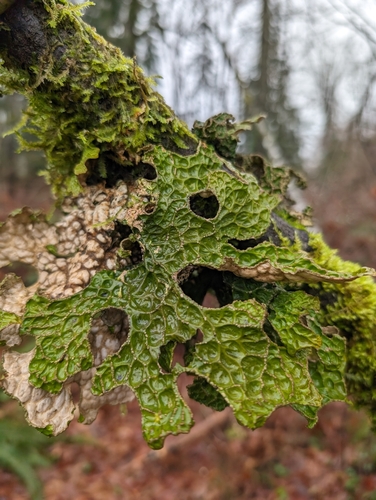
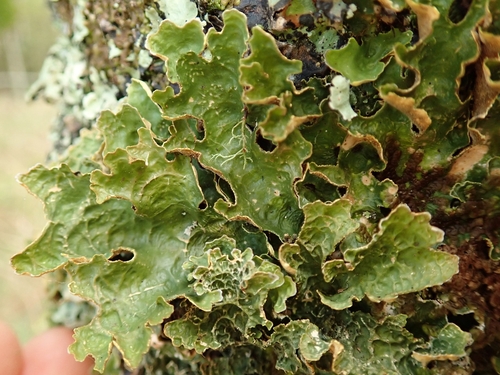
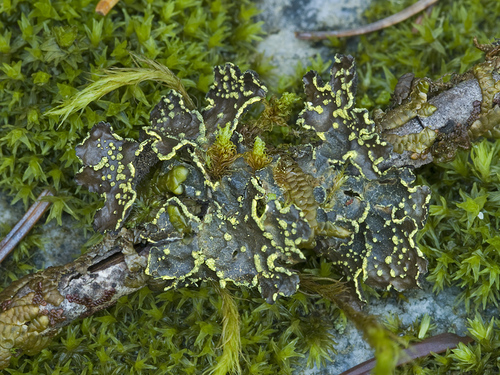
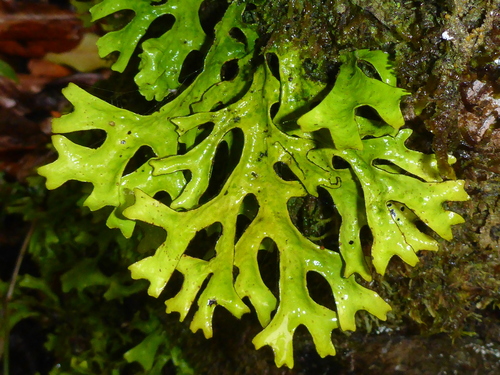
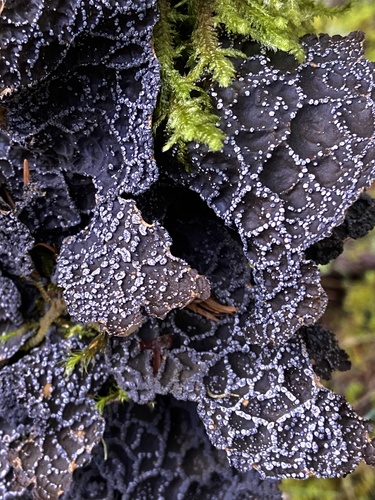
Lobaria anomala has a medium to dark brown thallus marked by ridges and depressions. These depressions contain white or grey soredia, and sometimes rounded to irregular soralia that develop between the ridges. The individual lobes of the thallus are rounded or angular, and measure 1–3 cm (0.4–1.2 in) wide. Apothecia are rarely produced by this species. The lichen products found in Lobaria anomala are stictic acid and triterpenes. Standard chemical spot tests give the following results for this species: an orange positive reaction for PD in the medulla, a yellow positive reaction for K, and negative reactions for both KC and C. Lobaria anthraspis shares a similar distribution with Lobaria anomala in northwestern North America, and the two species look very similar. They can be told apart by their different reproductive strategies and ecological preferences. Unlike Lobaria anomala, Lobaria anthraspis does not produce soredia, and very frequently produces apothecia. Ecologically, Lobaria anthraspis is less common than L. anomala and typically grows in riparian habitats, while Lobaria anomala has a broader ecological range. Lobaria anomala is found in western North America, along the Pacific coast of the United States and Canada. It grows on both deciduous and coniferous trees in humid locations, most commonly in the Interior Cedar Hemlock zone and in low-elevation coastal forests. Its geographic range extends from Alaska in the north, through British Columbia, to California in the south. Although it was predicted to occur on Cypress Island, Washington, no individuals were found during an extensive survey of the island's lichen flora.