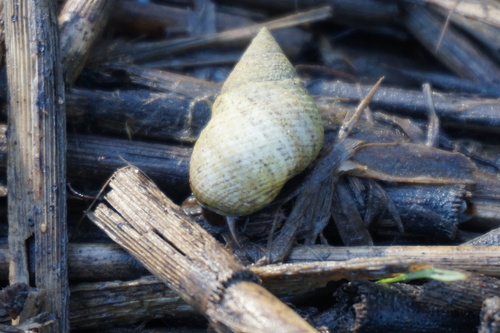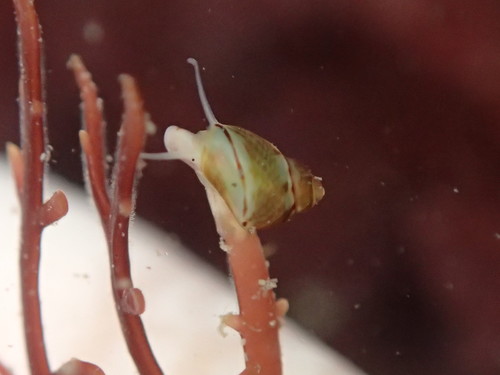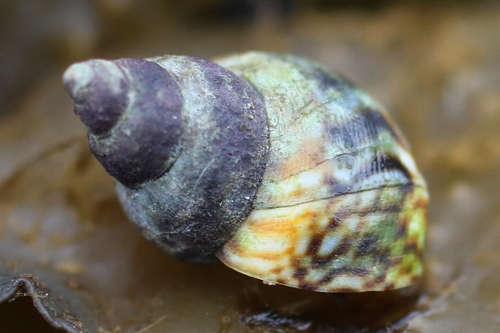
About Littorina scutulata Gould, 1849
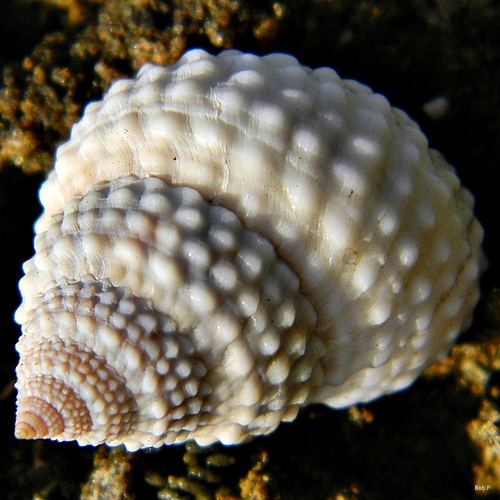
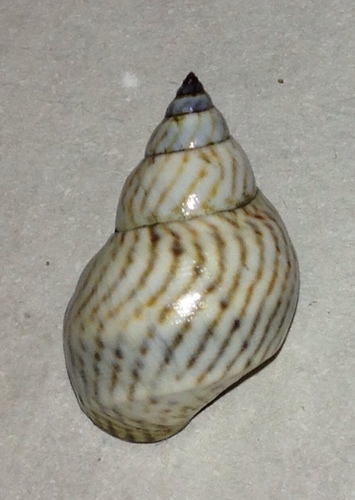
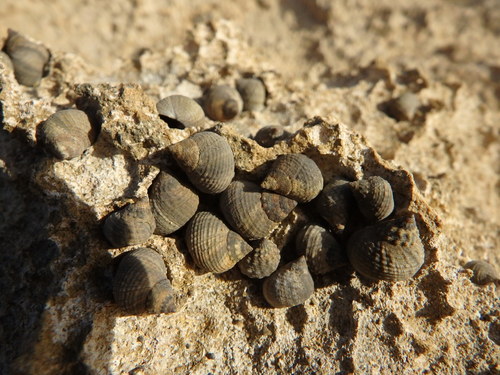
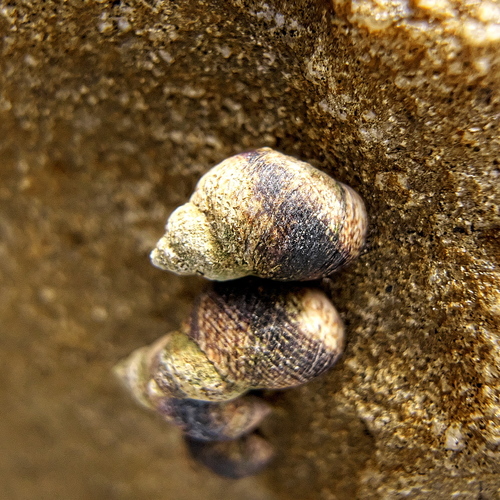
Littorina scutulata is a species of sea snail, a marine gastropod mollusk in the family Littorinidae, also called winkles or periwinkles. This species occupies a lower position on rocks than L. planaxis, and migrates up and down rocks with the tide. It crawls out of tidepools at night. It often hides in cracks or barnacle shells during low tide. The waves on the two sides of its foot are out of phase with one another, a trait called ditaxic. It feeds mainly on diatom films, microscopic algae, and lichens, and will also eat Pelvetia, Ulva, and other larger algae. L. scutulata breeds in every season except summer. Its eggs are laid underwater; each egg is individually enclosed in a flattened capsule, all contained within a sausage-shaped gelatinous mass coiled into a spiral that holds over 2000 eggs. The eye anatomy of this species is similar to that of the land snail Helix aspera. In Oregon, more than 10% of individuals carry parasitic flukes. The starfish Leptasterias hexactis feeds on this snail. It is distributed along the Pacific coast of North America from Kodiak Island, Alaska, to Bahia de Tortuga, Baja California. In 2015, an unusual case of L. scutulata found inside the human body was documented in San Pedro, Los Angeles. An immature specimen was found inside the knee joint of an eleven-year-old boy, who had recently fallen and injured his knee on a rock while exploring a tide pool. The force of his impact with the rock drove the small snail into his skin, and the snail survived even after the patient’s immune system formed an abscess around it.