About Littorina saxatilis (Olivi, 1792)
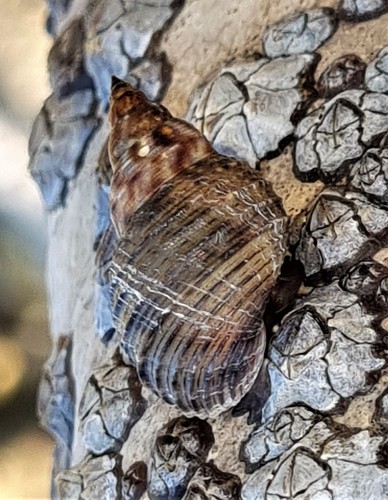
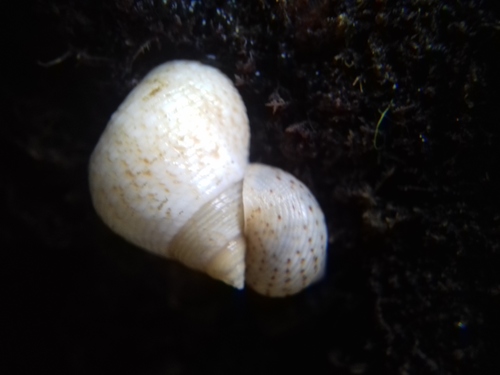
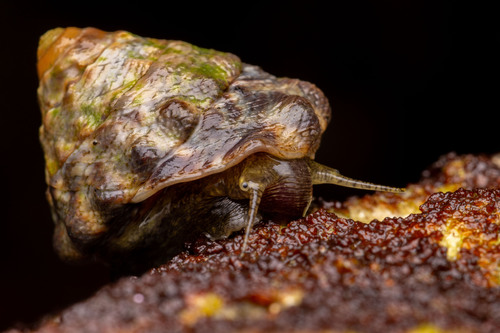
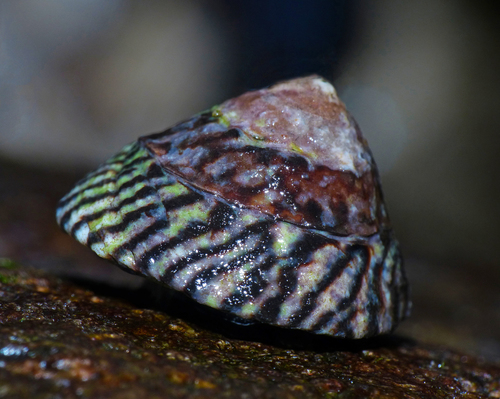
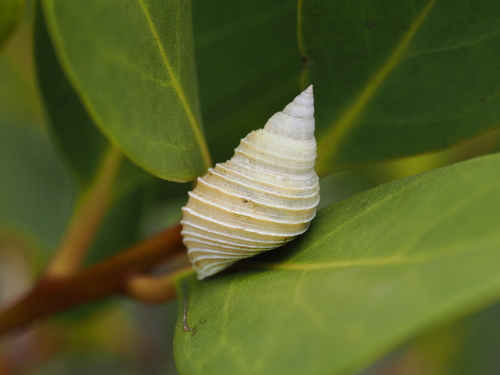
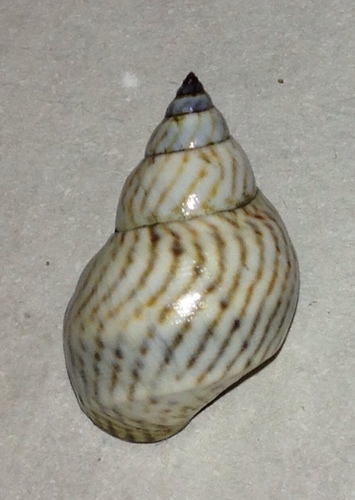
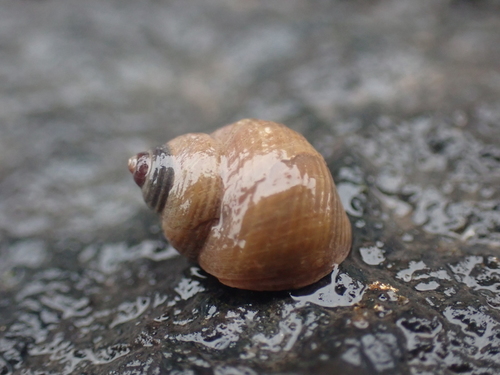
The shell of Littorina saxatilis often appears green in life due to algal growth, but the shell itself can be white, red, or brown, and sometimes marked with checkered lines. The shell has 4 to 5 whorls, and the maximum recorded shell length is 19 mm.
This species is native to the shores of the North Atlantic Ocean. Its native range includes Hudson Bay, Baffin Island, Greenland, and the Barents Sea, extending south along the American East Coast to Chesapeake Bay, and along the European coast to the Straits of Gibraltar. This intertidal species has only one known population in the Mediterranean basin, located in the Venice lagoon. This Venice population represents the earliest confirmed introduction of an exotic species to the Mediterranean Sea. Abiotic environmental features including salinity and water temperature have influenced the past and current distribution of this snail, and have limited its invasion into the Mediterranean Sea. It has also been introduced to San Francisco Bay on the West Coast of the United States, where it was first observed in 1992.
This species frequently lives in salt marshes. It can also be found in crevices of intertidal bedrock, inside empty barnacle shells, and under rocks. Like many other periwinkles, this species can survive long exposures out of water. Living individuals of the species have been recorded from a depth range of 0 to 46 meters; empty shells have been found as deep as 183 meters. On the exposed Galician coast of Northern Spain, two well-differentiated ecotypes are adapted to different shore levels and habitats. The RB (Ridged and Banded) ecotype lives on barnacles in the upper shore. It has a larger, more robust shell to resist attacks from predators such as crabs, and a smaller shell aperture to reduce desiccation from high sunshine exposure. The SU (Smooth and Unbanded) ecotype is found on the lower shore, living on mussels. It has a smaller, thinner shell with a wider shell aperture that accommodates a relatively larger muscular foot, giving it a higher ability to avoid dislodgment caused by heavy wave action. Both ecotypes coexist in an intermediate habitat on the middle shore.
The marine snail Littorina saxatilis has separate sexes, internal fertilization, and a brood pouch that holds non-planktonic shelled embryos.