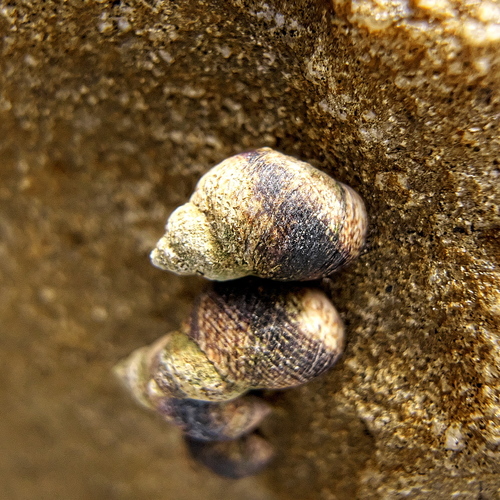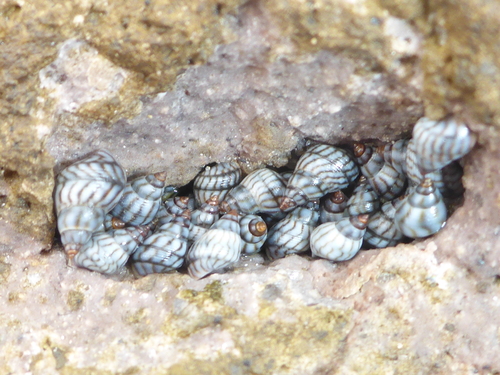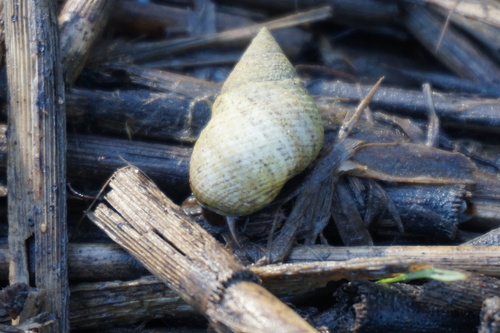
About Littoraria irrorata (Say, 1822)
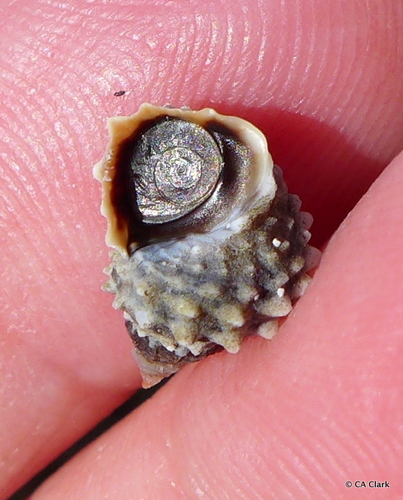
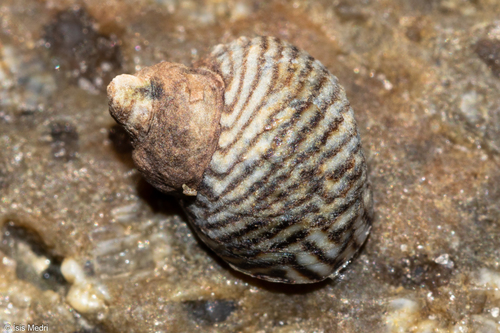
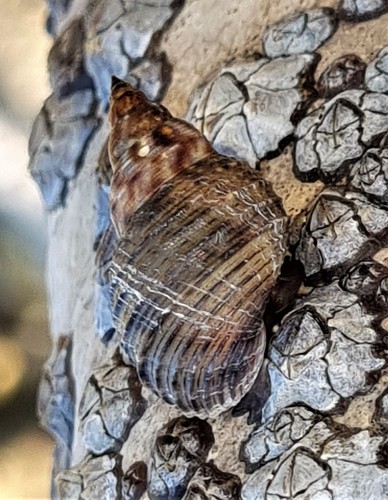
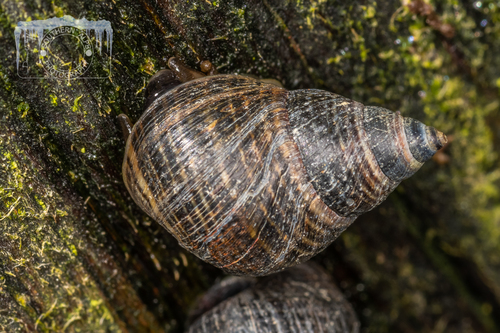
Description: The maximum recorded shell length of Littoraria irrorata is 29.2 millimetres (1.15 in). L. irrorata has extremely high temperature tolerance. When experiencing thermal stress, the snail can retract its foot into its shell. This ability allows it to avoid water loss through evaporation and survive in high temperatures. Distribution: This species can be found along Ireland, the Northwest Atlantic Ocean, and the Gulf of Mexico. In salt marshes, the spatial distribution of L. irrorata likely depends on predation pressures and varies with geography. Stem density of S. alterniflorus may play a role in the local distribution of L. irrorata. Habitat: The minimum recorded depth for this species is 0 metres (0 ft), and the maximum recorded depth is 22 metres (72 ft). L. irrorata can usually be found on the rootstock of S. alterniflorus, and in some salt marshes it can also be found on its dead, fallen leaves. L. irrorata has additionally been observed inhabiting Sporobolus cynosuroides. There were no significant differences in snail population density between areas with S. alterniflorus and areas with S. cynosuroides. However, observation shows that S. cynosuroides is a safer habitat for the snail due to its greater superior height. In Virginia salt marshes, L. irrorata shell size increases with decreasing elevation, but the opposite pattern is found in salt marshes of South Carolina and Florida.