About Litoria rothii (De Vis, 1884)
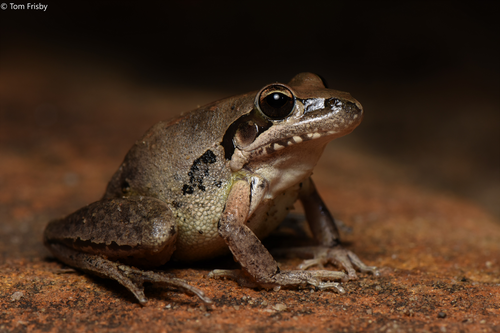
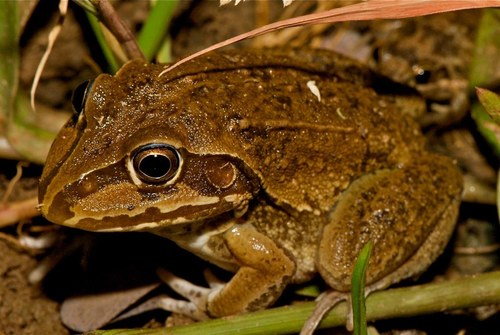
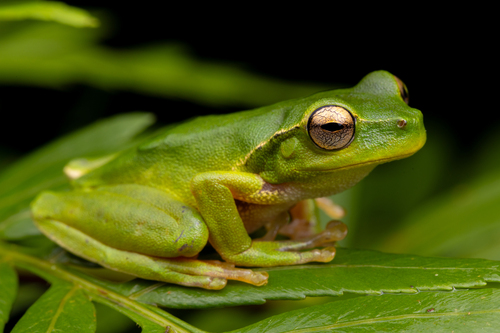
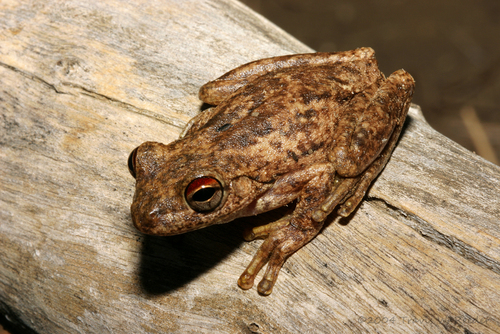
Roth's tree frog (Litoria rothii) is a medium-sized frog that reaches a maximum length of 5.7 cm (2.2 in). It has an elongated body, a small head, and large eyes. As an arboreal species, its toe pads are wider than its fingers. The dorsal surface ranges from dull grey to brown, and may be marked with dark brown blotches. The inner thighs and armpits are black, blotched with bright yellow or orange. The tympanum is visible, with a fold of skin covering its top portion. Two features set this species apart from Peron's tree frog and Tyler's tree frog: the upper half of the iris is deep red, and the dorsal surface has no emerald green flecks. Roth's tree frog breeds during the wet season, from November to March. Its call consists of seven to nine loud, chuckling or cackling sounds that resemble laughter. Eggs are laid in temporary pools of water, and tadpoles take a maximum of 65 days to complete metamorphosis. The color of Roth's tree frog is extremely variable, and can change from pale grey to dark brown within just a few hours. Typically, individuals are grey during the day while basking in the sun, and turn brown at night.