About Litoria latopalmata Günther, 1867
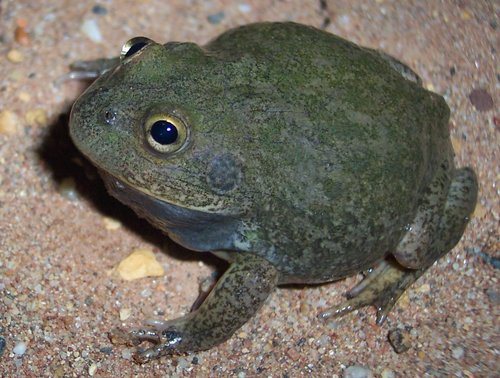
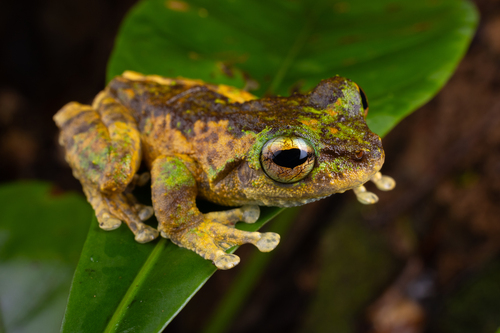
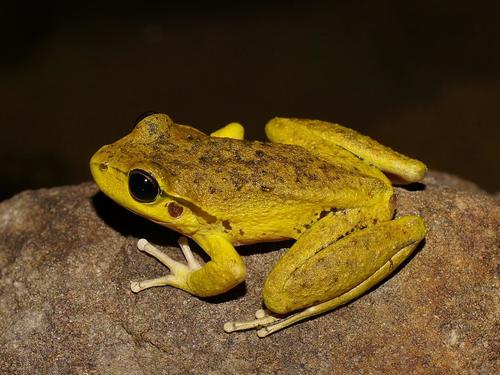
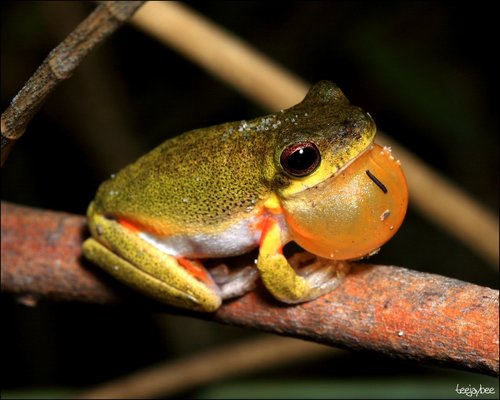
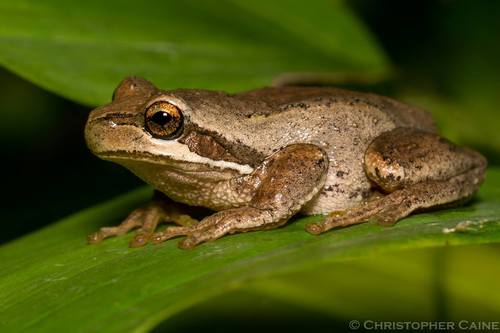
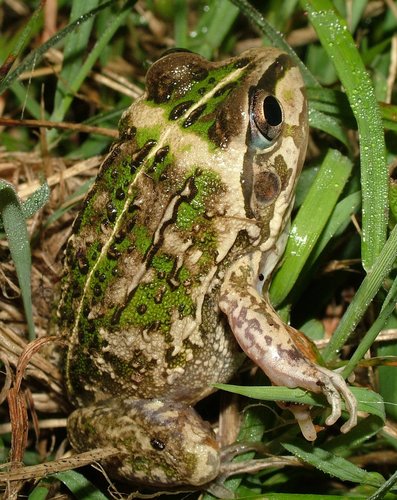
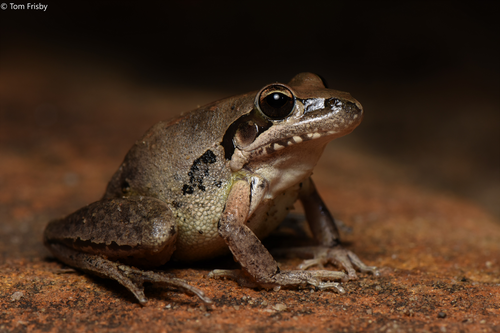
Description: The broad-palmed frog has a pale to dark brown dorsal surface, which may have darker blotches or variegated patterns. Its skin is mostly smooth, with occasional warts on the back. A black band runs from the snout, through the eye and tympanum, and breaks into blotches along the side. A white line cuts through the black band in front of the eye, and extends under the eye. The thighs are marbled with yellow and black, and the armpit is yellow. The lower lip is typically marbled black and white, and the belly is white. Ecology and behaviour: During mating season, the broad-palmed frog calls in large choruses around still water sources, which are most often dams, but may also be roadside ditches, temporary puddles, or still sections of streams. Its call is a short, continuously repeated "quark". This species can be found a great distance from its breeding area, and typically inhabits open country or forest. Females lay clutches of up to 350 eggs in a mass that either floats on the water or attaches to vegetation. The egg mass often sinks after being disturbed. Eggs hatch 3 to 6 days after laying, with the timing depending on water temperature. Tadpoles are sandy gold in color and reach a maximum length of 49mm. Their overall development period is short, because this species often lays eggs in very temporary water bodies. Recently metamorphosed frogs resemble adult individuals, and measure between 14 and 17mm in length.