About Litoria freycineti Tschudi, 1838
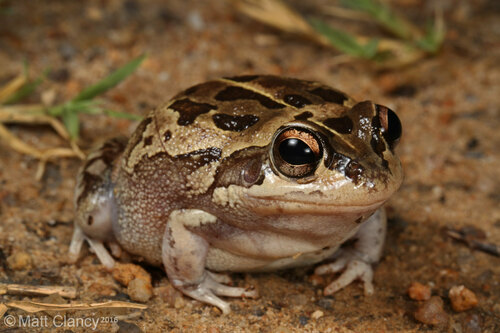
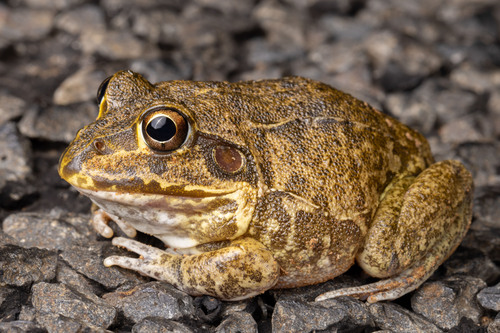
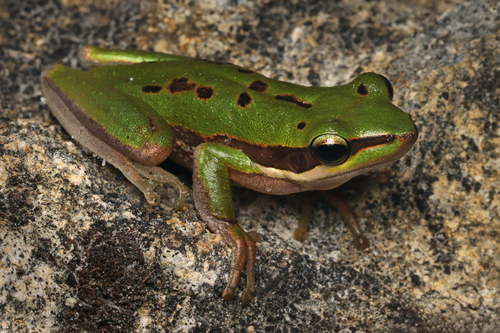
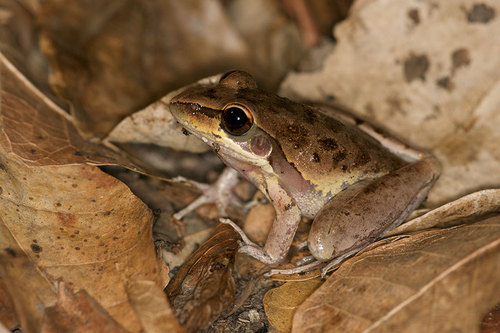
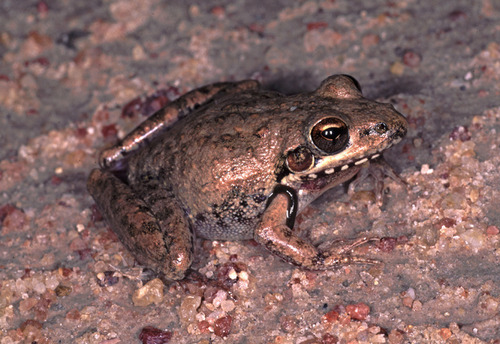
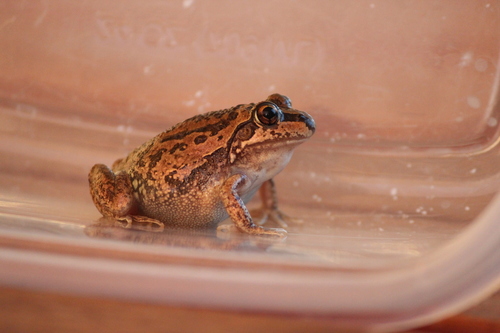
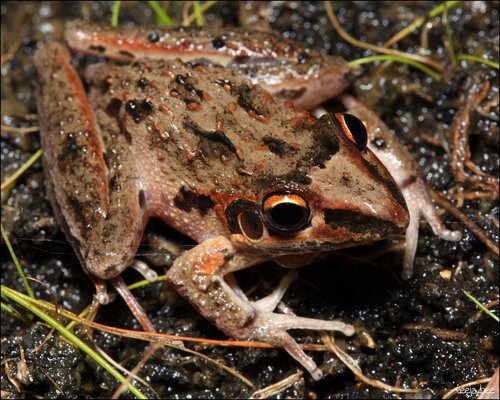
This is a variable species of frog that reaches 45 mm in length. Its dorsal surface is normally brown, marked with large lighter or darker patches or raised dots; in some specimens, these patches can be very indistinct or almost entirely absent. A triangular marking the same colour as the patches sits on the snout, and a second larger triangular marking of the same colour sits behind the eyes, nearly mirroring the snout marking. The upper half of the iris is rusty coloured, while the lower half is brown-grey. A white bar runs from in front of the eye, around the tympanum, and extends to the arm. The lower lip has a black and white marbled pattern. The finger pads are small. The underbelly is white, and the throat of male individuals is darker. Despite its common name association with wallum, this species occurs just as frequently in sandstone heath habitats as it does in wallum swamps. The call produced by males is a duck-like "wak", similar to the call of Litoria latopalmata, but slower in pace. Males call on warm nights during spring and summer, often after rain. Breeding occurs in any body of water the frogs can access, ranging from large swamps, to creeks where stream-side pools are normally used, to temporary puddles. Temporary puddles may require follow-up rainfall for tadpoles to complete metamorphosis.