About Lithopoma tectum (Lightfoot), 1786
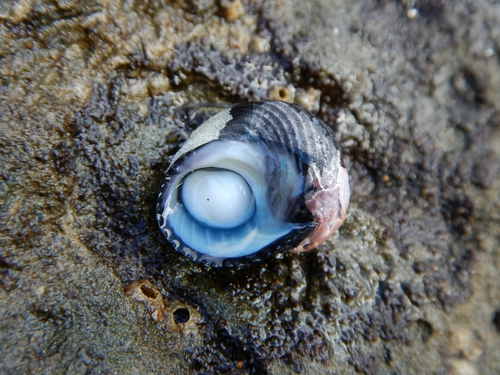
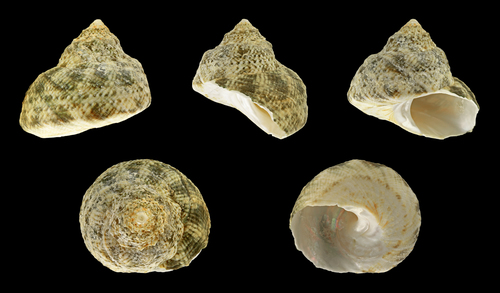
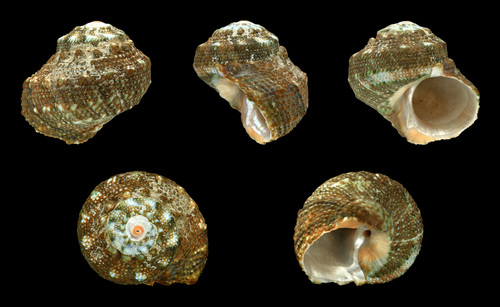
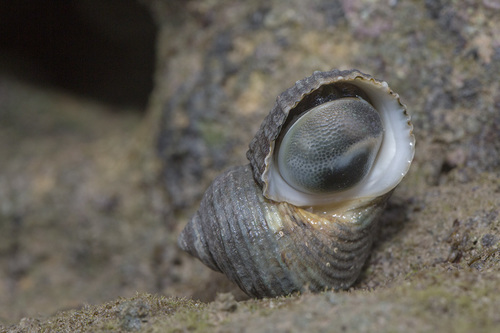
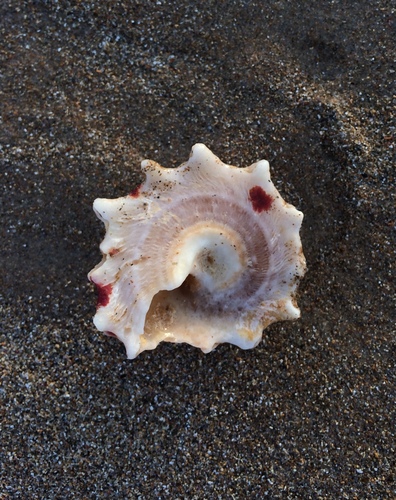
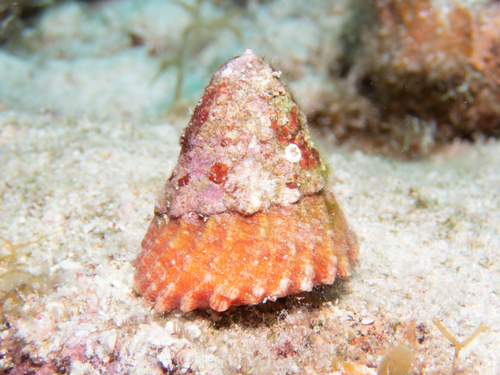
The maximum recorded shell length of Lithopoma tectum is 63 mm. The shell is solid, imperforate, and has an elevated-conic shape, with a pattern of longitudinal, slightly oblique wrinkles across its surface. Its coloration is reddish orange, with irregular patches of white and olivaceous. The suture is impressed and irregular. This species has 6½ whorls, which are somewhat flattened on the upper section and slightly concave in the middle. The apical one or two whorls are smooth, while subsequent whorls have longitudinal folds. These folds are cut across the middle by two impressed spiral lines, they project out at the carinated periphery, and there are approximately 23 folds on the body whorl. The base of the shell is nearly flat, marked with radiating stripes, and bears five subgranose lirae. The aperture is oblique and rhomboidal. The white columella is curved and has two teeth at its base. The umbilical tract is pale violet, bounded by a folded cordon. The outer surface of the operculum is convex, marked with a median rib, finely granular, and has a small excavation near its center. This species is found in the Caribbean Sea, the Gulf of Mexico, the Lesser Antilles, and in the Atlantic Ocean off the coast of Brazil. Its recorded habitat depth ranges from 0 m to 10 m.