About Lithopoma americanum (Gmelin, 1791)
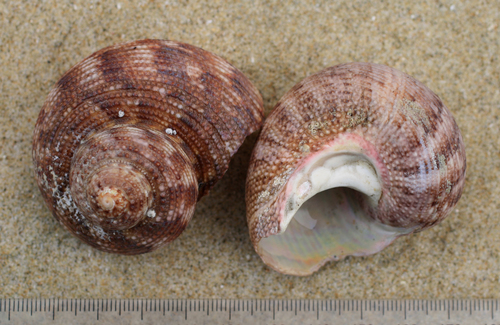
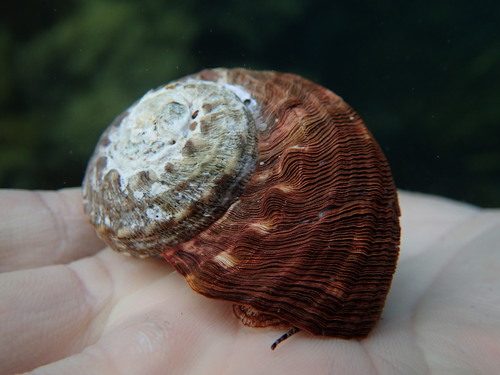
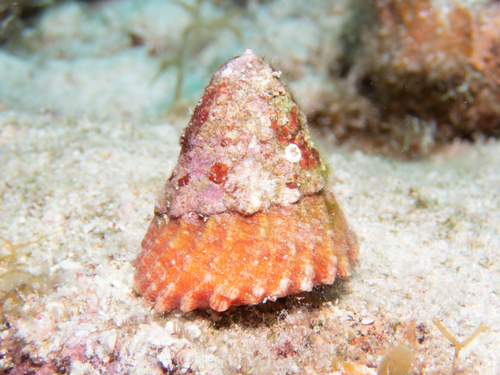
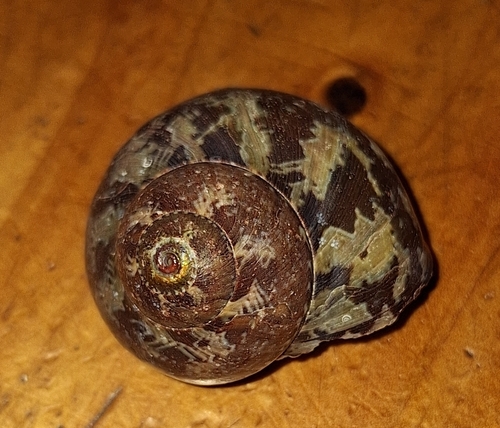
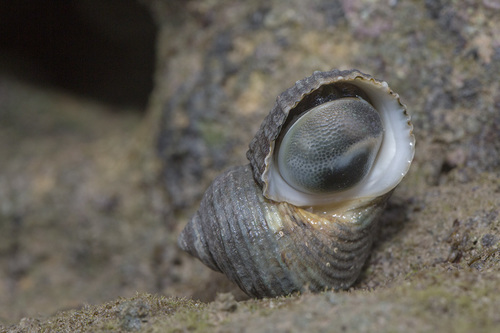
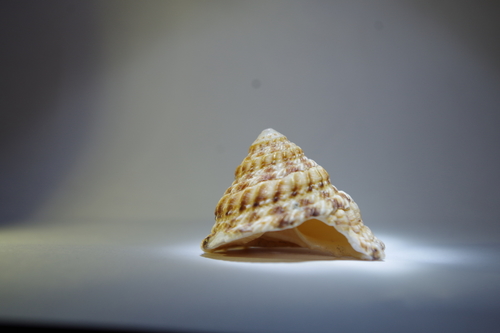
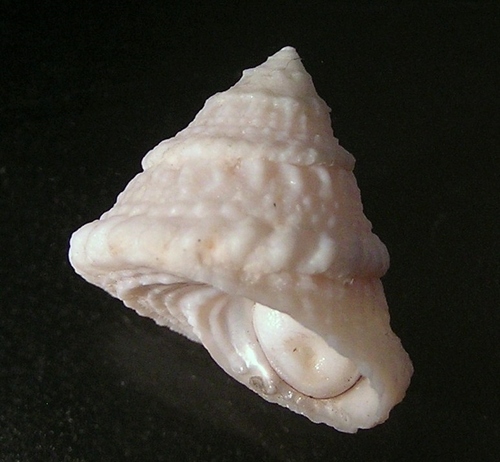
This species of marine snail has the scientific name Lithopoma americanum (Gmelin, 1791). The maximum recorded shell length is 40 mm (1.6 in). The shell is elevated, imperforate, solid, and has a trochiform shape. Its color is white or yellowish. The shell is made up of seven whorls. In adult individuals, the upper three whorls have had their original sculpture eroded smooth, and these whorls are flattened or concave on their upper surfaces, with longitudinal oblique plications. There are approximately 36 of these folds on the body whorl, and the folds end in nodules at the periphery; young individuals have spines in this location instead. The folds are generally intersected around their middle by two to four spiral impressed lines. The periphery of the shell is angled and more or less swollen. The base of the shell is nearly flat, with more or less sharp radial striae, and spiral lirae. The lirae are frequently nodulose, and number around six, sometimes more. The aperture is very oblique. The outer lip is usually crenulated. The short columella is heavy, with two tubercles at its base, and is bounded by a radiately plicate cordon. The operculum is oval, light brown on the inside, and has a sublateral nucleus. The outside of the operculum is convex, white, and granulose. It is more or less excavated around the upper margin, and excavated near the center. Young specimens have a stout curved central rib that follows the spiral, with its ends connected by a short straight rib. This marine snail is found in the Caribbean Sea, the Gulf of Mexico, and in waters off the Lesser Antilles. Its habitat has a minimum recorded depth of 0 m, and a maximum recorded depth of 33 m (1.3 in).