About Lithophaga lithophaga (Linnaeus, 1758)
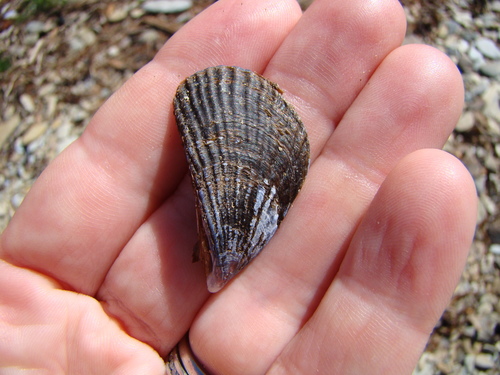
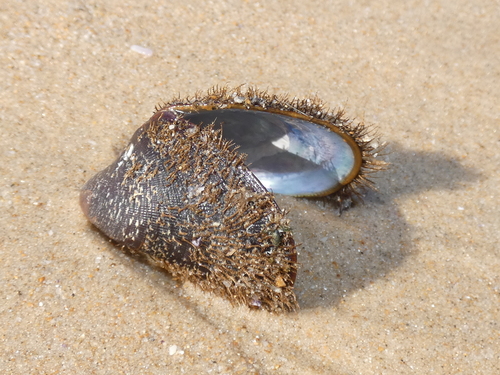
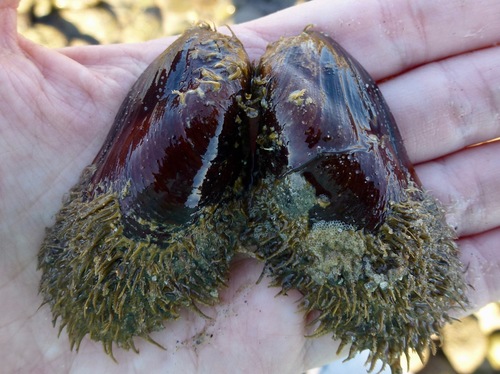
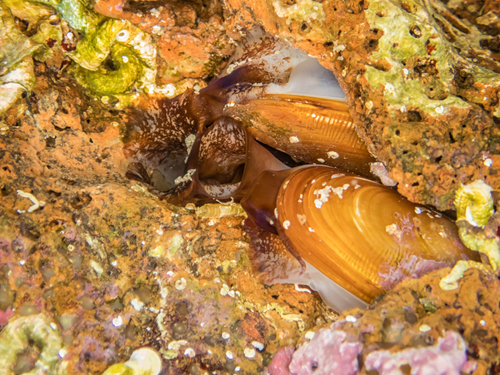
The shells of Lithophaga lithophaga can reach about 8.5 centimeters (3.3 inches) in length. They are yellowish or brownish, almost cylindrical, and rounded at both ends. The interior of the shell is whitish iridescent purple with a pink tinge. These shells are relatively thin. The shell surface is nearly smooth, covered with growth lines that can sometimes be quite rough. This species can be found in the northeast Atlantic Ocean, the Mediterranean Sea, and the Red Sea. On the Adriatic coast of Croatia and Montenegro, it is known under the local name prstaci. These bivalves live mainly in areas battered by waves, but they can also be found at depths of 125 to 200 meters. They bore into marine rocks, creating a type of boring called Gastrochaenolites. Their growth is very slow; it takes 15 to 35 years for them to reach 5 centimeters in length. They are filter feeders that consume plankton, algae, and debris filtered from the water. They reach sexual maturity after approximately two years. In a single spawning season, individuals can release between 120,000 and 4.5 million eggs, and fertilization occurs in open water. These mollusks are considered a delicacy in Mediterranean cuisine, where they are often cooked and served in a broth made with white wine, garlic, and parsley.