About Lithodes maja (Linnaeus, 1758)
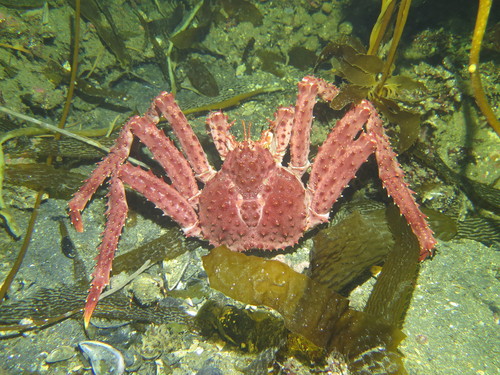
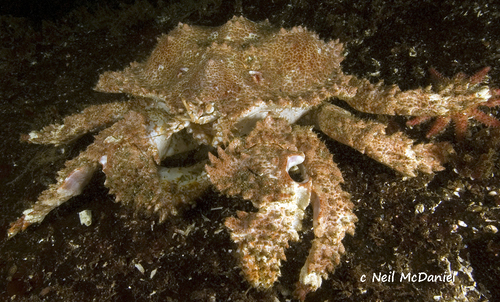
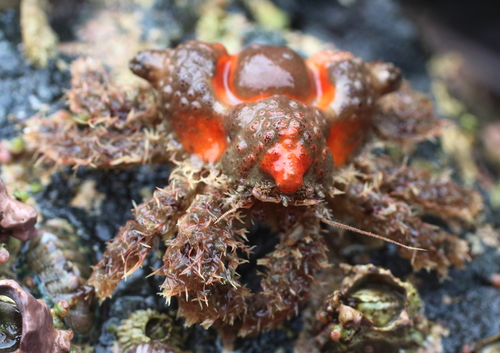
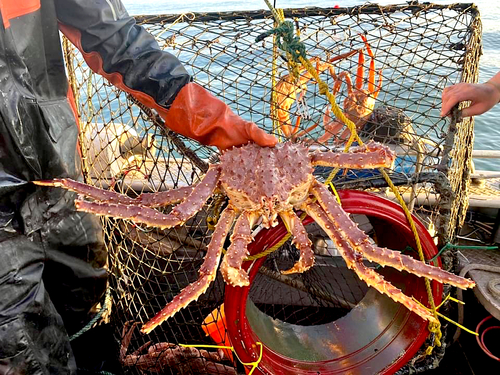
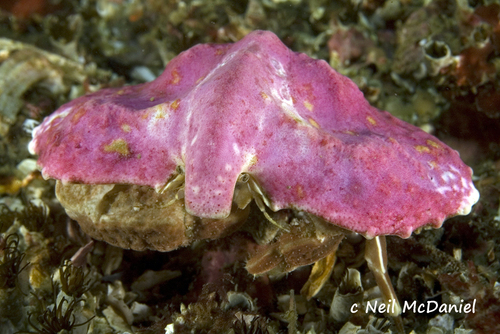
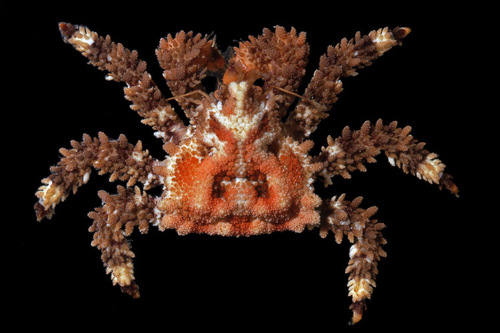
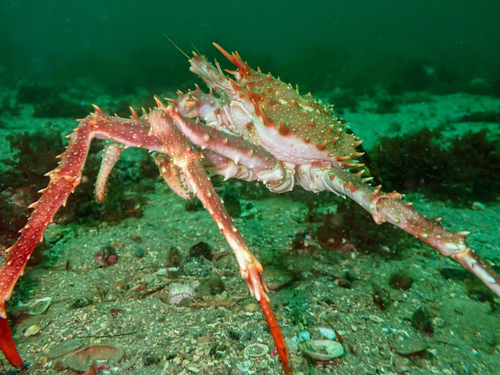
Lithodes maja, commonly called the Norway king crab or northern stone crab, is a species of king crab that lives in cold North Atlantic waters off the coasts of Europe and North America. In the eastern North Atlantic, it can be found along the entire coast of Norway, including Svalbard, ranging south into the North Sea and Kattegat. It also occurs in the northern half of the British Isles, with a small number of records off southwest England, as well as around the Faroe Islands, Iceland, and off southeastern Greenland. In the western North Atlantic, its range extends from the Davis Strait between Greenland and Canada south to The Carolinas in the United States. This species has an almost circular carapace that can reach a width of 13 to 14 cm (5.1 to 5.5 inches). Its entire body is brown or orange in color and covered in large spikes. Lithodes maja inhabits both soft and hard seabeds, at depths ranging from 10 to 1,000 meters (30 to 3,280 feet). Like most king crabs, female Lithodes maja have asymmetrical abdomens, where the left side is considerably larger than the right; specimens with the opposite asymmetry are occasionally found. Compared to commercially fished king crab species in the North Pacific, this species has a low egg production rate. This low reproduction limits its population size, making it unsuitable for commercial fishing. Its larval development is lecithotrophic, and takes approximately 7 weeks when held at a constant temperature of 9 °C (48 °F).