About Lithobates vibicarius (Cope, 1894)
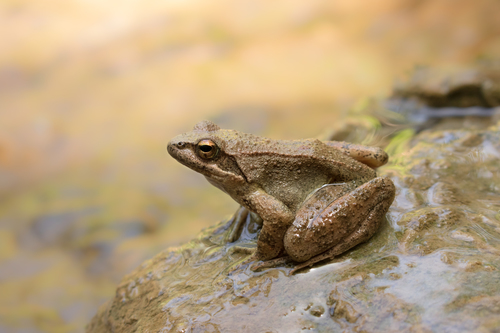
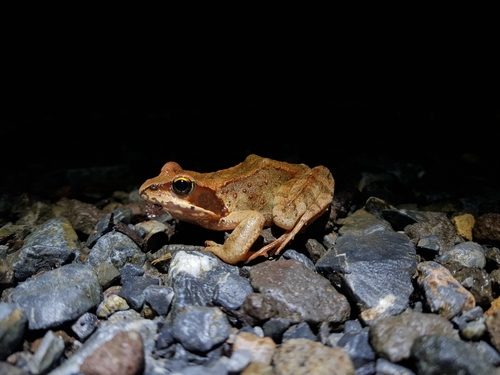
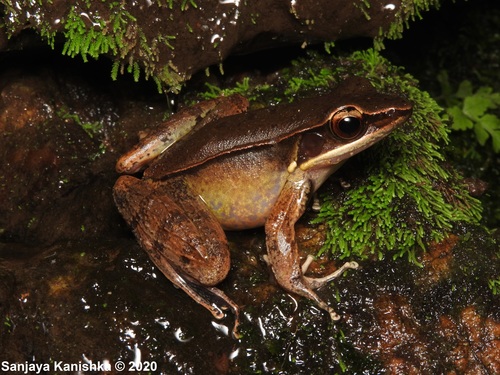
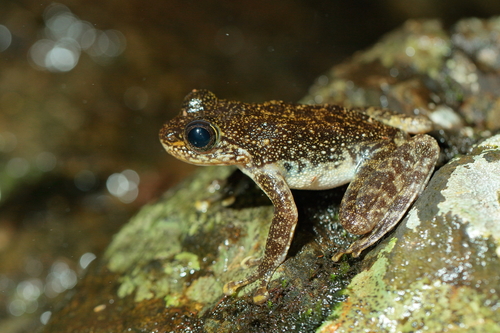
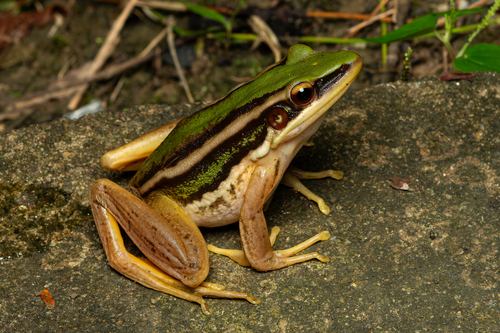
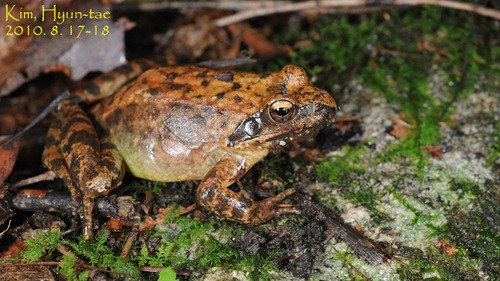
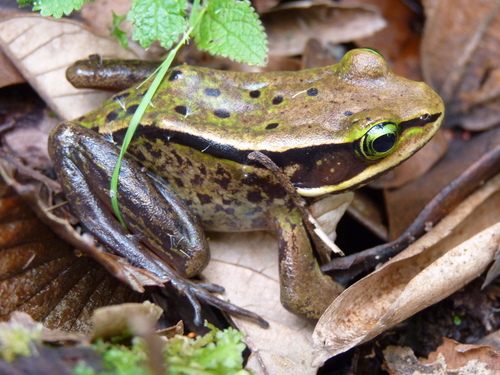
Lithobates vibicarius, also called Lithobates vibicarius (Cope, 1894), are relatively large frogs, with a snout–vent length ranging from 6 to 9 cm (2.4 to 3.5 inches). Their dorsal coloration is variable and can be golden, greenish, or dull brown; juvenile individuals are usually green. Most individuals have at least some darker markings on their dorsum. The dorsolateral folds typically have black linings along their outer edges. A black face mask is a common trait for this species, and the upper lip has a white lining. The iris is green, and the feet are extensively webbed. This is a semi-aquatic frog species that occurs in lower montane rainforest and the lower portions of montane rainforest. They prefer dense woodland habitats, but can also be found near water in clearings or pastures. Lithobates vibicarius was once very common across Costa Rica, but has nearly disappeared from the region; only three populations are currently known. Survey efforts in Panama have not found any individuals of this species. This population decline is thought to be primarily caused by the disease chytridiomycosis, though habitat loss and agricultural chemicals may have also contributed to the decline. The International Union for Conservation of Nature currently lists Lithobates vibicarius as an endangered species. Breeding can take place throughout the year, but is concentrated in the early parts of the rainy season. Both calling and mating occur at night. Males typically call from vegetation growing in water, and their call is a low, harsh trill. Eggs are laid in large, round gelatinous masses in shallow bodies of water, where they are attached to vegetation.