About Lithobates taylori (Smith, 1959)
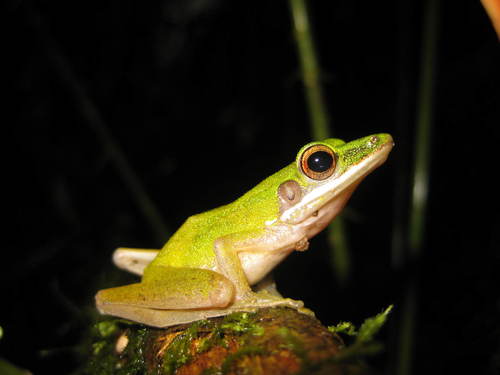
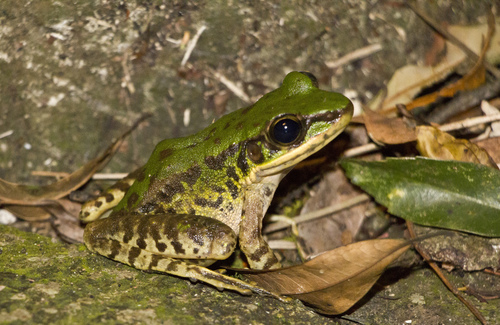
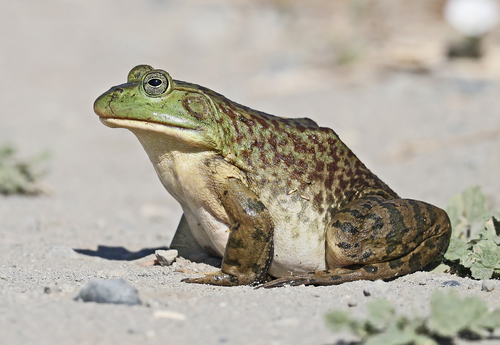
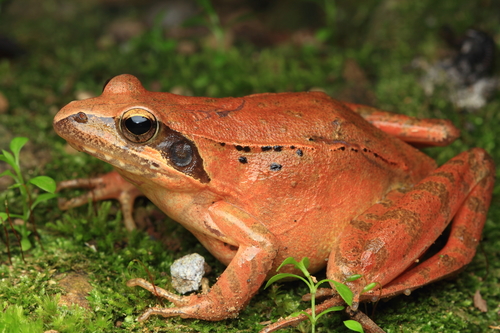
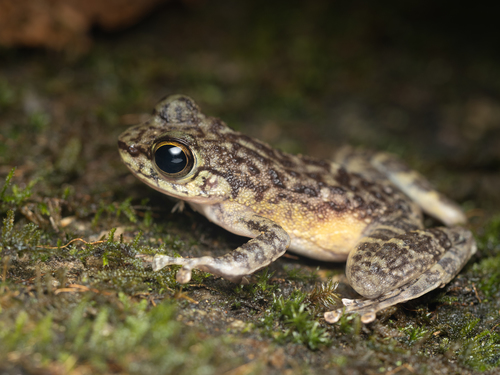
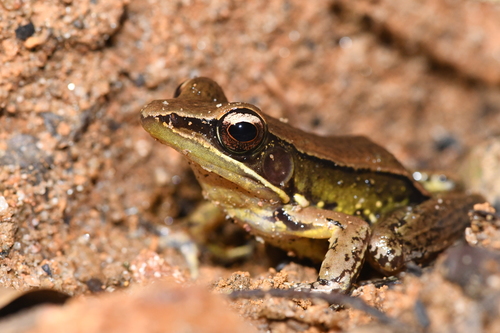
Peralta frogs are relatively large amphibians, with a snout–vent length ranging from 6 to 8.5 cm (2.4 to 3.3 inches). The dorsum (back) is tan, green, or gray, and often has large, elongated black spots with distinct edges. The dorsolateral folds (ridges along the sides of the back) are distinct, but become discontinuous toward the rear of the body. The belly is white, and the feet are extensively webbed. The Peralta frog is a nocturnal, semi-aquatic species that lives in ponds, swamps, and marshes located in lowland wet forest, premontane moist forest, premontane wet forest, and rainforest. Breeding occurs during the wet season; females attach their eggs to aquatic vegetation, and tadpoles complete their development within these wetland habitats. This species may be threatened by habitat loss caused by deforestation, and potentially also by water pollution from agricultural pesticides.